
Home / Field notes / Fishing guide trucks and key habits
Field notes: river work
Fishing Guide Trucks and Key Habits That Hold Up
A fishing guide starts before sunrise, parks on gravel and works around water all day. This guide looks at the truck, the keys and the small habits that keep a working day from turning into a lockout.
A truck that works as hard as the guide
A guide's truck is not a commuter car. It hauls boats, coolers, rods, waders and clients, and it gets driven down dirt turnouts to river access points where there is no cell signal and no one to call. When something goes wrong with a key out there, the cost is not only the repair. It is a cancelled trip, a disappointed client and a lost day of work.
Most of the key trouble we hear about in this line of work has nothing to do with locks failing. It comes from habits that made sense in the moment. The keys get left in a wader pocket, set on a tailgate while gear is loaded, or dropped into a boat that is then pushed off the ramp. Each of those is a small slip that adds up over a season.
This guide walks through how a guide's day tends to run, where keys go missing, and what a sensible setup looks like. It is written for anyone who works near water in the Shasta region, from the rivers around Redding to the cold streams up in the mountain towns, and it applies just as well to a weekend angler who wants fewer surprises.
The pre dawn routine and where keys vanish
Picture a guide loading the truck in the dark. The porch light is off so as not to wake the house, hands are full of rods and a cooler, and the key is in a jacket that will come off once the sun warms the day. That jacket then rides in the cab, in the boat or on a rock. The key is only as safe as the habit that tells you where it is.
The riskiest moments are the transitions. Arriving at a put in, a person steps out, grabs gear, shuts the door and walks to the water. If the key stayed on the seat and the doors lock on close, the day starts with a problem. If the key went into a waders pocket and the guide then wades in, the key is now wet and may not survive.
A reliable pattern beats memory. Decide on one place for the key at every stage of the day: one pocket while driving, one pocket while rigging, one pocket while on the water. The goal is that your hand goes to the same place every time without thinking, even when the morning is cold and you are tired.
Keys and water do not mix well
Modern vehicle keys are more than metal. Many contain a transponder chip, and many fobs hold a small circuit board and a battery. Water can creep into a case, corrode the contacts and leave a fob unresponsive. A fob that fell in a river and was dried on a dashboard may seem fine for a day and then stop working.
If a fob does get wet, take it out of your pocket, open the case if it is designed to open, remove the battery and let everything dry in open air, not on a heater or in a hot cab. Our guide on key fob battery basics explains what is inside and how to treat it kindly.
A better answer is to keep the fob out of harm's way in the first place. A small waterproof pouch or a dry bag with a clip can ride on a lanyard. Some guides keep the day fob in a sealed pouch and leave a plain metal key hidden somewhere sensible for emergencies. Whatever you choose, the aim is a key that never has to get wet.
- Keep the fob in a sealed pouch whenever you are near water.
- Never dry a wet fob on a heater or in direct hot sun.
- Remove the battery of a soaked fob and let it dry in open air.
- Clip the key to a lanyard so it cannot fall from a pocket.
- Keep a plain mechanical key available if your vehicle allows one.
Spare keys: how many, and where
Every guide should have a working spare, and it should not live in the truck. A spare tucked into a magnetic box under a bumper may survive for a year and then fall off on a washboard road, or be found by someone else. We explain why in our guide on hiding a key outside, and better options.
A better home for the spare is with a person you trust: a partner, a business associate, a friend in town who has a house near your usual launch. If you work with a lodge or a shop, a labeled hook behind a counter can also work. The test is simple. If your main key were gone right now, how long would it take someone to put a spare in your hand?
The spare also needs to be a real, working copy. A spare that was cut years ago and never tried can turn out to be a poor copy or an unprogrammed blank. Our article on a spare key now versus later talks about the value of making that spare before you need it, when you have time to do it right.
Transponder keys, fobs and the cost of waiting
Many newer trucks use a chip in the key that talks to the ignition. The key can be cut perfectly and still not start the engine unless the chip is recognised by the vehicle. We cover how that works in transponder keys explained.
When all keys are lost, the process is more involved than people expect. The key has to be cut to match the lock, the new key has to be introduced to the vehicle's computer, and the old keys may need to be removed from memory so a lost one can no longer start the truck. A mobile locksmith with the right equipment can do that at the vehicle, which matters when the vehicle is not easy to tow.
That is a good reason to act early. Having a spare made while one key still works is simpler than starting from nothing. If you need either service, our pages on car key replacement and key programming describe what happens and what to have ready.
Locked out at the river
A lockout at a remote access point has a special sting. There may be no signal, and the nearest road can be far from a main route such as Interstate 5 or Highway 299. If you can get a message out, tell the locksmith where you are in plain terms, such as the river access name, the nearest highway and the direction you came from, since we cannot find a place from a vague description.
Before calling anyone, take a breath and check the easy things. Look at every door and any rear window or tailgate, and think about whether the key is actually in the vehicle or just in another jacket. Many lockouts end when someone finds the key in a pocket they forgot.
If the key really is inside, avoid forcing the door, jamming a tool into the frame or breaking a window. Forced entry can damage seals, wiring in the door and the lock itself. Our car lockout page explains how a professional works without damage. And if a child or pet is shut inside a vehicle, call emergency services first, before anything else.
Work truck habits that save a season
The habits that matter most are boring ones. Lock the truck when you leave it, but only after you have touched the key in your pocket. Do not leave a key on the seat, on a tire or on the roof of the cab while loading, because the one time you drive off with it up there is the time it ends up in a river road gravel pit.
Share keys with care. If a second guide, a relative or a client drives the truck, you now have a key in somebody else's pocket. Keep a short note of who holds what, and when a key leaves your control for good, think about whether it is time to rekey the locks or have the transponder list updated.
Think about the other locks on the rig as well. Truck bed boxes, rod lockers and trailer couplers each have their own keys, and the ring grows heavy. Our guides on work trucks and toolbox locks and trailers and hitch locks show how keyed alike sets can simplify a heavy ring.
Cold, mud and wear on a working key
Keys that live in a pocket with sand, mud and fish scales wear sooner. The teeth round off, the cut loses sharp edges and the key begins to drag. Our piece on what happens when a key wears down explains why a copy of a worn key is a worse key, and why it is better to cut from the original code or a clean master.
Cold mornings also stiffen locks. If a door lock will not turn, do not lean on the key. Warm the key in your hand, try gently, and let the lock settle. A bent or snapped key is a much bigger problem than a stubborn lock.
Take a minute each season to clean your keys with a dry cloth and a soft brush, and to try each one in its lock. A key that feels rough today can be copied, replaced or swapped before it fails in the dark on a gravel road.
Summer brings its own version of the problem. A truck parked in full sun on a hot, dry day can reach cab temperatures that soften plastic key heads, cook a fob battery and leave rubber buttons sticky. Do not leave the fob on the dash. Tuck it in the console or carry it with you, and shade the windshield when you can. A fob that has been baked many times will often show it with weak buttons, a shorter range or a case that no longer closes tight, and those are signs to line up a replacement before the next trip.
Building a key plan for a guiding business
If you run a guiding business with more than one vehicle or more than one guide, a simple key plan pays for itself. List each vehicle, each key, and who carries it. Decide who holds the spares. Keep that list somewhere that is not in the truck.
Decide how to handle changes. When a guide leaves, the key they hold should come back. If it does not, consider whether rekeying or reprogramming makes sense. We can explain the options without any pressure, and you can send a note through our request page with the details of your setup.
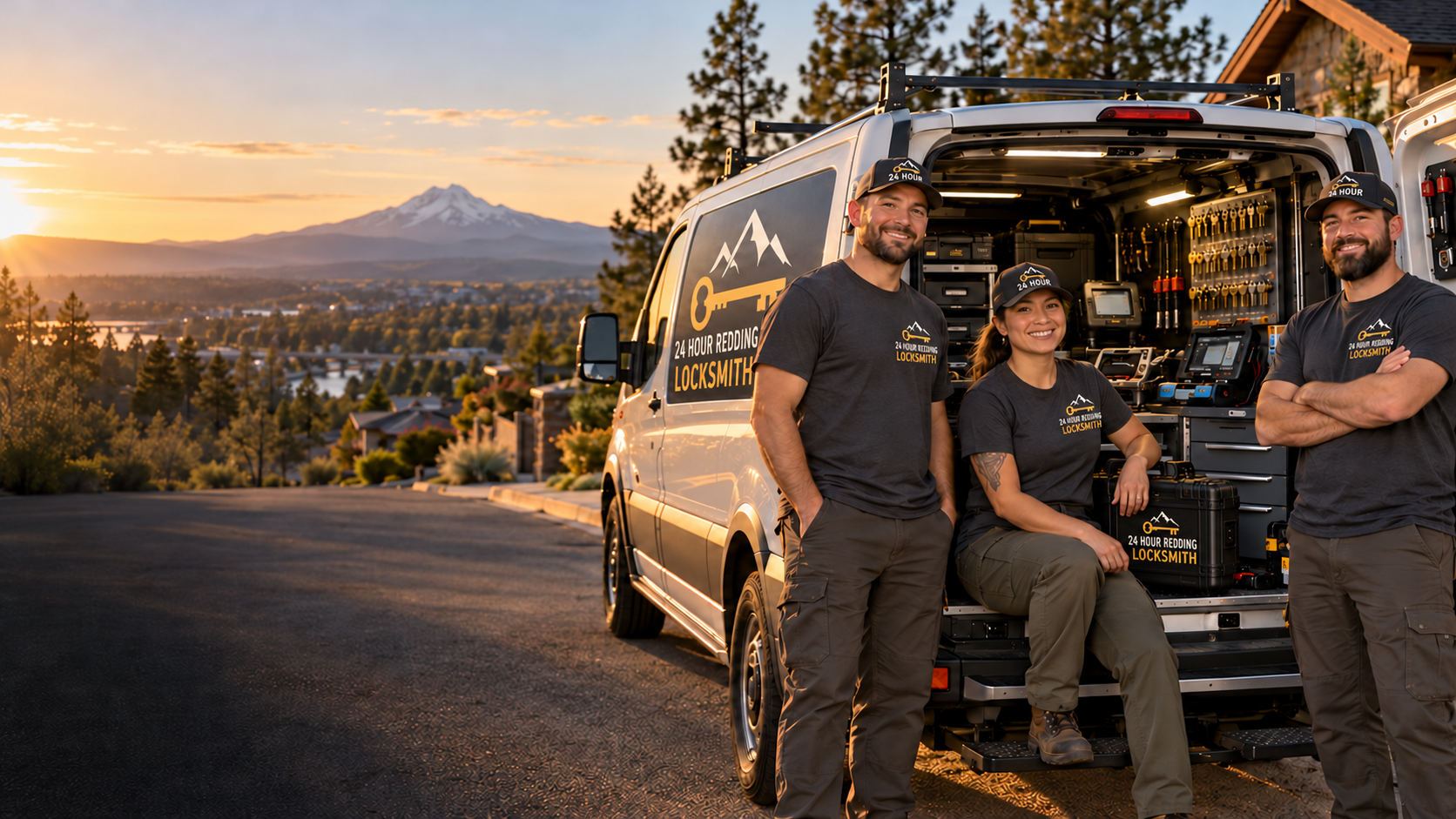
If you are based near Redding or Anderson, our team can come to you with a branded van carrying key cutting and programming equipment and common hardware. See our pages for Redding and Anderson to see what we do locally.
Clients, shuttles and handing over keys
Many guides run shuttles, where one person drives the truck and trailer to the take out while the boat floats down. That means a key changes hands, a second driver sits behind the wheel and, sooner or later, the wrong person ends up holding the only key. Before a shuttle begins, agree out loud who holds which key and where it will be left at the end. It sounds fussy, and it is the simplest insurance a guide has against standing at a boat ramp with no way into the truck.
Clients bring their own keys too. A visitor from out of the area may lock a rental vehicle at your put in, step into the boat and realise the fob is still on the dash. Gentle reminders at the ramp help, and so does a short routine you repeat every trip: keys, phones, wallets, then shove off. Guides who build that pause into the morning rarely have a story to tell about it.
If you do hand a key to a shuttle driver, hand over a copy and not your only one, and ask that it be returned when the trip ends. If a key is ever not returned, treat it as lost rather than waiting and hoping. A key that wanders off is a reason to look at rekeying or reprogramming, and our team can talk through which fits your truck.
A season's worth of small wins
Imagine a guide who sets up a few simple habits in spring: a floating key lanyard for the boat, a sealed pouch for the fob, a spare cut and tested, and a hook at a trusted friend's place holding a second key. Over the summer there are a dozen near misses, and none of them becomes a lockout. That is what good key habits look like, and they are almost invisible when they work.
None of this requires special gear or big spending. It takes a decision to make the key's journey through the day a deliberate one. If you want help with a spare, a worn key or a vehicle that has begun to act oddly, a mobile locksmith can come to the place where you work and sort it out there.
Common questions
Should a fishing guide keep a spare key in the truck?
It is usually wiser not to. A spare hidden on the vehicle can fall off, be found by someone else or be locked inside with you. Leave it with a trusted person or at a known location away from the truck, and make sure it has been tested and works.
What if my key fob goes in the river?
Pull the battery out if the case opens and let it dry in open air, away from heaters. Even a fob that works after drying may fail later because of corrosion. It is sensible to arrange a spare or a replacement soon, before the fob stops working at a bad moment.
Can a locksmith make a new truck key at a remote access point?
A mobile locksmith with the right equipment can often cut and program a key at the vehicle, depending on the model and the system. Tell us the vehicle, where you are and what keys you still have. Remote spots can limit what is possible, so describe the location clearly.
Is it better to rekey truck locks or replace keys?
If keys are lost or have been shared, rekeying and reprogramming stop old keys from working. If the locks themselves are worn, replacement may be better. The right answer depends on the vehicle and the lock condition, and a locksmith can look at both before suggesting a route.
How do I stop losing keys while loading gear?
Give the key one fixed home at each stage of the day, such as a zipped pocket or a lanyard clip, and return it there every time. Never set it on a tailgate, a roof or a boat seat, even for a moment. A simple routine is stronger than good intentions.
What should I tell a locksmith when I call?
Give the vehicle type and year if you know it, where you are, and what keys you still have. Say whether the doors are locked, whether a child or pet is inside, and whether the key turns at all. If anyone is trapped inside, call emergency services first.