
Car lockout service
Car Lockout: The Calm Way Back Into Your Vehicle
A locked car with the keys inside feels bigger than it is. Here is how we walk people through it, what to check before you ask for help, and what to tell the dispatcher so the crew arrives ready.
What a car lockout really is
A lockout is a simple problem wearing a stressful disguise. The door is locked, the key or fob is somewhere you cannot reach, and the rest of your day is now waiting on a few pieces of metal and plastic. Almost every lockout falls into one of a handful of patterns, and knowing which pattern you are in changes how the whole thing goes.
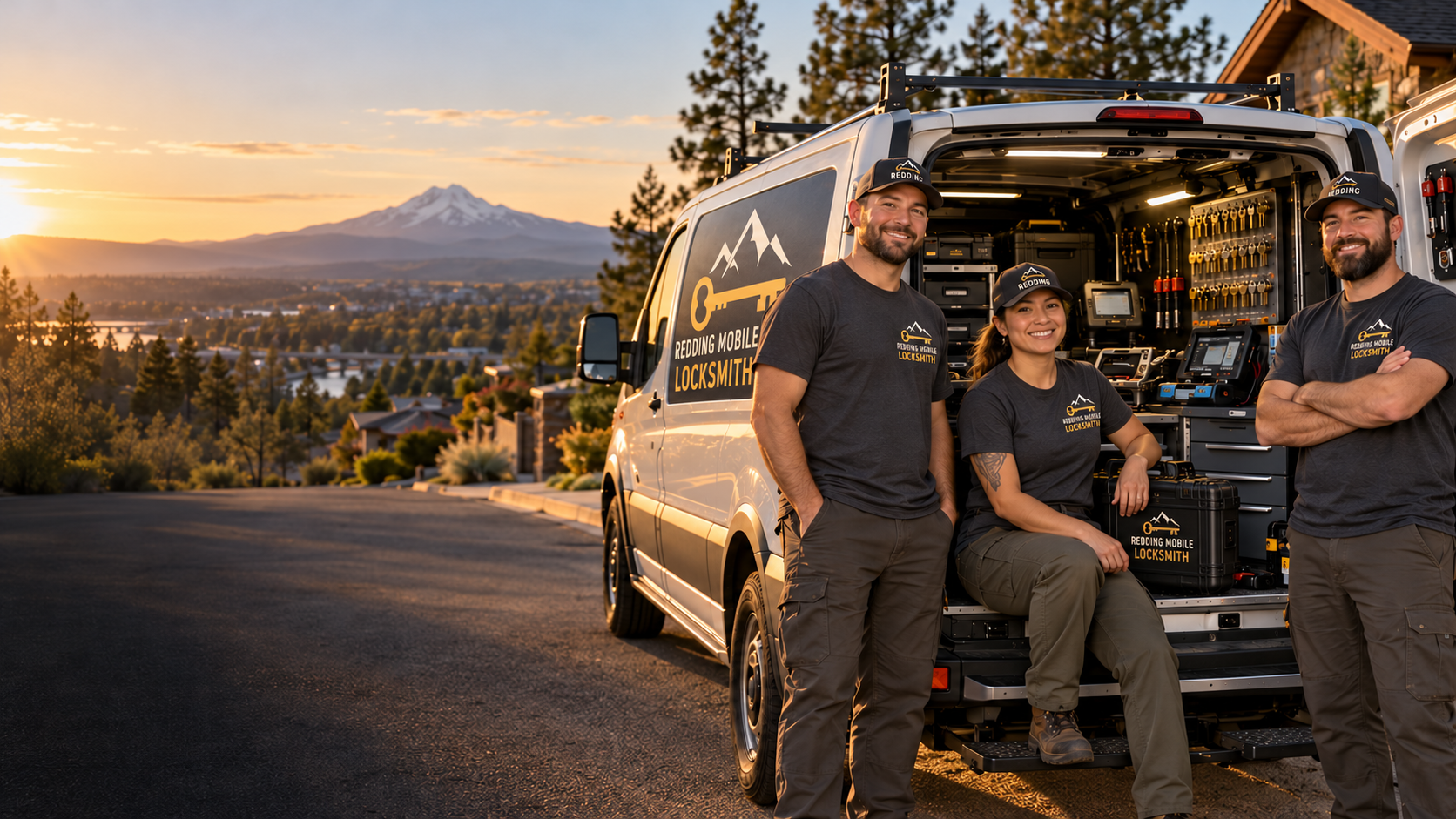
The most common pattern is keys left inside while the door was closed. Another is a fob that stopped answering the car, so the doors will not unlock from outside. A third is a key that is simply gone, dropped somewhere along a trail, a parking lot or a riverbank. Each one needs a slightly different kit, and our branded service van carries tools for all of them.
This page is the long version of what we say on the phone line once it opens, and in the meantime what we say through the request form. If you are standing next to a locked car right now, read the next section first. It will take you a minute and may save the crew a few questions.
Before you ask for help, check these things
Work through the obvious items slowly, because stress makes people skip them. Walk around the whole vehicle and try every door, including the rear doors and the tailgate or trunk. Cars do not always lock every door together, and a door that was missed is the simplest way back in. Check that a window is not left a little open, and look inside to see where the keys actually are.
Then look at the key itself. If you have a spare fob in your pocket or a second key at home, say so. A working fob that has a weak battery sometimes unlocks the car when held close to the door handle or against the start button area, depending on the design. Your owner manual will show the spot. If you can read the manual on your phone, do that before anything else.
Finally, settle your own position. Note where the car is parked, which way it faces, and whether it is in sun, shade, a lot or on a roadside. A locksmith team can only prepare properly if the place is described clearly, so a landmark you can name in general terms is worth more than a vague guess.
- Try every door and the rear hatch or trunk, not just the driver door.
- Look through the glass to see exactly where the key or fob is sitting.
- Check whether a spare key or second fob exists at home or with someone nearby.
- Read the owner manual for a fob battery position if the fob seems weak.
- Write down the make, model and approximate year before you make the request.
What to tell the dispatcher
A good request is short and specific. Tell us where the vehicle is, in plain words: the community, the kind of place, and anything that makes it hard to find. Then tell us the make, model and approximate year, because the lock design and the key system differ by vehicle and the crew packs accordingly.
Say whether the keys are inside, lost or broken, and whether the engine is running. A running engine changes the safety picture, and a lost key changes the job from a lockout into a key replacement. Mention push button start if you have it, and say whether you own a second key. If the car is a work vehicle or belongs to an employer, say that as well, since someone else may need to approve the work. These details are not for show; they decide which equipment comes off the shelf in the van.
Tell us about people and animals in the vehicle, too. If a child or a pet is inside a locked car, call emergency services first, before you contact any locksmith. We can help after that, but nothing we do should come before the people trained for that emergency. You can send your details through the request form, and the phone line is coming soon.
Safety comes before the lock
There are three situations where the lock is the least important thing in the picture. The first is a child or a pet in the vehicle, especially in warm weather. Call emergency services first and follow their instructions. Do not wait for a locksmith, and do not assume a crew can arrive before dispatchers who deal with this every day.
The second is a roadside or a parking area with moving traffic. Move yourself and your passengers somewhere safe and keep your hazard lights in mind if the car is running. Do not stand between lanes or lean on the vehicle in traffic. A car is replaceable and a person is not.
The third is cold or heat exposure while you wait. A person standing at a mountain trailhead in winter, or in a sunny lot in summer, needs shelter and water before a door gets opened. Tell us if anyone waiting with the car is unwell or uncomfortable, and use your own judgment about calling emergency services. We do not give medical advice, and nothing here replaces it.
How a professional opens a locked vehicle
A trained locksmith does not force a door. Modern vehicles have tight weather seals, side airbags and wiring inside the door skin, so the goal is to open the car without bending the frame, scratching paint or touching anything electronic. The crew uses professional tools made for this work, together with training in how each vehicle family is built.
Different vehicles call for different approaches. Some lock designs allow access through the keyway itself with the right professional tooling, which keeps the exterior of the door untouched. Others are opened by creating a small, controlled gap in the door seal and working a purpose made tool through it to the interior handle or lock button. We are not going to describe the steps in more detail than that, and that is deliberate.
The result you should expect is simple: the door opens, nothing is scratched, bent or broken, and you are asked to check the door and the lock before the crew leaves. If anything looks different from how it was, say so on the spot. A careful team would rather hear it at the car than later.
Keys that complicate the job
Not every key is just metal. Many vehicles use a transponder key, which has a small chip in the head. The chip answers the car with a coded signal, and the engine will not start unless the code matches. Opening the door does not involve the chip, but if the key is lost, a replacement needs the chip programmed, which is a separate step covered under key programming.
A key fob adds buttons for locking, unlocking and sometimes remote start, and a smart key lets the car sense the key nearby so you can enter and start with a push button. A dead fob battery is a surprisingly common reason for a lockout. Our guides on car key types and smart keys and push button start explain the differences without jargon.
Some vehicles also have a keypad on the door, or a lock that rejects the usual access methods for good reason. If yours is one of those, tell us. It does not mean the job is impossible. It means the crew plans the approach in advance rather than finding out at the curb.
Heat, cold and trailheads
Where you are locked out matters as much as how. In the valley, summer parking lots turn a closed car into an oven, and a locked door in that heat is a reason to act sooner rather than later. If you feel unwell, step into shade or a building and call for help appropriate to how you feel.
In the mountain towns, the opposite problem shows up. Cold makes locks stiff and weather seals cling, and a frozen door can look locked when it is only stuck. Our guide on winter lockouts and frozen locks explains how to tell the two apart without harming anything.
Trailheads and lake access points create a third pattern: the key gets lost somewhere on a hike, a fishing trip or a boat ramp, and you return to a car you cannot open. Our guide to carrying keys while hiking, fishing and boating has practical habits for that. If the key is truly gone, the job becomes a replacement, not just a lockout.
When the problem is not really a lockout
Sometimes the door will not open for reasons that are not about a missing key. A car door lock actuator, the small motor that moves the lock, can fail and leave the lock in a state that fob signals cannot change. Our guide on car door lock actuator trouble shows what that looks like and what to tell us.
A key that turns but does nothing, a key that will not enter the lock, or a key that snapped partway can also feel like a lockout. They are lock and key problems, and the crew handles them differently from a straightforward entry. If your key broke in a door, see what to do and what to avoid.
If every key is lost, the situation is bigger than getting in. You need the car opened and a new key made and programmed. Our page on car key replacement covers that route, and the guide on what to gather when you lost every key lists what to have ready.
Habits that prevent the next lockout
Once you are back in the car, take two minutes to make the next lockout less likely. Decide on one place where your keys always go, ideally somewhere you touch every time, like a pocket or a lanyard. Habit beats memory, especially when your hands are full of bags or gear.
A spare key is the second layer. Keep it somewhere that is not on you and not inside the vehicle, with someone you trust or in a secure spot at home. Our guide on a spare key now versus later lays out why having one cut before you need it makes life simpler, and storing spare keys safely covers where it should live.
If your fob battery is old, replace it before it dies. Our fob battery basics page explains what the symptoms are. None of this requires a locksmith, though we are glad to help if you want a spare made or a worn key checked.
One more habit is worth building: before you shut a door, glance at the seat and the cup holder. Most lockouts happen in the half second between setting the keys down and closing the door. If you travel with gear, such as a fishing bag, a pack or a child seat, set the keys in a pocket first and load the gear second. It sounds small, and it removes the most common cause.
What the visit looks like, start to finish
When the crew reaches the vehicle, the first minutes are conversation, not tools. We confirm who you are, confirm the vehicle is yours or that you are allowed to open it, and look at the situation together. That is when we also check the doors you may have missed and ask once more about the key.
Next comes the entry itself, done with care and without hurry. The team protects the paint and trim around the door, works with professional tools, and keeps you informed about what is happening so nothing feels mysterious. When the door opens, we hand over what is yours and ask you to test the lock and the handles.
If a key needs to be cut or programmed, that happens at the van, where the equipment is. Then we test the new key in the door, the ignition or the push button start before we call the job finished. You should leave with a car that opens, starts and locks the way it should.
Where the crew goes
Our service van and uniformed team cover 17 communities across Shasta and Siskiyou counties. In the south that includes Redding, Anderson, Shasta Lake and Cottonwood, and the lake and foothill communities around them. Farther north the coverage follows the mountain corridors, from Mount Shasta and Dunsmuir up toward Yreka and Fort Jones.
If you want to see what a lockout looks like in your own community, start with the page for Redding, or the local page on car lockout in Redding. Nearby, we also serve Anderson and Shasta Lake, and the full list lives on our areas page.
If your situation involves a house door rather than a car, the sister service is house lockout. For a broader view of everything we do, see automotive locksmith or the 24 hour emergency locksmith page, or send a request through the contact page.
Common questions
Will opening my car damage the door or paint?
A trained crew uses professional tools designed to work around weather seals, glass and paint without marking them. The aim is a door that opens and looks exactly as it did before. Before the crew leaves, you are asked to check the door, the lock and the interior handle so any concern is raised while we are still beside the car.
What if a child or pet is locked inside?
Call emergency services first. Do not wait for a locksmith, and follow what the dispatcher tells you. Once the situation is handled by the people trained for it, we are glad to help with the lock afterward. Nothing about a locked door should come ahead of someone who may be in danger.
Can you help if my keys are lost and not just inside?
Yes. A lost key turns the job from a lockout into entry plus a replacement. The crew opens the vehicle, then cuts and programs a new key if the vehicle uses a chip. Tell us up front that the key is gone, so the right equipment is packed and the visit goes smoothly.
Do you need proof the car is mine?
Expect to be asked. A responsible locksmith confirms that the person asking has a right to open the vehicle, usually by checking registration or identification that matches. This protects owners and keeps the work honest. If you cannot show anything on the spot, explain the situation and we will talk through what is possible.
What details should I put in the request?
Give the community and a plain description of where the car is, the make, model and approximate year, whether the key is inside, lost or broken, and whether anyone is waiting with the vehicle. If you have push button start or a second key, mention that. The more precise you are, the better the crew can prepare.
Is there a phone number I can call?
The phone line is coming soon and is not published yet. For now, the request form on the contact page is the way to reach the team. Include your location, your vehicle details and what happened, and keep your phone with you so the team can follow up on your request.