
Home / Field notes / Getting your locks and keys ready for a hurried evacuation
Field notes: evacuation
Getting Your Locks and Keys Ready Before an Evacuation Order
When an order to leave arrives, nobody wants to hunt for a key. A little planning on a calm day puts the right keys in one place and keeps your locks from becoming a second problem.
Why this belongs on a calm day
In the North State most of us have lived through a smoky season, an alert on a phone, or a neighbor loading a trailer. In those moments the priority is people, pets and getting out safely. Locks are not part of that priority, and nothing in this note is a reason to delay leaving. The point is the opposite: to make sure that on the day you have to go, keys do not slow you down.
Think about what actually goes wrong when a household leaves in a hurry. The car keys are in a coat that is in the other room. The spare for the truck is on a hook in the shop. The gate key is in a drawer nobody remembers. The one person who knows which key opens the cabin is not home. Each of these is a small problem on an ordinary day. Under pressure, each one costs attention you would rather spend somewhere else.
Preparation is the answer, and it is mostly organizing, not buying. You decide where keys live, who knows, and what you take. You check a few pieces of hardware. You write a short list. Then you put the plan where the whole household can see it, and you leave it alone until you need it.
Households that live with other adults, teenagers or older relatives have an extra job. Everyone needs the same picture. A plan that only one person understands is a plan that fails when that person is not home. Walk through it together once, say out loud where the keys are, and let a teenager hold the set so they know what it feels like.
One place for the keys that matter
Choose a single, obvious home for the keys you would take if you had to leave. A hook by the main door, a small tray, or a hard shelf near where you park works well. It should be a spot that every adult and older child in the home can find in the dark, and it should be somewhere that does not change from week to week.
Then decide which keys belong there. Vehicle keys come first, including the keys to any truck, trailer or second vehicle you would also move. Add house keys, the key to any safe or lockbox you would take, and any gate or outbuilding key that you would want with you. Keep the set short. A ring of thirty keys is a ring nobody will grab in a hurry.
Label spare keys so a stranger or a stressed family member knows what they open. A small tag with a short code, not an address, is enough. If your keys include a smart key or fob, keep it where you also keep a physical backup key blade, because a dead fob battery is not something you want to learn about on the day of an order.
- Pick one fixed spot near the main exit for the evacuation key set.
- Put vehicle keys, house keys and any safe or lockbox key in that spot.
- Add trailer, truck and second vehicle keys if you would take them too.
- Label spares with a short code, never a street address.
- Keep a physical backup key for every smart key or fob.
Spare keys that are somewhere else
A single copy of anything is a risk, and that goes double for keys you might not be able to reach. A spare car key and a spare house key stored with a trusted person outside your immediate area gives you a way back in if the originals are lost or left behind. Choose someone you trust, and tell them exactly what the keys are for.
Resist the urge to hide spares at the property. A key under a rock or in a planter is the first place anyone looks, and in an emergency you may not be able to get to your own property at all. Our note on storing spare keys safely and the companion piece on hiding a key outside and better options go through the safer choices.
If you are down to one key for a vehicle, consider having a spare made before the season gets busy. A cut key is simple, and a transponder key needs to be programmed to the car, which is work we do with our key programming service and with car key replacement. Having a second key on hand is peace of mind for any kind of emergency.
Fuel, fobs and the car you may need to leave in
Keys are only half of vehicle readiness. A fob with a weak battery can leave you standing at a car that will not unlock, or one that unlocks and then will not start. Replace the battery in each fob once a year, on a date you will remember, such as the first day of fire season. Our piece on key fob battery basics shows how to open a fob and what to buy.
Know your car's backup method too. Many push button start cars will start if you hold the fob against a certain spot on the steering column or console when the battery is dead. Many have a hidden key blade for the door. Learn where those are while you are calm. A practice run in the driveway is better than discovering the secret slot in smoky air.
Check that the glove box, the ignition and the door locks all work without sticking. A car that starts but whose doors need coaxing is a car that will hold up a family. If a lock is stiff or a key is worn, it is better to repair it now. Our automotive locksmith page lists what we handle.
Think about who else might need to drive. If one person usually handles the truck and another handles the car, make sure each of them can start both. A key that only works in the hands of the person who is not present is no help. If a vehicle has a security feature, such as a coded key, practice with the spare and not only with the original.
The house itself when you leave
When you leave in a hurry, your instinct will be to lock up. In many situations that is sensible. In others, local officials give specific direction about what to do with doors, gates and utilities. Follow what emergency officials tell you, and do not spend precious time on a lock if you have been told to go. Rules and practices vary, so we leave the specifics to the people who issue the orders.
What you can do ahead of time is make the locking itself simple. A deadbolt that needs a key from the inside is a hazard when you have to leave in a hurry. Many households use a thumb turn on the inside of exterior doors so that anyone can lock or unlock without hunting for a key. Check which of your doors need a key from inside, and consider whether that is wise for your home.
Make sure each door actually closes and latches. A door that has to be pulled and lifted to engage is a door that may stay unlatched. If you have a door that does not latch properly, our note on doors that do not latch, alignment basics explains the likely cause and the fix.
Gates, padlocks and rural property
Many North State properties sit behind a gate. A locked gate can be a problem during an emergency, both for you leaving and for anyone who may need to come in. If you have a gate with a padlock, think about who may need access, and ask your local fire agency or road association what they prefer. There is no single rule, and practices differ from place to place.
Keep a spare key to the gate with the evacuation set, or consider a lock type that is easy to open in poor visibility, such as a larger shackle and a big, obvious keyhole. Check that the padlock opens without a fight, since gates and padlocks that have sat unused for months are the ones most likely to stick. Our guide to gates and padlocks on rural property has more on the options.
Outbuildings and barns matter too. If you keep tools, fuel or livestock supplies inside, keep the key for those doors on the same ring or in the same place as your evacuation set, or at least write down where it is. See also barn, shop and outbuilding locks for the hardware side.
Do not forget the less obvious doors. A shed with a hay supply, a shop with a welding setup, or a barn full of equipment may hold things that matter to you, and the key for each is easy to forget in a hurry. Make a habit of knowing which of these buildings will need to be secured, and which can simply be left as they are.
Papers, safes and what to take
A small fire resistant box with a key or a combination can hold documents and spare keys, but it only helps if you can carry it. If you own a lockbox or a small safe you plan to take, keep it where you can grab it. If you have a larger safe that stays put, make sure someone else knows how it opens in case you cannot get back.
Photograph the front and back of your important keys and write the code stamped on them in a safe place. A locksmith can often cut a replacement from a code and proof that you own the property or vehicle, which can save you a lot of trouble if the originals are lost. Keep that note away from the keys themselves.
Make a short, plain list that anyone in the home could follow. It should say where the evacuation key set lives, which vehicle goes first, who has spares, and who to contact for access. Keep the list somewhere other than your phone, since phones lose power, and tape a copy inside a kitchen cabinet.
If you rent your home, the arrangement may be different. Some landlords keep a copy of every key, some do not, and the rules vary from place to place. Ask your landlord or property manager what you should do with keys in an emergency, and write down their answer so that you do not have to remember it later.
Coming back home: checking the locks
When you are allowed back, take a calm, careful look at your locks before you settle in. Smoke, ash and soot are fine particles that can enter a keyway and gum up the pins. A lock that worked on the way out may feel stiff or gritty on the way in. Do not force it. Brush the keyway clean, use a small amount of dry lubricant, and work the key gently.
If the house has been exposed to heat, check plastic and rubber parts around the hardware. Weatherstripping, keypad housings and door seals can warp. Electronic locks and keypads need a close look at the battery compartment and the buttons. If anything looks melted, discolored or loose, have it inspected before you rely on it.
Also consider who had access while you were away. If emergency crews, neighbors or contractors used your keys or entered the home, you may want to know where every key is. Rekeying the locks puts you back in control of who can open the doors, which is why we offer rekeying. Our lock repair page covers damaged or sticking hardware.
Take a few minutes to walk around the outside too. Look at the strike plates, the door frames and the area around the locks for anything that looks scorched or warped. A frame that has shifted by even a small amount can stop a bolt from sliding home. If the door has stopped closing properly, it is a repair job, not something to put up with.
If you are locked out or a lock is damaged afterward
Return from an evacuation is tiring, and a lockout on top of it feels worse than it is. Take a breath before you try anything drastic. A key that does not work after an emergency is often a dirty cylinder or a fob with a drained battery, not a permanent failure. If you need help, send us a request and tell us what happened.
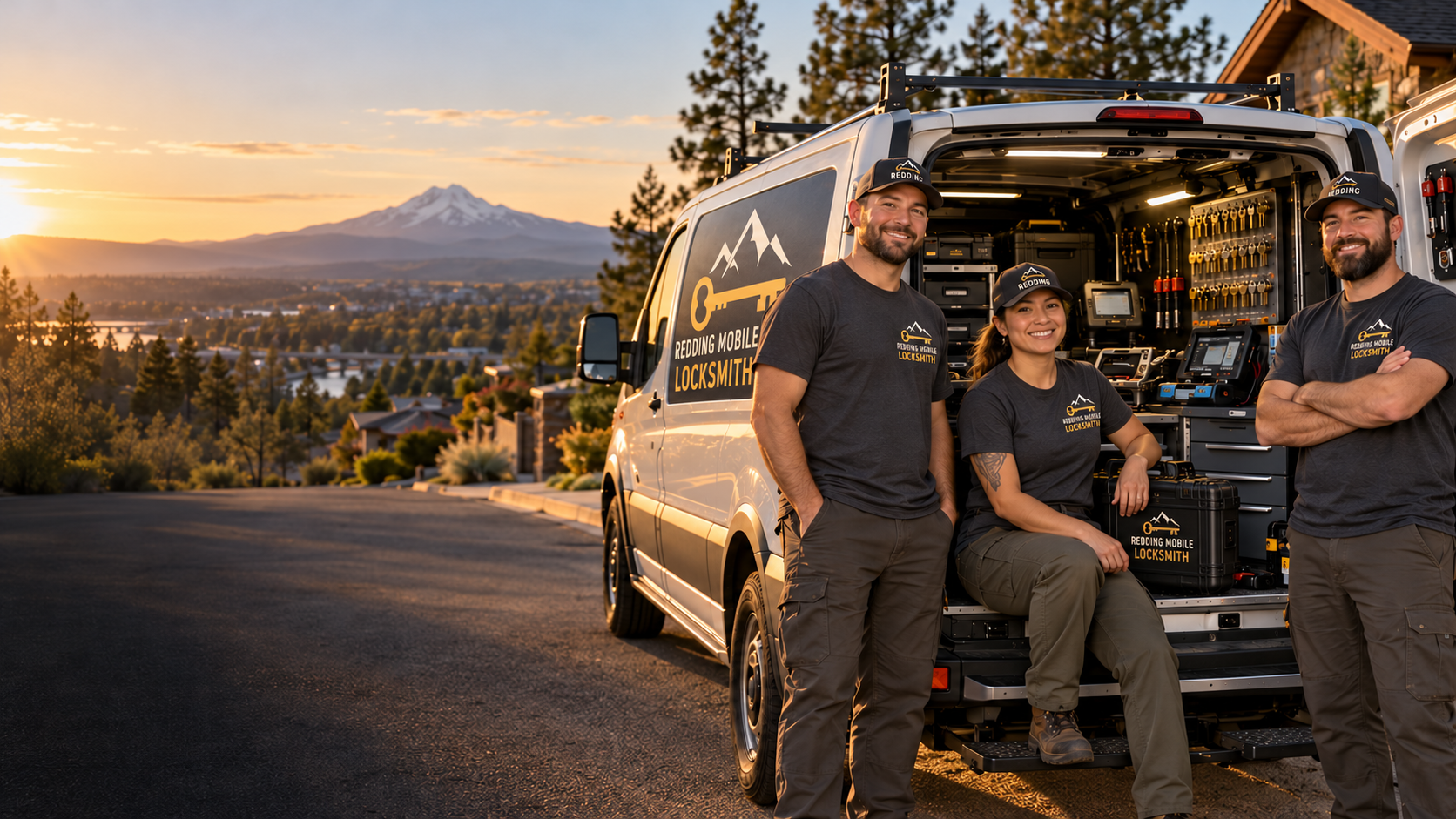
Our team works from a branded service van that carries professional tools, key cutting and programming equipment, and common hardware, so that a lockout, a broken lock or a lost key can usually be sorted out at your door. The house lockout page and our 24 hour emergency locksmith page explain the service.
Use the request form to reach us. The phone line is coming soon. If anyone is in danger, call emergency services first. A locksmith is for doors, locks and keys, and emergency crews are for people.
A simple checklist to keep on the fridge
Plans work when they are short. Write the following on one page and tape it where everybody sees it. Look it over twice a year, when you change clocks or when the first smoke of the season shows up on the horizon. If anything in the household changes, such as a new vehicle, a new gate lock or a new teenage driver, update the list that very day.
The goal is not to build a perfect system. It is to take a few small, sensible steps so that on a bad day your keys are the least of your worries. Across the North State, from the valley around Redding to the mountain towns of Siskiyou County, households that do this feel the difference right away, and they spend their energy on what matters most.
- Keep the evacuation key set in one fixed spot, and tell everyone where it is.
- Replace the fob batteries once a year and keep a physical backup key.
- Store a spare vehicle key and a spare house key with someone you trust.
- Check gates and padlocks for smooth operation and ask local officials about access.
- After you return, clean the keyways, test every lock and consider rekeying.
Common questions
Should I lock my house when I evacuate?
Follow the directions of emergency officials, who may give specific guidance for your area. If you have been told to leave immediately, do not spend time on locks. If you have time and no instruction to the contrary, locking the door is a reasonable habit, but safety always comes before property.
Where should I keep spare keys for an evacuation?
Keep one small set where you can grab it at the main exit, and keep spares with a trusted person away from your home. Avoid hiding keys outside, since anyone can find them. Label spares with a short code instead of your address, and tell the holder what each key opens.
What if my car key fob battery dies at the wrong time?
Most smart keys have a physical key blade hidden inside, and many cars can be started by holding the fob against a marked spot. Learn your car's method before you need it. Replacing the battery once a year, on a date you pick, prevents most problems.
Should I leave a gate unlocked during a fire season?
It depends on your situation, and practices vary. Ask your local fire agency or road association what they prefer, and follow any instructions you are given. In any case, make sure the gate lock opens easily, and keep the key in your evacuation set.
Do locks need attention after smoke or ash?
Yes. Ash and soot can gum up a keyway and slow the pins. Brush the keyway clean, use a small amount of dry lubricant, and work the key gently. If a lock feels gritty or heat has warped nearby parts, have it inspected rather than forcing it.
Can a locksmith help after an evacuation?
Yes. We can open a stuck or locked door, repair damaged hardware, rekey locks if keys were shared, and cut or program replacement keys. Send a request through the contact page with the town and the problem. If someone is in danger, call emergency services first.