
Home / Field notes / Ranch hands and shared keys, a simple log
Ranch key control
Ranch hands and shared keys, a simple log
A working ranch runs on shared keys, and shared keys drift. This guide shows how a single sheet of paper, kept honestly, tells you who holds what and when a lock should change.
Why ranch keys drift out of sight
Walk the yard of almost any working ranch in the North State and you will find the same pile. A ring of gate keys on a nail in the barn, a spare truck key in a coffee can, a padlock key that somebody swears is in the shop. None of this is carelessness. Ranch life is busy, hands change with the season, and a key is the last thing anyone writes down.
The trouble shows up later. A seasonal hand finishes in the fall and drives off with a ring still in a jacket pocket. A relative borrows the feed room key for a weekend and has a copy cut at a hardware counter without telling anyone. Within a couple of seasons nobody can say how many working keys exist for the main gate, and that uncertainty is the real weakness, not any single lock.
A written log does not make a lock stronger. What it does is turn a fuzzy feeling into a count. When you know exactly how many keys exist and who holds each one, every other decision about locks becomes easier to make and less costly to carry out, because you are working from facts rather than hunches.
The one page log, laid out
Use a single sheet, kept in the same place every time, such as a clipboard inside the tack room door or a folder in the house. Make a table with five columns. The first names the lock or the door, the second names the key, the third names the person holding it, the fourth records the date it went out, and the fifth records the date it came back.
Give every lock a plain name that anyone on the place would recognise, like Lower Gate, Hay Barn, Shop Side Door, Diesel Tank, Quad Shed. Then give each key a short tag name that matches. If two keys open the same lock, write both lines. If one key opens three locks because the padlocks were bought as a matched set, say so on the sheet.
A paper log wins over a phone app on most ranches for a simple reason. The sheet lives where the keys live, it works without a signal, and anyone can read it without a password. If you also want a copy in the house, photograph the page now and then and keep the picture.
- Name each lock in words everyone on the place already uses.
- Write one line per key, not one line per ring.
- Record the date a key goes out and the date it comes back.
- Note the holder by first name and role, such as Sam, irrigation.
- Keep the sheet in one fixed spot and put it back every time.
Sorting keys into tiers
Not every key deserves the same care. Sort what you have into three tiers. Tier one is the keys that protect the most value or the most risk: fuel tanks, the main house, the safe or gun cabinet room, vehicles, and any building that holds chemicals or tools that are expensive to replace. Tier two covers working access, such as the barn, the main gates and the shop. Tier three is low consequence, like a hay shed that holds nothing a thief would want.
Write the tier next to each lock on the log. Tier one keys should have the fewest copies and the shortest list of holders, often only the owner and one trusted person. Tier two can go to regular hands for the length of their work. Tier three can live on a shared board where anyone on the crew can borrow it.
This sorting also tells you where to spend money. If your hay shed and your fuel tank share the same light duty padlock and the same ring, you already know which one to upgrade first. Our guide on choosing padlocks for outdoor weather helps with that choice.
Handing a key to a new hand
When someone new starts, treat the key handover as part of the job, not an afterthought. Walk them to each lock they will need, let them try the key in front of you, and write the line on the log while they watch. This takes a few minutes and settles a lot of later arguments, because the hand has seen the key counted and has agreed to what it opens.
Say out loud that copies are not allowed. Many people honestly do not think of copying a key as a problem, especially when a hardware counter will do it without asking. A short sentence such as, if you lose it, tell me and we will sort it, matters more than any warning. People hide a lost key when they fear blame, and a hidden lost key is the dangerous kind.
Match the key to the work. A hand who feeds in the mornings needs the feed room and the lower gate, not the shop and not the fuel. If a job does need wider access, write down why. The point is that every key out there has a reason attached to it.
Taking keys back and the season change
Hand back is where most logs fail. People write the date a key goes out and never fill in the return. Make the return a fixed moment: last day of the job, end of the season, end of a short loan. Walk the person back along the same path and take the keys in your hand, then write the date.
Ranch work in Shasta and Siskiyou counties moves with the calendar. Spring brings branding and irrigation, summer brings haying, fall brings gathering and hunting season visitors, and winter is quiet. At each change, sit with the log for ten minutes and ask whether every name on it still belongs there.
When a key does not come back, do not guess. Write what you know on the sheet, such as, last seen in Dan's truck, and decide whether the lock it opens is tier one, two or three. For a tier three lock you may simply note it. For tier one, you act on it, which is covered a little further down.
Gate keys and shared access on rural land
Gates are where shared keys cause the most confusion. On many places a single chain and padlock hold a gate that neighbours, a water district crew, a propane driver and a hay buyer all need to pass through. If everyone has a different key for a different lock, the gate ends up with a chain of locks hooked together, which is heavy and awkward and still not secure.
One neat answer is a keyed alike set, where several padlocks open with the same key, so a visitor needs only one. Another is a single padlock with a controlled number of keys and a clear log of the holders. For more on who should hold the gate key, read farm gate keys and who should hold them and gated driveways, chains and the gate lock choices.
Whatever you pick, put the gate on the log as its own line with its own tier. A gate is often the only thing between the road and the whole property, so it deserves the same honesty as a house door.
Vehicles, equipment and the keys that follow them
Tractors, side by sides, quads, trucks and trailers bring their own key habits. Many old tractors start on a key that is the same as the neighbour's, and many ranch trucks have a spare key under a seat or on a magnet in the wheel well. Those spares are on no log and everyone knows it.
Add vehicles and equipment to the sheet. For anything with a transponder or a push button system, record how many working fobs or chips exist, because a modern key is expensive to replace and impossible to guess. Our pages on transponder keys and key programming explain what is inside a modern vehicle key and why a spare matters before the last one goes missing.
For shared work trucks, think about a lockbox or a keyed hook in the shop rather than leaving keys in the cab. It is a small habit that keeps the tier one vehicles out of the cab pocket game. If a truck is also a fleet style tool, key control for fleet vehicles goes further.
When a key goes missing: rekey, replace or accept
Three choices exist when a key disappears. You can accept the risk, you can rekey the lock, or you can replace the lock entirely. Rekeying changes the pins inside the cylinder so that the old key no longer works while the lock hardware stays in place, and the new keys are cut to match. It is often the sensible middle step for a barn or house door. You can read how it works at rekeying and the decision walk through.
Replacing makes sense when the lock is worn out, when the padlock shackle is weak, or when the gate lock has been fixed with a repair too many times. Accepting the risk is fine for tier three. It is not fine for fuel, vehicles, chemicals or the main house.
A good rule is to let the tier decide. Tier one means act the same week you notice. Tier two means act at the next natural pause. Tier three means note it and move on. Writing the decision beside the entry on the log saves you from having the same argument again next fall.
Visitors, contractors and one time access
Not everyone who needs to get onto a ranch is a hand. A well driller, a fencing crew, a vet, a hay buyer, a propane driver, a friend feeding the horses while you are away. Each of them is a short loan of access, and short loans are the ones most likely to be forgotten because they never feel like a real handover.
Treat a visitor loan the same way you treat a hand, only smaller. Put a line on the log, name the person and the job, and write the date it should come back. If the visit is for a single day, consider whether you can simply meet them at the gate and unlock it yourself, which removes the key from the picture altogether.
For repeat visitors such as a feed driver, a padlock on a dedicated gate with its own key, tagged for that one purpose, keeps the rest of the property out of reach. Picture a delivery driver who needs to reach the hay barn only. If the barn lock is on its own key, a lost key opens a barn of hay and nothing else, and the loss is small and easy to deal with.
Remember also the keys you do not think of as keys: combination padlocks and keypad gate codes. A code shared with five people over three seasons is just a key with no tag. Change codes on the same rhythm you check keys, and write the date you changed them on the sheet, without writing the code itself on a page that anyone could read.
Handing the log to the next generation
Many ranches in the region pass between family members, and the log is a gift to whoever inherits the work. A person who takes over a place and finds a clean sheet, a labelled set of keys and a note about which locks have been rekeyed has an enormous head start compared with someone who finds a nail full of tags and a shrug.
Keep old versions. When you start a new sheet, staple the old one behind it. A clipped stack of dated pages tells a story: which hands came and went, which locks were changed, which keys went missing and what was done about it. That history will help if a question ever comes up about who had access on a certain date.
If the place has several buildings, a one key plan simplifies life, and properties with several buildings and one key plan shows how to think it through. When a rekey or a set of new locks is needed and you want a team to come to the property, use the request form and describe the locks you have.
A short routine you can keep
The right system is the one that survives a busy week. Choose a routine small enough to do. Once a season, sit with the log and the key board and count. Whenever someone starts or leaves, add or close their lines. Whenever a lock is changed, write the date and the number of keys cut.
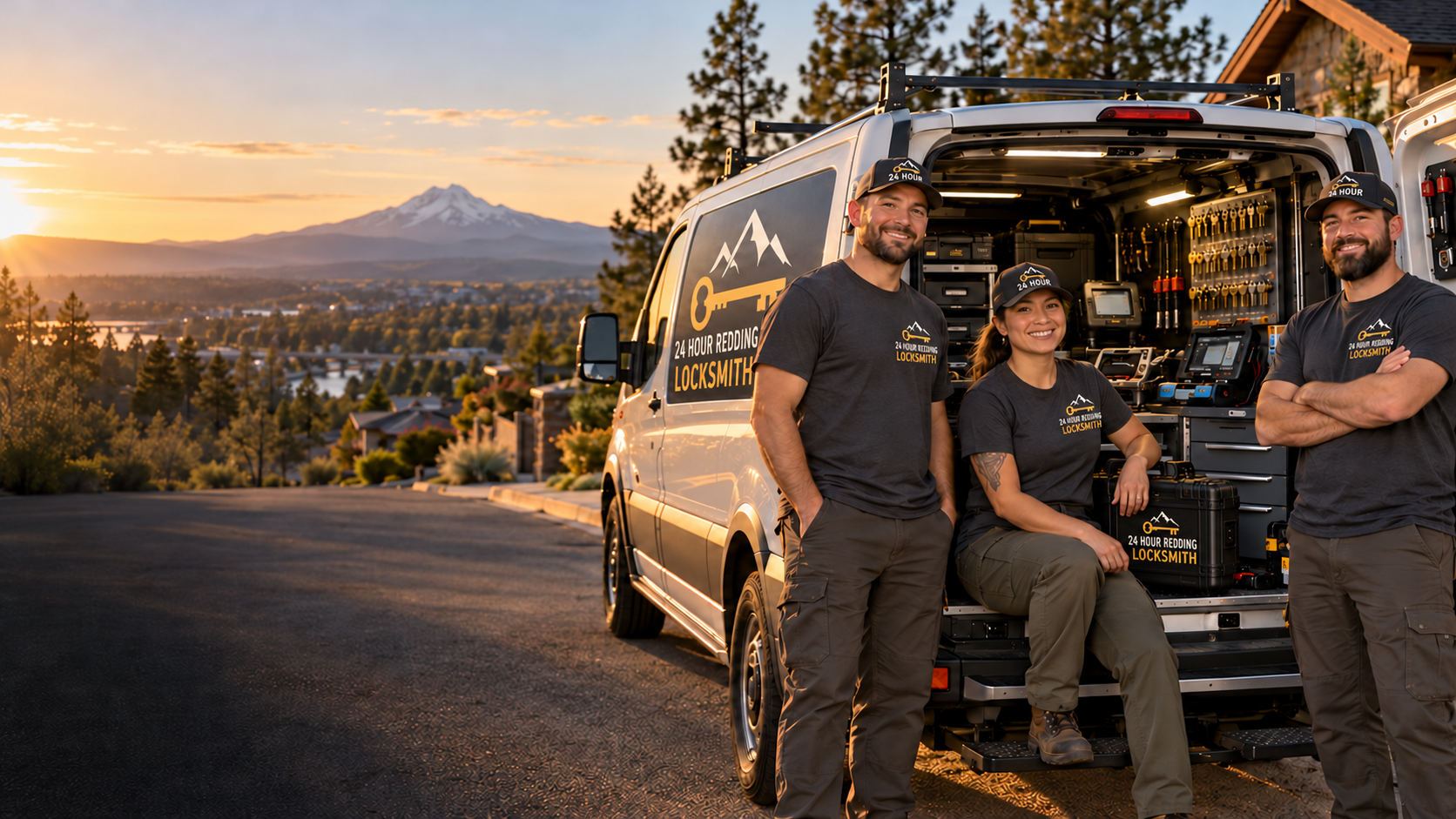
On the ranch, as anywhere, locksmith work should be rare and planned, not a midnight emergency. Our team at 24 Hour Redding Locksmith works with residential and commercial clients across the valley and the mountain towns, and a tidy log makes any visit shorter because we can see what you have and what you need.
If you do nothing else this month, make the sheet, count the keys on the nail, and write one name beside each. Everything else in this guide is built on that single, ordinary habit.
Common questions
How many copies of a ranch key is too many?
There is no magic number. A better test is whether you can name every holder from your log. If you cannot, there are too many. Keep tier one keys to the owner and one trusted person, and give working keys to others only for the duration of their job.
Should hired hands ever be allowed to copy a key?
As a rule, no, and the rule should be said out loud on the first day. A hardware counter will cut most common keys without asking. If a hand needs a second key for the job, you arrange it, write it on the log, and keep the count correct.
Does a paper log really beat a phone app?
For most ranches it does. The sheet stays where the keys stay, works without a signal, and needs no password. If you like an app, treat it as a copy of the sheet, not the main record, and photograph the page now and then.
What should I do when a seasonal hand leaves with a key?
Check the tier of the lock first. For a low consequence shed, note it on the log. For a fuel tank, a vehicle or the house, rekey or replace the lock. Ask the person to return the key politely, and do not rely on that alone.
Can one key open all my padlocks?
Yes, padlocks can be bought or rekeyed so that a set shares one key. That reduces the ring on your belt. The tradeoff is that losing that one key affects every lock in the set, so keep it for tier two and three, and use separate keys for tier one.
When should I call a locksmith about shared keys?
Call when a key tied to something valuable is missing, when a lock is worn, when you want matching keys across several buildings, or when you want to set up a tidy key plan. Use the request form on the contact page and describe each lock you have.