
Home / Field notes / Locking up before holiday travel
Field notes: travel
Locking up before holiday travel, door by door
Most homes are left with the front door locked and a few other doors forgotten. This guide walks the whole house in a sensible order so you can leave town knowing the locks are doing their job.
Start with the doors people actually use
Before you pack the car, stand at the front door and look at it the way a stranger would. Is the deadbolt thrown every time you leave, or only when you remember? A latch bolt on its own is held in by a small spring and a beveled tip, and it is the deadbolt that gives the door real resistance. Turn the thumb turn or the key until the bolt is fully out, then push on the door to see that nothing moves.
Next, check the door you use more often than the front one. In many North State homes that is the kitchen door, the garage entry door or a back slider. These are the doors that get left on the latch because everyone is carrying groceries or kids or firewood. If a door has no deadbolt at all, a holiday trip is a good moment to write down that you want one added.
Finally, spend a minute with the keys you carry. A key that sticks in the cylinder or needs a jiggle to turn is a key that is wearing down, and that is exactly the key you do not want to discover is failing at the end of a long drive home. Wear is easier to fix before the trip than after it, and a locksmith can cut a fresh key from the original code or a good copy while you are still home to test it in every lock it is supposed to open.
The walk around before you leave
A good habit is to do one slow lap of the house, ideally in daylight, and touch every door and window latch. Touching matters because eyes slide past things. You will find the bedroom window that never closed all the way, the sliding door whose lock tongue barely catches the frame, and the basement door that has not been opened since spring.
Start inside and work out. Check each exterior door for a thrown deadbolt, then check that the strike plate, the metal plate in the frame where the bolt enters, is firmly screwed in and not cracked. Move to the windows and look for latches that are fully rotated. Then step outside and walk the perimeter the same way, pulling gently on each gate and shed door.
Do the lap in the same order each trip. Pilots and nurses use checklists because memory is poor at routine tasks, and a house is no different. If you want help thinking through what your doors need, the home security walkthrough goes through a full house in the same spirit.
Keys: who has them while you are gone
Holiday travel often means someone else holds a key. A neighbor collects the mail, a relative waters the plants, a house sitter feeds the dog. Each of those arrangements puts a working key outside your control for a week or two, and it is worth making a short list of exactly who holds one.
The cleanest approach is to give a key only to the person who needs it and to take it back when you return. If you keep a spare under a mat or in a planter, a trip is the moment to retire that habit, because a hidden key is only hidden from people who have never looked in the obvious places. The guide on hiding a key outside and better options covers what works instead.
If you are not sure how many copies of a key are out in the world, that is a sign the lock deserves attention. A locksmith can rekey the cylinders so old copies no longer work and hand you a fresh set. It is a small job and it settles the question, which is useful when guests, former roommates and past contractors have all had a key at some point.
- Write down who holds a key before you leave.
- Ask the key holder to lock up behind them every visit.
- Never leave a key in a mailbox or on a ledge.
- Collect borrowed keys on the day you return.
- Consider rekeying if you cannot account for every copy.
Garage, side gates and the forgotten entrances
The garage is a door that is easy to ignore because it feels like it belongs to the car. Yet the door between the garage and the house is often the weakest entrance in the building, with a thin latch and no deadbolt. Before you leave, close the overhead door fully, confirm it is down, and lock the entry door behind it with a deadbolt if you have one.
Side gates and yard doors matter more in a rural setting. Properties around Palo Cedro, Cottonwood and Lakehead often have long driveways, outbuildings and gates that never see a neighbor's eye. A padlock that is hanging open on a hasp is an invitation, so lock it closed rather than leaving it parked on the hasp.
Outbuildings deserve the same walk. A shop with tools, a barn with equipment or a storage shed with a generator holds things that are expensive to replace. A guide to barn, shop and outbuilding locks explains what suits each kind of door, and the one on gate and fence latches covers the entry points a padlock alone cannot protect.
Electronic locks and batteries before a long trip
Keypad locks and smart locks run on batteries, and batteries do not tell you politely when they are about to quit. Most electronic locks give a warning, a beep or a blinking light, but if you have not been paying attention you may not have noticed it. Before leaving for a week or more, replace the batteries or at least test them, and make sure you know how to get in using the backup key or the emergency power terminals if there are any.
Take a moment to look over the access codes too. If you gave a code to a contractor or a visitor months ago, it may still work. Remove old codes, set one for the house sitter if you need to, and plan to delete it when the trip ends. Some locks keep a log of entries, which can be a useful record of who came and went.
If the lock connects to an app or a home network, think about what happens if the internet goes down while you are away. Does the lock still operate on its own? Does it lose its schedule? Our notes on battery failure in electronic locks and smart locks and their practical limits explain the quirks to watch for.
Cold weather and winter travel
Many holiday trips happen in the cold season, and that changes how locks behave. In the mountain towns such as Mount Shasta, Dunsmuir and McCloud, moisture can freeze inside a cylinder or around a latch overnight. If your lock turns stiffly in the morning frost, it is better to deal with that before you leave rather than after a week of snow has packed around the door.
A light dose of the right lubricant and a check of the weather stripping can help a lot. Keep in mind that the wrong product can attract dirt and gum up the pins in cold air, so read what helps and what hurts first. If a deadbolt only sticks when the temperature drops, the cold weather sticking guide will help you find out why.
Think too about how you will get back in. After a long drive in the dark, with snow on the porch and cold hands, a lock that was marginal in the warm afternoon becomes a real problem. A simple fix now saves a cold call later, and it also means you are not standing on the porch fumbling with a stiff cylinder while the car is still running, and our guide to preventing snow day lockouts lists a few more habits worth building.
Leaving a house for a rental or a house sitter
If a guest or a sitter will live in the house while you travel, treat it like a small handover. Walk them through every lock they will use, including the one that sticks a little and the one that needs the door pulled toward you before the key turns. Show them which keys go with which doors so they do not force the wrong one.
Rental stays are different again. Keypad locks are popular because you can change the code between guests and never worry about a lost key. If you are renting out your home over the holidays, take a look at securing a vacation rental with keys and keypads and keypad locks for rental turnover before the first guest arrives.
Agreements about locks vary. If you rent your home, or you are staying in someone else's, rules about changing or adding locks differ by lease and by property, so ask the owner or the property manager what is allowed before you change anything. A locksmith can often suggest solutions that fit within whatever limits apply.
What to leave out of sight and what to leave alone
A house that looks occupied is harder to bother. That is a matter of what people can see from the street, and it overlaps with locks more than you might think. Spare keys on a hook near a window, a garage remote on the dash of a car parked outside, and a wallet key ring left on a table in plain view are all things that make an easy opportunity for a passerby.
Move spare keys and remotes inside a closet or a drawer, not near a door or window. Take your own garage remote out of the car if it will sit in the driveway. If you leave a vehicle at home, lock it and keep the key inside, away from the entry door. A key in a bowl by the front door is easy to reach for a person who has found a way to lift the sash.
Packages and mail can also announce an empty house. Ask someone you trust to bring in deliveries, or hold them until you return. This is not really a locksmith topic, but it works hand in hand with locks, because a locked door is most effective when there is no sign that nobody is behind it.
- Store spare keys and remotes out of sight inside.
- Take garage remotes out of parked cars.
- Lock every vehicle and keep keys away from windows.
- Ask a neighbor to bring in packages.
- Leave a few lights on a timer inside.
Returning home: checking before you step in
Coming back is part of the plan. When you pull into the driveway, take a moment to look at the doors before you unload. Is anything open that was closed, or closed that was open? Is the lock cylinder scratched or the door frame split near the strike? Most trips end with nothing unusual, but the habit of looking costs nothing.
If something looks wrong, do not go inside alone. Stay outside or in your car and contact local emergency services. Your safety matters more than your belongings, and a professional can look over the damage afterward. We can come to the house and assess the doors and locks once it is safe, and the lock repair page describes what that visit typically covers.
If everything is fine, take a few minutes to reset the house. Replace the batteries you removed, return borrowed keys to their hooks, delete the sitter's code, and test each lock once with the door open so you know the bolt moves freely. A short checkup on the first day home means the locks are ready for the next trip.
If something goes wrong while you are away
Trips do not always go according to plan. You might lose your keys on the road, realize a door was left unlocked, or hear from a neighbor that something looks off. The first step is to stay calm and decide what is urgent. A lost key is a nuisance. A door that may have been forced is a safety matter that belongs with emergency services.
For a lost key, work out whether the key was labeled or kept with identifying details. If it was, the sensible choice is to rekey the locks it fits when you return, so the missing key no longer works. Our rekeying service is built for just that situation, and our 24 hour emergency locksmith team can help if you are locked out or need a door secured urgently.
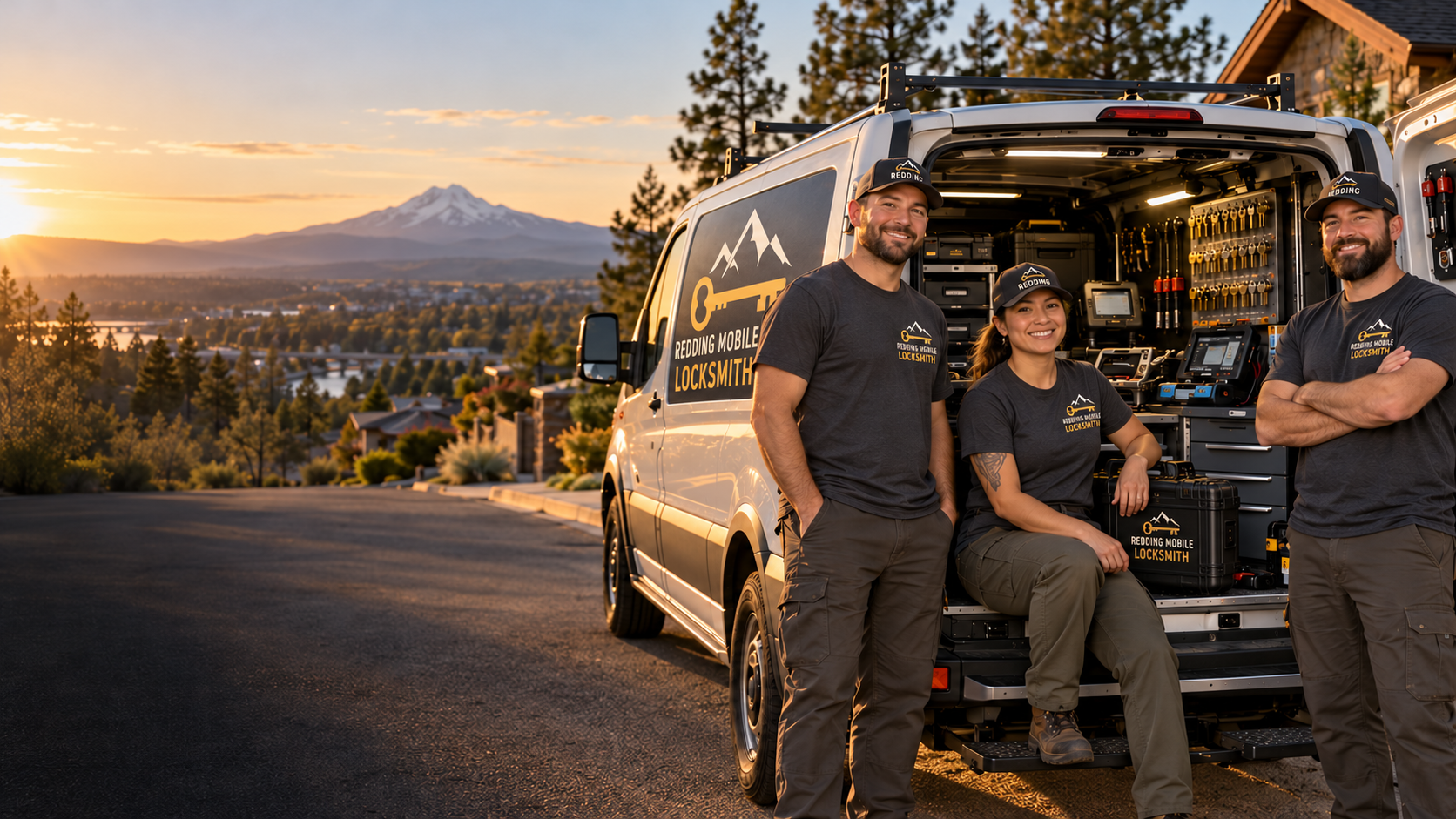
If you want to talk through a plan before the next holiday, you can send a message through the request form. The phone line is coming soon, so the form is how to reach us right now. Our team of uniformed locksmiths works from a branded van with the tools to cut keys, program fobs and fit common hardware at your door.
Common questions
What is the most common lock I should check before I leave?
Start with the deadbolt on the door you use every day, because many people only slide the latch. Make sure the bolt is fully thrown and the door does not push open. Then check the garage entry door, any slider and the back door, since those are often the ones that get left unlocked by habit.
Should I give a spare key to a neighbor?
It can work, as long as you trust the person and keep track of the key. Give it to one reliable person, ask for it back when you return, and avoid labeling it with your address. If you are unsure that every old copy is accounted for, rekeying the lock settles the question for good.
Do keypad locks need anything before a long trip?
Yes. Replace or test the batteries, delete old codes you no longer want active, and confirm that you know how to get in with the backup key or emergency power if the battery fails. If the lock relies on a home network, find out whether it still works on its own when the connection drops.
Is it worth adjusting locks if I will be gone for only a few days?
A short trip is still a good time to do one short lap of the house. You do not need new hardware for a weekend away, but you do want every door locked, every window latched and the garage fully closed. The longer you stay away, the more the small things matter, like batteries and spare key storage.
What should I do if I come home and a door looks forced?
Do not go inside. Stay in a safe place and contact local emergency services first. Once they say it is safe, a locksmith can examine the door, the frame and the lock, and tell you what is repairable and what should be replaced. Do not try to fix the lock before the scene is checked.
Can a locksmith come to my house to check everything before I leave?
Yes. We are a mobile service, so we come to you with our tools and common hardware. You can use the request form on the contact page to describe what you want checked, and we will plan the visit. It helps to list the doors you are unsure about and any keys that stick.