
Home / Field notes / Preventing snow day lockouts
Field Notes: Winter Lockouts
Preventing Snow Day Lockouts at Home and in the Car
Winter in the mountain towns of Siskiyou and eastern Shasta County turns a small slip into a long wait in the cold. A few habits and a little preparation keep you on the right side of the door.
Why snow days cause more lockouts
On a snow day, everything about getting in and out of a car or house changes. You wear gloves that hide small objects, you carry extra bags and scrapers, and you hurry to get warm. Doors freeze, locks stiffen and keys slip from numb fingers into snowbanks.
Each of those changes adds a small chance of a mistake. Together they raise the odds of the classic winter story: the keys sit in the ignition or on the kitchen counter, the door clicks shut, and you stand outside as the temperature drops.
The goal of this note is not to scare anyone. It is to show how a few steady habits take most of that risk away, so a snowy morning stays routine.
Daylight is short in winter, and that adds pressure. A lockout at four in the afternoon in January means waiting as the light fades and the temperature falls. Planning for the worst day is more sensible than hoping for a gentle one.
Mountain towns feel this most. Weather can change in a single afternoon, and a road that was clear in the morning may be packed with snow by evening.
Know how cold changes a lock
Metal contracts in the cold, and the thin lubricant inside a lock thickens. A lock that turns smoothly in July may feel stiff in January. Moisture that gets into the keyway can freeze and block the key, and ice can form on the outside of a car door seal.
Cars add another wrinkle. Rubber door seals can freeze to the frame, so a door that is unlocked still will not open until the ice breaks. People often think the lock has failed when it is really an ice seal.
Understanding these effects helps you respond without panic. A gentle approach to a stiff lock, such as warming the key in your hand, works better than force.
Cars have their own cold story. Door handles can freeze, trunk latches can stick and key cylinders can fill with road spray. Locks on the driver side are used most and wear first, while the passenger door lock may be stiff from disuse.
Use all your locks occasionally so they stay supple. Turning the key in each door cylinder a couple of times in autumn is a small act of care that pays off in deep winter.
Keep an eye on the weatherstripping around car doors as well. Wipe the rubber with a dry cloth after a wet drive and, if you like, treat it with a silicone product made for seals. A dry, supple seal is far less likely to freeze to the frame overnight.
Build a one place habit for keys
Most lockouts start with a key in the wrong place. The simplest habit is to give your keys one home. A hook by the door inside the house, a pocket in your coat that always holds them, a clip on your bag. When the keys have a home, you check it without thinking.
Say it out loud before closing a door: phone, wallet, keys. It sounds silly, and it works, because it forces a half second of attention at the exact moment mistakes happen.
Teach everyone in the household the same routine. A teenager who leaves for school and a spouse who comes home late should both follow the same pattern, so the key never gets left behind.
Add a backup to the habit: a spare key in a place that does not depend on your coat. A spare in a drawer at home does not help if you are stuck at a trailhead lot. A spare held by a family member or a coworker nearby does.
Think about the people who might be home when you are locked out. If someone can bring a key, you can wait in a warm place instead of the cold.
- Give your keys one home and always return them there.
- Check phone, wallet and keys before every door closes.
- Keep a zipped pocket in your winter coat for the key.
- Do not leave keys in the ignition while you scrape the windows.
- Pick one spot in the car for the key when you are parked.
Warming up the car without locking yourself out
A common winter lockout happens while the car warms up. You start the engine, leave it running, step out to scrape the windows, and a door clicks shut. In some vehicles the doors lock automatically after a short time or when you press a button on the door.
Know how your car behaves. If it locks itself, leave the driver window cracked or keep the fob in your pocket while you scrape. Some vehicles will not let you lock the doors with the fob inside, but others will.
Never walk away from a running car with the key inside. Besides the risk of a lockout, it invites theft. If you need to warm the car, stay near it and keep the key on you.
If your car has a remote start, learn its quirks. Some systems keep the car locked while the engine runs, and some will not let you re lock the doors with the key inside. Read the manual page for this feature, because it varies widely.
A small habit helps: after remote starting, still carry the fob when you go outside. The fob is your way back in.
Another reason for a spare is the simple matter of other people. A partner who borrows the car, a teenager who drives to school and a neighbor who helps move a vehicle all touch the key. More hands mean more chances for the key to end up somewhere unexpected, and a second key calms that worry.
Frozen locks and frozen doors
If the key will not enter or turn, resist the urge to force it. A key that snaps in the cold becomes a bigger problem. Try warming the key with your hands or breath, and wipe any ice from the keyway. A commercial lock de icer, used sparingly, is a sensible tool.
Do not pour hot water on a frozen lock or door seal. The water refreezes and makes the situation worse, and it can crack glass or damage paint. A gentle warm up in a garage or from the vehicle's heater is safer.
If a door seal is frozen, push gently on the door with your palm around the edges to break the ice, then try the handle. Pulling hard on a frozen handle can break plastic parts. Our note on winter lockouts and frozen locks in the mountains goes further.
Keep a small kit in the car. A plastic scraper, a lock de icer, a pair of spare gloves and a blanket take little space. Store the de icer in a coat pocket or in the house, not in the car, since a frozen lock cannot be reached by a spray that is locked in the car.
Make sure everyone who drives the car knows what is in the kit and why.
Check the hinges and latch on your house doors before the first storm too. Swollen wood or a dry hinge can make a deadbolt hard to throw, and people force the key. A door that closes easily is a door that locks easily.
At home: porches, doors and hidden keys
Snow brings extra reasons to step outside: shoveling, checking a generator, walking a dog. Doors that lock automatically, such as some smart locks or lever handles with a push button, can lock behind you. Before you step out, make sure you can get back in.
Keep a spare in a safe place that is not under the doormat. A hidden key outside is a gamble, and a thief knows the usual spots. Better options include a trusted neighbor, a family member or a lock box mounted in a discreet spot. Our note on hiding a key outside and better options covers the trade offs.
Shovel a clear path to your door and sprinkle traction material on the step, so a slip does not send you sprawling with your keys flying.
Porch lights and walkways matter too. Falling in the dark while fumbling with keys is its own risk. Make sure you have light at your door, and use a flashlight in your pocket or a phone light to see the keyway.
If your lock is stiff, give it a small amount of dry lock lubricant in the fall. Avoid heavy oil, which gums up in the cold.
Keypad and smart locks in cold weather
Electronic locks use batteries, and batteries lose strength in the cold. A keypad lock that worked in the fall may blink and fail in January. Replace batteries before winter and test the lock both from inside and outside.
Keep a mechanical backup key somewhere safe, since an electronic lock with a dead battery is a locked door. Many models allow an outside jump with a battery, but you must know where to find the contacts. Read our note on battery failure in electronic locks.
Also keep snow and ice off the keypad and sensors. A wet keypad can register false presses or none at all.
Garage doors with side entry doors are another weak spot. People step out through the garage entry to check the snow and the door locks behind them. Learn which doors lock on closing, and keep the key near the door.
Our note on garage entry door security looks at that door in more detail.
Pets and children add moments of confusion. A dog darting out the door or a child pulling it closed can lock the entry while you hold a bag in each hand. Decide on a rule, such as the key stays in your pocket whenever the door might close behind you.
Vehicles with push button start
Fobs add another layer in winter. A fob with a weak battery may unlock the door at close range but struggle at a distance, and in the cold the battery gets weaker still. Replace fob batteries on a schedule, and carry the spare mechanical blade that sits inside many fobs.
If the car says key not detected, hold the fob against the start button or the spot marked in your manual. The car can read the chip at very short range even when the battery is dead. Our note on key fob battery basics has the details.
Do not leave a fob in a coat pocket you hang on a hook near the garage door, where a car might sense it and unlock itself, and avoid leaving it in the vehicle.
Do not forget the time before a trip. If you will be on the road during a storm, check your spare fob battery, your mechanical blade and your jump starter. A cold car may need a boost before it will accept a key, and the electronics can behave oddly with low voltage.
Winter roads in the passes can close, so carry water, snacks and a warm layer. A lockout in a closed pass is a much larger problem than a lockout at home.
If you are locked out anyway
Even careful people end up locked out. The first rule is to stay warm and safe. If you are outdoors in freezing weather, find shelter, put on any extra clothing and keep your phone close. Do not break a window or force a door unless there is an emergency.
If a child or a pet is inside a locked vehicle, call emergency services first and follow their instructions. Nothing else matters as much as that.
If no one is at risk, call a professional. Our car lockout and house lockout services are designed to open a door without damage where possible. Describe your location and the conditions on the road.
When help is on the way, stay in a safe place. Do not stand in the road or on a narrow shoulder. If you are in a car and not locked out of the passenger area, keep the engine running only if the exhaust pipe is clear of snow.
Share your location and the nearest landmark with the team and with a friend. In areas with thin cell coverage, a short message sent early beats a long call attempted late.
Help across the snow country
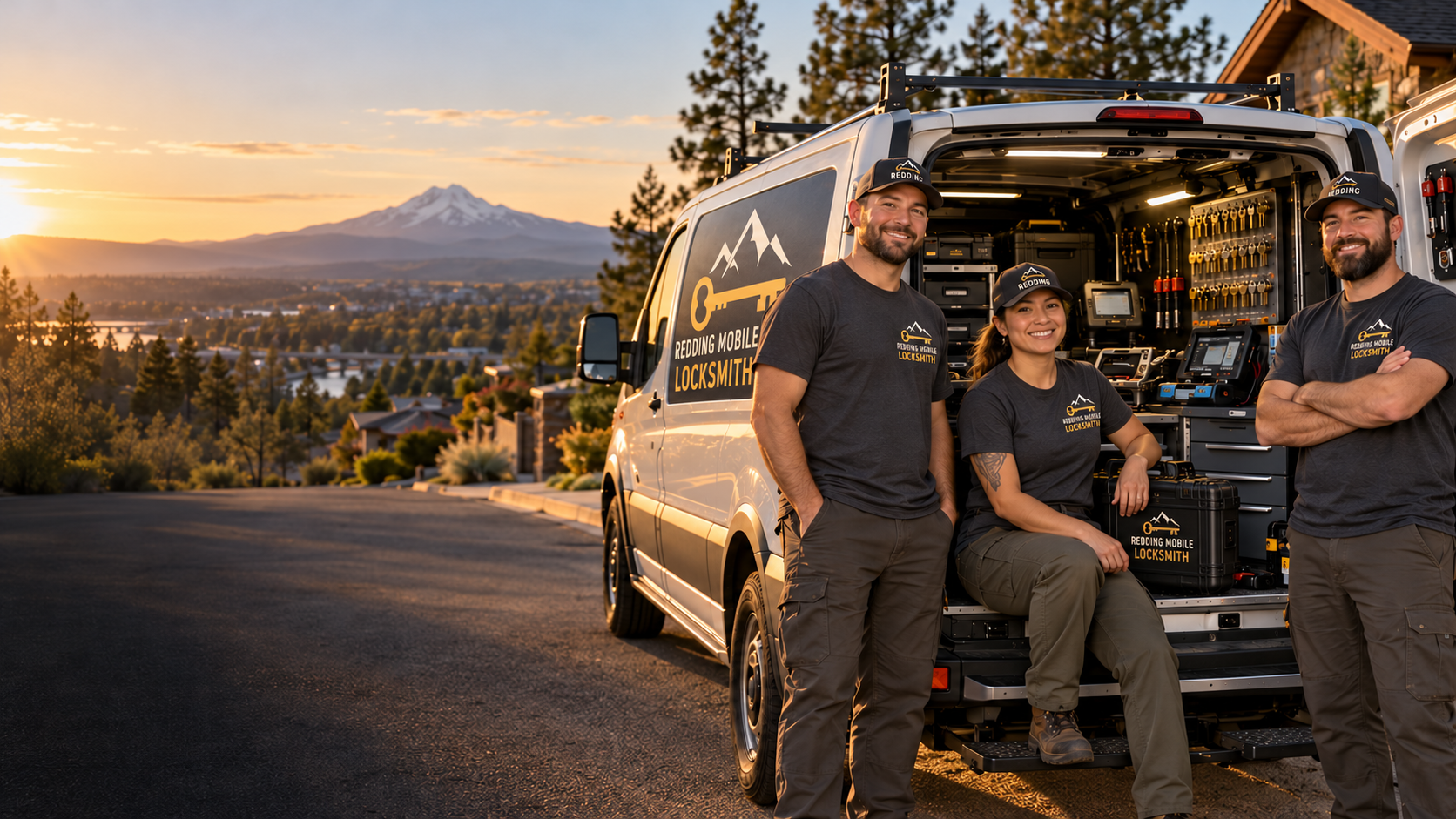
The winter roads of the North State, from the passes around Mount Shasta to Highway 89, Highway 97 and Interstate 5, can be slow, icy and remote. Our branded service van carries professional tools and key equipment, and our team serves Shasta and Siskiyou counties around the clock through our 24 hour emergency locksmith service.
When you contact us, tell us your location, the road you are on, the vehicle or door involved and any hazards, such as ice, a narrow shoulder or a steep driveway. Use the request form. The phone line is coming soon.
To stay ahead of the next storm, plan a spare through our note on a spare key now versus later.
After a lockout, take stock. What went wrong? Where did the key go? What spare could have helped? A few minutes of reflection today prevents the same problem next week.
If a lock was damaged by the cold, such as a stuck or broken part, ask about lock repair so it works properly before the next storm.
Common questions
What should I do first if I am locked out in freezing weather?
Get warm and stay safe. Find shelter, put on extra layers and keep your phone close. Avoid forcing a door or breaking glass. If a child or pet is trapped inside a vehicle, call emergency services first. Otherwise arrange professional help.
Can I use hot water to open a frozen lock?
No. Hot water refreezes and can leave ice deeper in the lock. It can also crack glass and damage paint. Use a lock de icer sparingly, warm the key in your hand or let the vehicle heater do the work.
Why does my car door not open even when unlocked?
In freezing weather, rubber door seals can freeze to the frame. Push gently around the door edge to break the ice, then try the handle. Pulling hard on a frozen handle can damage plastic parts.
How do I stop locking my keys in a running car?
Keep the key in your pocket while you scrape, and know whether your car locks itself after a time. Never leave a running car unattended with the key inside. A habit of checking your pocket every time a door closes helps as well.
Do keypad locks fail in the cold?
They can, because batteries weaken in low temperatures. Replace batteries before winter and test the lock inside and outside. Keep a mechanical key as a backup in a safe place, and keep snow off the keypad.
Is it safe to hide a key outside during winter?
A hidden key under a mat or rock is easy for others to find, and it can freeze in place. A trusted neighbor, a relative or a well placed lock box is a better plan. Choose the option that suits your home and your routine.