
Start with safety before anything else
If a child or a pet is inside the locked vehicle, stop reading and call emergency services first. Do not wait for a locksmith. Emergency responders are trained and equipped for exactly this, and a few minutes matter more than any other concern. Once the situation is under control, we can help with the rest.
If everyone is out of the car and safe, take a breath. A locked car is an inconvenience, not a danger, as long as you are in a safe place. Move away from traffic, keep your phone with you and make sure you have shelter if the weather is hot or cold.
Montague is a small town in the Shasta Valley of Siskiyou County, with older homes, agricultural surroundings and small main street businesses. Summer afternoons can be very hot, and winter evenings can be cold, so pay attention to where you are waiting. Our car lockout service page explains the work in general.
One more safety point: do not try to break a window to retrieve keys unless a life is at risk. A broken window is a larger and more expensive problem than a locked door, it scatters glass around a place where people and children walk, and it leaves the car open to the weather afterward. A calm professional approach almost always is easier on everyone in the end.
Picture a household with a new baby
Imagine a young family driving through Montague on an errand. The parents have a newborn in a car seat, a diaper bag and a mountain of small things. One of them steps out, shuts the door, and hears the lock click with the keys on the seat. This is an illustration only, not a real customer.
If the baby is in the car, this is the situation that calls for emergency services first, as above. If the baby is already out of the car in a parent's arms, the problem is much calmer. The family has a locked car, a tired baby and a need to stay comfortable while the problem gets solved.
The practical advice is the same either way: get everyone to a safe and comfortable place, then arrange help. A town with a main street and nearby businesses often offers a shaded or heated spot to wait, but do not assume. Use your judgment and ask for permission before settling in somewhere private.
Parents in this position often feel hurried, because the baby needs feeding or changing and the plan has fallen apart. Allow yourself to slow down. A locked car is a solvable problem, and a few minutes of deliberate thought now will make the next hour smoother for everyone.
What to check before you call
Before you call anyone, walk around the car and try every door, including the trunk or tailgate. It sounds obvious, but cars sometimes lock only one door, and a passenger or rear door may still be open. Check the windows, too. A window cracked open is not an invitation to do anything unusual, but it helps us understand the situation.
Think about spare keys. Does anyone at home have a second key, and can they bring it? A spare is sometimes the simplest route. On the other hand, a long drive to fetch it may not be practical, especially with a baby. If you carry a remote or app that can unlock the car, try that too.
Look at the dashboard through the window. Are the keys visible? Is the engine running? Is the car in park? Those details matter, and we will ask.
If you use a phone app or a connected service tied to your vehicle, try it. Some cars can be unlocked remotely through a subscription or a manufacturer app. If you are not sure whether yours can, a look at the app settings may answer the question before anyone has to drive out.
- Try every door handle, including rear doors and the trunk.
- Check whether a spare key or remote can be brought to you.
- Note whether the keys are visible and where they lie.
- Note whether the engine is running and the car is in park.
- Find a safe, comfortable place to wait, away from traffic.
What to tell the dispatcher
Clear information helps the dispatcher send the right tools. Tell us the make, model and approximate year of the vehicle, and whether it is a sedan, truck, van or SUV. Describe where you are in plain terms, using a landmark type such as a business entrance or a street corner, without private details.
Say whether the keys are inside, and whether the car is running. If you are in a busy or awkward spot, mention it. If you have a baby, a pet or a person with limited mobility with you, say so, because it affects how we plan.
We will confirm that you are the owner or an authorized driver. Keep registration or identification ready if you can. A professional locksmith always asks, and it protects you.
If you are not sure of the make or model, describe the vehicle: the color, the body style and any badge you can read. A photo from your phone, if you have one in your camera roll from an earlier day, can help too. We can usually work out the rest on arrival.
How we open a locked car
A professional lockout service uses tools made for the job. For most vehicles, that means a thin inflatable wedge to create a small gap at the door frame, and a long rod to reach the unlock control or handle. The process is deliberate and gentle, designed to protect the paint, the weatherstripping and the door.
Modern vehicles complicate the work. Side airbags, wiring in the door and tighter seals mean a careless approach can cause damage. We take our time and work with the vehicle, not against it. We do not describe or teach bypass methods here, because those details do not help you and could help the wrong person.
In most cases the car is opened without harm. In rare cases, such as a damaged lock or a very unusual vehicle, we explain the options before we begin.
The tools are chosen to suit the door. Some vehicles have a frame that allows a small opening with a wedge, while others have deep, tight seals that call for a different method. If the first approach does not suit your car, we change it. Patience and judgment matter more than any single tool.
Keys inside a running car
A running car with the keys inside is a special case. The engine may be on, the air conditioning or heat may be working, and the car may drive off if someone were to bump the shifter. The priority is the same: safety. Make sure the car is in park, and keep people away from it.
Our field note on keys locked in a running car covers what to do and what to avoid. If the vehicle is idling with a child inside, call emergency services first, as above.
If the car is running and nobody is inside, tell the dispatcher. We will plan the work around the running engine, and you may need to think about fuel.
Think about the keys themselves. If the fob is in the car and the vehicle senses it nearby, some push button systems will keep the engine running or even refuse to lock. Others lock with the fob inside and then warn you. Knowing how your own car behaves helps you avoid the situation next time.
Different vehicles, different locks
Cars differ. A pickup truck, a small sedan, a van with sliding doors and an SUV with a hatch all have different locking systems. Some have manual lock posts, some have electric locks, and some have smart entry systems. Each requires a slightly different approach.
Older vehicles around Montague, including farm trucks, often have simple mechanical locks, which can be straightforward. Newer vehicles often have more complex electronics, which require extra care. Tell us what you drive, and we will bring what we need.
If you want to understand your own key technology a bit better, our guides on car key types in plain words and smart keys and push button start explain the differences.
Mention anything unusual about your vehicle, such as a security system that was added later, a lock that already sticks or a window that does not seal. Small details like these can change how the work is done and help us avoid surprises in the middle of the job.
Waiting well: weather and comfort
Montague summers can be hot and dry, and a parked car becomes an oven in the afternoon. If you are waiting, find shade, drink water if you have it, and keep your baby cool and comfortable. Do not sit in a closed car in the sun.
Winter can be cold, particularly in the evening. Dress warmly, keep the baby wrapped and find a sheltered spot. If you cannot get into the car to retrieve a coat or blanket, ask a nearby business for a moment indoors.
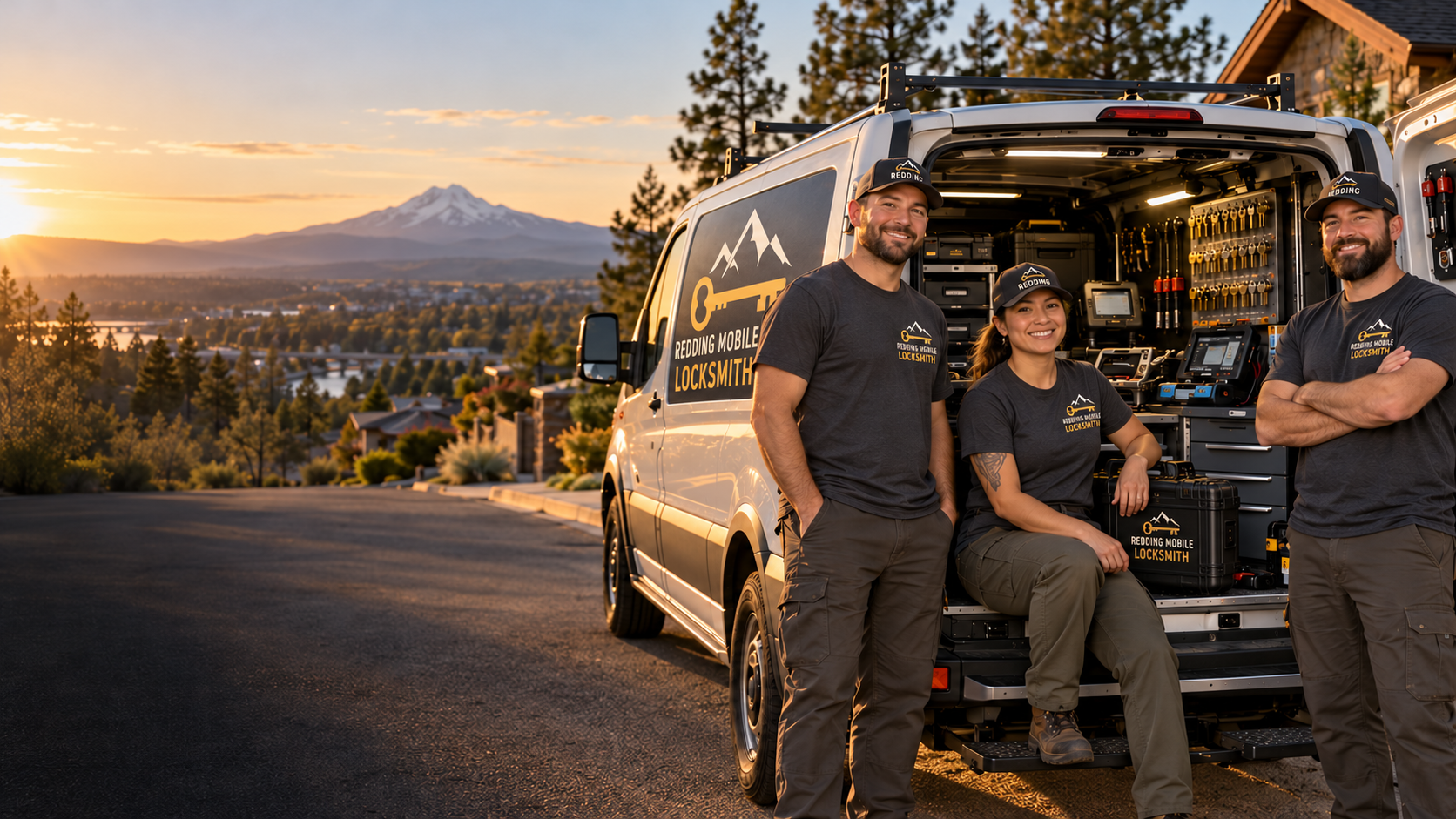
We are on our way when we say we are. Our team travels in a branded service van with professional tools, and we do not make promises about timing, because distance and conditions vary.
If you have older children, give them a calm job, such as watching for the van or holding a bag. Children handle waiting better when they feel useful. Keep snacks and water within reach if you have them, and take turns standing with the baby so nobody gets tired or chilled.
After the door opens
Once the door is open, check that everything works. Try the lock, the handle and the window. Make sure nothing is scratched or bent. If you notice a problem, tell us immediately so it can be sorted out while we are still on site.
Then think about prevention. Where did the keys go? Many lockouts happen when keys are set down for a moment while hands are full, which is common with a baby. A hook by the door, a clip on a bag or a habit of pocketing keys can prevent a repeat.
If you have no spare, now is a good time to arrange one. See our page on car key replacement in Montague, and the guide on a spare key now versus later.
Take a moment to look at the key itself. A cracked fob, a worn blade or a dying battery can lead to a repeat lockout. If any of those apply, mention it so we can talk about a replacement or a new battery while we are already there.
When the problem is the lock, not the keys
Sometimes a car is locked out for another reason. The key may be in your hand but the door lock may be frozen, jammed or broken. A broken door lock actuator can leave a door unable to open at all. See our note on car door lock actuator trouble.
A key that will not turn in the door can point to a worn key or a worn lock. Do not force it. Explain what you tried when you contact us, and we will plan for repair as well as entry.
For problems at home rather than in the car, see house lockout in Montague.
If the trouble is a lock that works only some of the time, tell us when it fails. A door that opens from the inside but not the outside, or one that unlocks only after repeated tries, usually points to a worn part that deserves repair before it fails completely. Catching it early saves you a second, less convenient lockout.
How to ask for help in Montague
Use the request form on the contact page and describe your vehicle, where you are and whether anyone or anything is inside. The phone line is coming soon, so the form is how to reach the team now. If there is any risk to a child or pet, call emergency services first.
For the wider picture, our Montague overview explains what we do in town, and Yreka is close by if your trip took you that way.
We will follow up with you, confirm details and arrange the visit. Keep your phone on and your identification handy.
It also helps to say if you have special circumstances, such as a long wait that would be hard for a baby, or limited mobility. We cannot promise a particular time, but we can plan better when we know what matters most to you.
Common questions
What should I do if my child is locked in the car?
Call emergency services immediately and follow their instructions. Do not wait for a locksmith. Responders are trained for this situation and every moment matters. Once the child is safe, we can help with the car, the keys or any damage. The same advice applies to a pet locked in a vehicle.
Will opening my car damage it?
A professional lockout uses tools designed to protect paint, weatherstripping and door mechanisms, and the work is done carefully. In most cases the car is opened without harm. If a lock or door is already damaged, or the vehicle is unusual, we explain the options before starting. If you notice anything out of place afterward, tell us at once while we are still there.
What proof will I need to show?
We confirm that you are the owner or an authorized driver before opening a vehicle. Registration, insurance paperwork or photo identification usually covers it. If your papers are inside the car, tell us, and we will talk through other ways to confirm. A vehicle belonging to a family member or an employer is fine, provided you can show you are allowed to drive it.
Can I just call someone with a spare key instead?
Often yes, if the spare is close and the wait is comfortable. Weigh the time, the weather and who is with you. If the spare is a long way off, or you are waiting with a baby in hot or cold weather, a mobile locksmith may be the sensible choice. If you do call someone, tell them to drive carefully and not to hurry.
What if the keys are locked inside a running car?
Make sure the car is in park and keep people away from it. Tell us the engine is running when you ask for help, so we plan around it. If a child or pet is inside, call emergency services first. Fuel level is worth thinking about if the wait may be long. Turning off the engine is something we can do once the door is open.
How do I request car lockout help in Montague?
Use the request form on the contact page and describe your vehicle, your location in plain terms, and whether anyone is inside. The phone line is coming soon, so the form is how to reach us now. In an emergency involving a child or pet, call emergency services first. Include the vehicle color too, since it helps when several cars are parked together.