
Home / Fort Jones / Car Lockout in Fort Jones
Fort Jones car lockout
Car Lockout in Fort Jones: Heat, Cold, Trailheads and Parking Lots
Keys inside, doors locked, and Scott Valley weather deciding how the next hour feels. Our uniformed crew comes to the car with the right tools and opens it carefully, whatever the season.
The day ends at the car door
Picture a family heading home after a long day at the lake or in the woods. The kids are tired and damp, the cooler is half empty, and somebody tosses the keys on the seat while loading the last bag. The door shuts, the lock clicks, and the whole mood of the day changes.
Fort Jones sits in Scott Valley in Siskiyou County, a ranch and farm town with cold winters and plenty of open country around it. People here drive to trailheads, fishing spots and mountain roads, often far from the nearest shop. A locked car in those places is more than an annoyance, because there may be no easy way to walk to help.
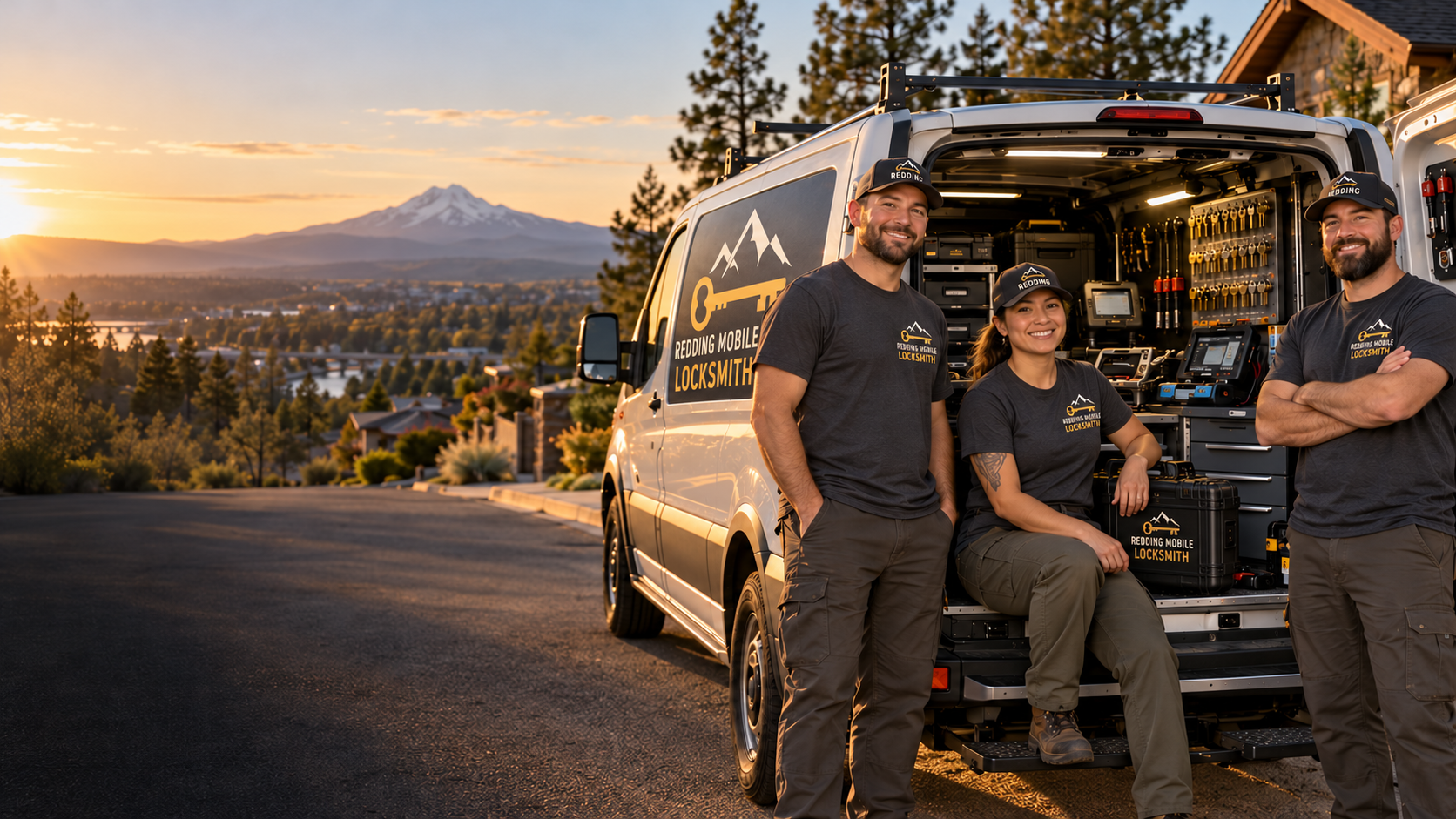
Our team exists for exactly this kind of call. We are a uniformed crew with a branded service van that carries professional tools and the equipment to deal with modern vehicles. We come to wherever the car is, and we work around the clock. The car lockout service page describes the general process in more detail.
The family in this picture has a few things going for it. Nobody is hurt, the weather is manageable and a spare key exists somewhere, probably at home. What they need is a clear head and a short list of steps, and that is what the rest of this page offers. Lockouts feel like emergencies, yet most of them are solved calmly when the facts are laid out in order.
First things first: safety before keys
Before anything else, ask whether anyone or anything alive is inside the car. If a child or a pet is locked in a vehicle, call emergency services right away, before you call us or anyone else. A closed car in summer sun heats up far beyond the outside air, and it can become dangerous sooner than most people expect. Emergency responders are trained and equipped to act on the spot.
If everyone is safe and the only trouble is a set of keys, take a breath. Move the family somewhere comfortable if it is hot, cold or windy, and keep warm layers or water within reach if you can. A calm waiting spot makes the delay far easier to manage.
Then gather a few facts. Note where you are and what the car looks like, check whether a spare key exists and who has it, and think about whether the car is running or off. Our note on a child or pet locked in a vehicle explains the emergency step in full.
How a professional opens a locked car
There is a gap between what people imagine and what really happens at a car door. A modern vehicle has weather seals, airbags in the doors, wiring that runs through the frame and electronic systems that can be upset by careless handling. Forcing a door or prying at a window can cause damage that costs far more than the lockout itself.
A trained locksmith works with purpose built tools and an understanding of how each type of lock behaves. The goal is to open the vehicle without leaving marks and without disturbing the systems inside. The method depends on the car, the lock type and the situation, and we choose it for each job.
Different cars lock in different ways. An older vehicle may have a simple mechanical lock with a post or a lever behind the door panel. A newer one may use electric actuators controlled by a module, with a key fob that sends coded signals. Some vehicles lock themselves under certain conditions, which is why a car can be locked even when you never touched the button. Knowing what type of system the vehicle uses lets us pick a careful approach and avoid triggering alarms or stored settings.
We do not explain bypass techniques here, and a responsible locksmith never will in public, because that information helps the wrong people. What you need to know is simple: we confirm that the vehicle is yours or that you are authorized to have it opened, we open it carefully, and we check that the door, the lock and the windows work normally afterward.
Summer heat in the valley
Summers in Scott Valley are hot and dry, and the inside of a closed car climbs well past the temperature outdoors. A parked car at a lakeside lot or a trailhead in July can become uncomfortable in a short time, and anything left inside, from medication to electronics, can suffer.
If you are locked out in heat, look for shade first. Stand in it, drink water and keep everyone out of direct sun. Leave the vehicle alone rather than trying to force a window, since broken glass and a failed attempt only add to the problem.
Heat also affects the lock itself. Metal parts expand, plastic components soften and old lubricant thins out. A door lock that sticks in summer sometimes needs attention more than the lockout does. Our field note on why locks stick in hot summer weather explains the pattern if you suspect your car is one of them.
A few simple habits help in warm weather. Park in shade when you can, crack a window only if you are staying close, and keep a bottle of water with you on any outing. If you must wait for us, stay somewhere cool and visible so the crew can find you easily, and keep your phone charged. Preparation will not stop a lockout, but it makes the wait far more comfortable.
Cold mornings and winter nights
Fort Jones winters are cold, and a lockout in freezing weather feels very different from one in July. Fingers go numb, batteries lose strength, and door seals can freeze shut around the edge. A lock that works perfectly in the afternoon may refuse to turn at dawn.
If you are outside in the cold, protect yourself first. Keep moving, use any spare layers and, if the car is running and locked, stay with it and wait somewhere safe. Do not pour hot water over a frozen door or window, because the water refreezes and glass can crack from the sudden change.
We know how winter conditions change the work. Gloves, snow and ice affect how a door opens, and we plan for that when we arrive. Once the car is open, we help check that the lock is not frozen, that the seals move easily and that the key fob battery is still healthy, since cold weather often reveals a weak battery. See our guide to key fob battery basics for what to look for.
Ice and snow add another wrinkle. Driveways and lots in Fort Jones can be slick, and an uneven surface makes it harder to set up and work safely. If you can, stand clear of the road, leave room around the car and mention the ground conditions when you contact us. The more we know about the setting, the better we can prepare the van and the tools before we leave.
Trailheads, lake lots and long gravel roads
Many lockouts around Fort Jones happen in places with no street address. A gravel pull out at the start of a trail, a dirt lot beside a lake or a ranch gate far from the road are all common places to lock a key inside. Describing where you are helps us find you.
Use landmarks you can see: the name of the road, the trail or the nearest highway, and anything distinctive near the car. If you have phone signal, share your location. If you do not, tell someone where you are headed before you lose coverage next time, a habit that helps in every kind of trouble.
The practical lesson is to plan for the lockout before it happens. Carry your keys on your person, not in a pack that stays in the car, and keep a spare somewhere safe and reachable. Our guide on carrying keys while hiking, fishing and boating gives practical ideas for outdoor days.
Boating and fishing days add water to the mix. Keys that fall in a lake are gone, and a wet fob can stop working even if it survives. A floating key ring, a waterproof pouch or a spare that stays in the truck bed lockbox can turn a ruined afternoon into a small inconvenience. Think about where the keys will be at each stage of the trip, from the parking lot to the water and back.
- Clip keys to a pocket or belt loop, not a loose pack.
- Leave a spare with someone who is not on the trip.
- Check your pockets before you close the door.
- Keep a coat or blanket in the vehicle for cold days.
- Know the road or trail name where you parked.
Parking lots, stores and town streets
Not every lockout is out in the wilds. In town, a locked car is most often a keys on the seat moment while loading groceries, getting a child into a seat or stepping out to open a gate. Small town parking lots are friendly places, but a locked car is still locked.
If this happens, stay near the vehicle in a visible spot and avoid asking strangers to try to open it. The wrong tool in the wrong hands can scratch paint, tear a weather seal or damage a door lock.
Ranch trucks and work vehicles bring their own wrinkles. A truck with a toolbox, a camper shell or a locking tailgate may have several separate locks, and a lockout can involve more than the cab. Tell us which parts of the vehicle you need open and whether the toolbox uses its own key, so we can plan for all of it in one visit.
We arrive, confirm ownership with you, open the car and check that nothing was disturbed. If the lockout has revealed a deeper problem, such as a key that is worn or a lock that is sticking, we mention it. A car key replacement may be wiser than another close call.
What we need from you when you call
Good information shortens the whole job. Tell us the make and general type of vehicle, the year if you know it, and the exact spot where it sits. Say whether a child or pet is inside, which is an emergency for the proper services first, and whether the engine is running.
We will also ask you to confirm that you own the vehicle or are authorized to use it. That is a normal step and it protects you. Having a registration or an item inside the car that shows your name can help, though we will explain what is acceptable when we arrive.
Because the phone line is coming soon, the way to reach us now is the request form. Describe the car, the location and the urgency, and put emergency details first. We treat lockouts as urgent work and our crew is available around the clock.
After the door is open
Once the car is open, a short check is worth the time. Make sure the doors lock and unlock normally, the windows move, and the key you have turns smoothly in the ignition or the start button responds. If the key looks worn or the fob is acting up, now is the moment to deal with it.
Many repeat lockouts trace back to a habit rather than a fault. Keys left on the seat, a fob stuffed in a pack, a door that locks when it shuts. Knowing which habit caught you helps prevent the next one.
If the key itself is the issue, we can help with key programming or a spare. A second key stored at home or with someone you trust costs little compared with another locked car on a cold evening. Our note on a spare key now versus later explains why timing matters.
Spare keys come in different kinds, and the kind matters. A plain metal spare opens doors but may not start a car with a transponder chip. A programmed key or fob does both. Before you pay for a spare, find out which type your vehicle needs, so the one in the drawer will truly rescue you on a bad day instead of only opening the door.
Local help across Siskiyou County
Redding Mobile Locksmith serves Fort Jones and the surrounding communities of Siskiyou County, including Etna and Yreka. Distances here are real, and we plan for them so that the van arrives equipped for the job.
If your vehicle is at the edge of a different town, the same crew covers the region, and our pages for car lockouts in Etna and car lockouts in Yreka explain what is local to each. For the full picture of what we do for people in Fort Jones, see the Fort Jones service area page.
You can also read about our other work here, including car key replacement and house lockouts. Together they cover most of the key and lock troubles people meet around the valley.
Whatever brought you to this page, the aim is the same: get you back in the car, back on the road and a little better prepared than before. A lockout is a small story with an easy ending when the right help arrives, and we would like to be the crew that writes the ending with you.
Common questions
What should I do first if my car is locked with keys inside?
Make sure no child or pet is inside. If there is, call emergency services immediately. Otherwise, move to a safe, comfortable spot, note your exact location and the type of vehicle, and contact us through the request form so our crew can come to you.
Will opening my car damage the door or paint?
A trained locksmith uses purpose built tools and works to avoid marks, scratches and harm to seals or electronics. Forced entry or improvised tools are far more likely to cause damage. We check the door, lock and windows after opening to confirm everything operates normally.
Can you help if I am at a trailhead without an address?
Yes. Describe the road, trail name or highway, nearby landmarks and the look of the area, and share your location if your phone has signal. Our team covers rural Siskiyou County and plans the trip based on where you are.
Do you need proof the car is mine?
We confirm that you own the vehicle or are authorized to use it before opening it. This protects owners. We will explain what we accept on site, and having ID that matches the registration or other items showing your name helps.
What if my key fob stops working in the cold?
Cold weather can weaken a fob battery and stiffen locks. Try the mechanical key if your fob has one, and warm the fob in your hands. If the problem continues, a new battery or key service may be needed, which we can discuss once the car is open.
Can a lockout be prevented?
Often. Keep keys on your person, never in a bag left in the car, store a spare with someone you trust, and avoid cars that lock automatically when closed without keys in hand. A worn key or weak fob battery is also worth fixing before it fails.