
Home / Mount Shasta / Car Key Replacement in Mount Shasta
Mount Shasta car keys
Car Key Replacement in Mount Shasta, Siskiyou County
Replacing a lost or broken car key is more involved than cutting a piece of metal. Here is what the work includes, what to gather ahead of time, and how our mobile team handles it in Mount Shasta.
Picture a caregiver far from home
Imagine someone who has driven to Mount Shasta to look after a relative for a few weeks. They are using their own car, staying in an unfamiliar house, and juggling appointments, groceries, and medications. One afternoon the key breaks off in the ignition, or it slips out of a pocket somewhere between a store and the driveway, and suddenly the one thing that makes life manageable, the car, will not start.
This is a hypothetical picture, but it is a very human one. A lost car key in a place where you do not know the roads or the shops is more than an inconvenience. It disrupts a schedule that other people depend on. The caregiver does not want to spend a day on logistics, and they certainly do not want to guess at what is needed.
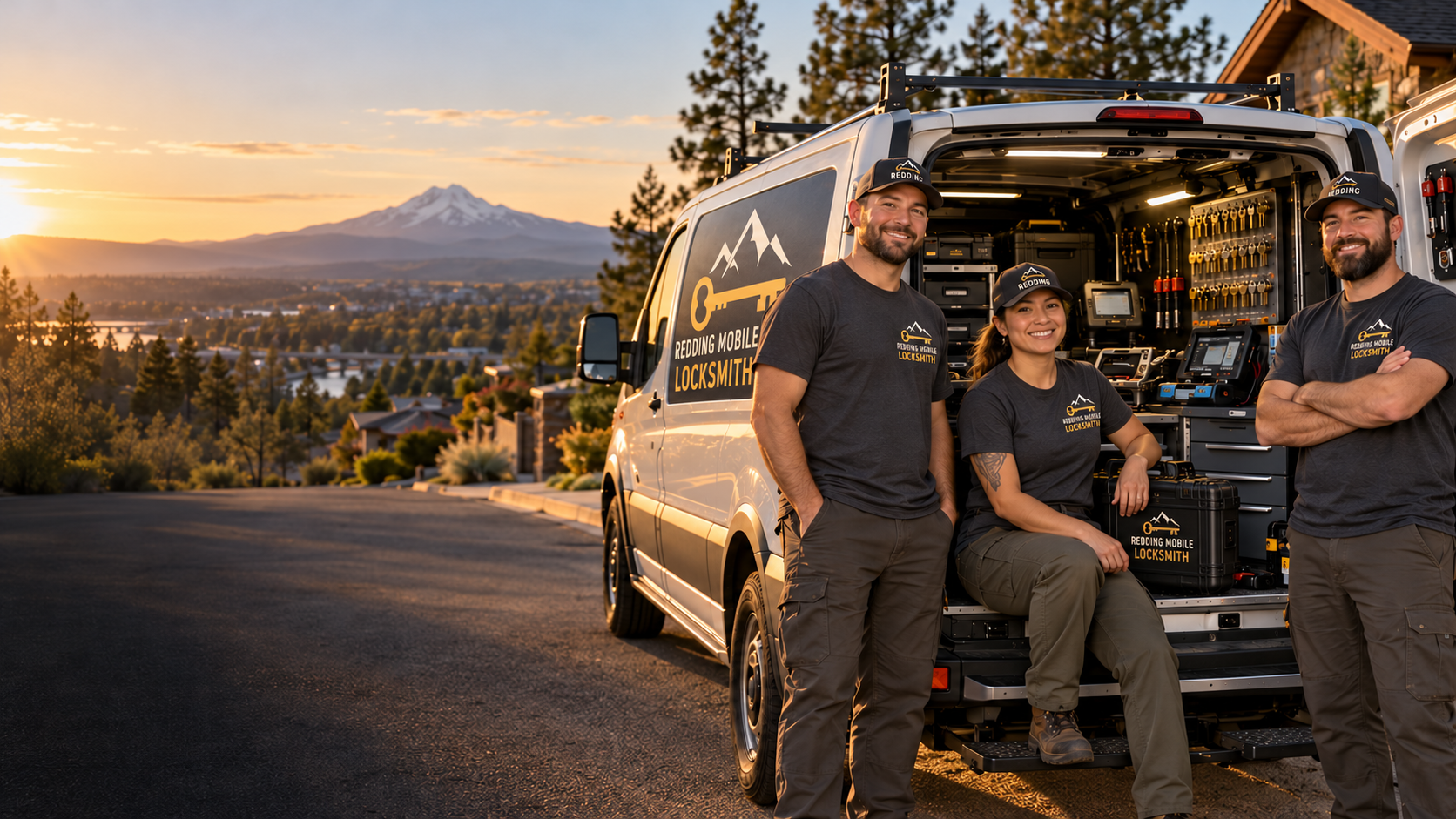
That is why a mobile service matters. Rather than arranging a tow and a trip somewhere, you describe the situation and our team comes to the car. The branded van carries professional tools, key cutting and programming equipment, and common hardware, so many replacements can be handled where the vehicle sits.
This is also why a hardware store copy often fails. It may open the door and even turn in the ignition, but without the right chip and programming the engine will not run. A proper replacement matches both halves of the key, the metal and the electronics.
Why modern car keys are more than metal
A car key from decades ago was a shaped piece of metal. Today, most keys contain a small electronic chip called a transponder. When you turn the key or press the start button, the car sends a low power signal to that chip, and the chip answers with a code. If the code matches, the engine control system allows the engine to run. If it does not, the engine may turn over but never start.
That means a replacement key must be cut correctly to fit the door and ignition and also programmed so the car recognizes it. Some vehicles use a key with a remote built in. Others use a smart key or a proximity fob that is never put in a slot at all. Each type needs different equipment and a different procedure.
Our guides on car key types in plain words and transponder keys explained go through each type if you want the background. Knowing what kind of key you have helps the conversation with the dispatcher.
If you are not sure where a lost key went, retrace your steps before calling. Check jacket pockets, the ground near the car, a bag, and the place you last used it. Finding it saves work. If you cannot find it, treat it as lost, because a missing key could be picked up by someone else.
Lost key, broken key, or damaged fob
The three situations look different. If you have lost the only key, you need a new one made from scratch for your vehicle. If you still have a spare, the job is easier, since the car already knows one key and a second can be added. If the key is broken, the cut part may still be usable, or the chip may be fine in a cracked case. A technician can often tell on the spot.
A fob with a dead button or a weak signal is a different matter. Sometimes a battery is the whole problem. Sometimes the circuit board has worn out. Our guide on key fob battery basics explains how to tell, and a technician can test the fob before anyone suggests a replacement.
Whatever the situation, tell the dispatcher what you have. The details let us pack the right blanks, fobs, and programming tools, and they shape the plan. A broken key in the ignition needs removal first, and our article about a broken key in the lock explains what to do while you wait.
Stay with the vehicle or nearby if you can, and keep your phone charged. Have your identification ready to hand to the technician. A caregiver in a borrowed or relative owned car should bring the owner on the line if paperwork is in their name, since the owner may need to confirm permission.
What to gather before we arrive
A little preparation turns a long visit into a smooth one. The dispatcher will ask for the make, model, and year of the vehicle, and ideally the vehicle identification number, which is the long code printed on a plate near the base of the windshield and on a sticker inside the driver's door. A photo of that number on your phone is enough.
You will also need to show that the car is yours. That generally means identification and paperwork linking your name to the vehicle, such as registration or a title. If those documents are in the car, do not worry. Other forms of proof may work, and the dispatcher can tell you what is acceptable. Requirements vary, so ask when you reach out.
If you have any other key, bring it. A spare, even a worn one, helps the technician confirm the key type and, in some cases, speeds the programming. Our article on lost every key and what to gather has a longer checklist you can follow.
- The make, model, and year of the vehicle.
- The vehicle identification number, or a photo of it.
- Identification and paperwork linking you to the vehicle.
- Any spare key, fob, or key shell you still have.
- The exact location of the vehicle in Mount Shasta.
- Expect the technician to explain each stage in plain words. Programming can take patience, and the car may need several steps, such as turning the ignition on and off in a pattern or waiting for dashboard lights. That is normal, and a good technician narrates it so you are not left wondering.
How a key gets cut and programmed on site
First, the technician confirms your identity and your right to the vehicle. Next, the vehicle's data is used to identify the correct key blank, which is a key with the right shape but no cuts yet. The cuts are made on a key cutting machine to match the lock, either by code or by reading the lock or an existing key.
Then comes programming. The technician connects specialized equipment to the car, usually through a diagnostic port, and teaches the car's computer to accept the new key. Some vehicles allow adding a key with less effort when a working key is present. Others require a more involved process when every key is lost. The equipment in our van covers many common vehicles, though no one carries tools for every possible model.
After programming, we test everything: the door lock, the ignition or push button, the remote buttons, and the trunk release. You should get a key that starts the car, locks and unlocks it, and feels right in the ignition. If something is off, we adjust it before leaving.
Why the key sometimes cannot be done on the spot
Honesty matters here. Some vehicles use security systems that need special codes or parts, and a small number may require work that cannot be completed roadside. Certain newer models have tightly protected systems, and in rare cases a dealer or a specialty shop is the only route. We would rather tell you that at the start than waste your time.
Weather and location matter too. Programming equipment connects to the car's electronics, so it needs a stable setting. A dead or weak car battery can interrupt the process, and cold temperatures can make batteries weaker. If your battery is struggling, tell the dispatcher so the team can bring what is needed.
If the job truly cannot be finished on site, the technician explains why and what the next step is. You will not be left guessing. For a longer overview, see our pages on car key replacement and key programming.
If you rent or borrow a vehicle that uses a smart key, tell the owner or the rental company early, since they may have rules about who can program or replace keys. Do not assume you can handle it alone, and ask before any work begins.
Smart keys, push button start, and keys that look different
Many newer vehicles use proximity keys. The car senses the fob when it is nearby and allows you to start the engine with a button. These systems are convenient, but they also hide a problem: because you never insert the key, you can lose the fob without noticing until the car refuses to start or the dashboard warns that no key is detected.
If you drive a vehicle like that, replacing the fob involves programming the new unit to the car's security system. A dead fob battery is often the cause of a no start rather than a lost key, so check it first. Many fobs have a hidden spot where the dead fob can be held against the start button so the car can read it.
Our guide on smart keys and push button start explains the idea. You can also read about ignition trouble signs if the key goes in but the car acts strangely.
Working in the mountain setting
Mount Shasta is a place where people park at trailheads, lodges, and cabins, and where winter weather affects every job. A key that dies in a snowy driveway needs the same work as one that dies in an open parking lot, but the conditions are tougher. We plan for that by asking about access, snow, and lighting when you contact us.
If your car is in a spot that is hard to reach, tell us. A steep cabin driveway, an unplowed lane, or a gated property changes how the van can approach. The dispatcher can suggest moving the car to a more accessible spot if it is safe, or can plan the visit around the terrain.
Visitors have extra challenges. Someone passing through on Interstate 5 may not know the area or have any local contacts. If that is you, stay in a safe, warm place and tell us exactly where the vehicle is. Our team travels across Siskiyou County and into Shasta County, and nearby places like Dunsmuir and Weed are part of our regular area.
Spare keys, valet keys, and making the next one easier
The least stressful time to make a spare is when you already have a working key. The technician copies and programs a second key from the first, and there is no emergency. Making a spare after losing every key takes more steps and more time. Our piece on a spare key now versus later goes through the difference.
Think about where spares live. Keep one at home in a safe place, and consider giving one to a trusted person nearby. Avoid hiding a spare on the vehicle itself, since a magnetic box under the bumper is the first place anyone looks and it can fall off on a rough road.
If you are a caregiver or a family member using someone else's car, make sure at least two keys exist before you travel. Ask the owner whether a spare is stored somewhere. A short chat about keys at the start of a visit can save a long afternoon later.
Related help if the car also will not open
Sometimes a lost key leaves the car locked as well. In that case the job starts with getting into the vehicle, then moves on to the key. Our car lockout page for Mount Shasta explains that first step. For a broader view, see the page on car lockout service.
If you are unsure whether the problem is the key or something else, the dispatcher can help sort it out. A car that will not start with a perfectly good key might have a weak battery, a failing ignition, or a lock actuator problem. Our notes on car door lock actuator trouble cover one common cause of strange lock behavior.
A fleet of work trucks, a family minivan, and a motorcycle all use different key types. If yours is unusual, say so. We handle a wide range, and you can see more on our automotive locksmith page.
Getting started with a request
The easiest way to begin is the request form on our contact page, since our phone line is coming soon. Tell us the vehicle, what happened to the key, where the car is, and whether you have a spare. Add any worries about parking, weather, or access.
We will confirm the plan, explain what is needed, and arrive with the right tools. If a child or a pet is trapped in the vehicle, call emergency services first and contact us afterward. That rule overrides everything else here.
Nothing about a lost key needs to be embarrassing or complicated. Describe what you see, gather what you can, and let the work happen at your car. That is what a mobile locksmith is for, whether you live in Mount Shasta or are only here to take care of someone.
Common questions
How is a replacement car key made if I lost every key?
The technician identifies the right key blank for your vehicle, cuts it to fit the lock, and programs it to the car's security system using specialized equipment. You will need to prove the vehicle is yours. Some vehicles take more steps than others, and the team will explain the plan before beginning.
What do I need to show before a key is made?
Expect to show identification and paperwork linking your name to the vehicle, such as registration or a title. The vehicle identification number also helps. If your documents are locked in the car, ask the dispatcher about other ways to show ownership, since requirements can vary.
Can every car key be replaced at the vehicle?
Many can, but not all. Our van carries key cutting and programming equipment for many common vehicles. Some models with tightly protected systems may need special parts or a different route. The technician tells you honestly at the start if your vehicle falls into that group.
Is it better to make a spare before I lose the key?
Yes, in most cases. Copying and programming a second key while you still have a working one is usually a calmer job than starting from nothing. It also gives you a backup for lockouts. Keep the spare somewhere safe and separate from your main key.
My fob stopped working. Does it need replacing?
Not always. A weak battery is a common cause, and a fresh battery may solve it. A technician can test the fob and tell you whether it needs a battery, a repair, or replacement. Try the hidden backup spot on your fob for starting the car if the battery is dead.
How do I request a visit while the phone line is coming soon?
Use the request form on our contact page. Give the vehicle details, the location, what happened to the key, and whether you have a spare. If anyone is locked in a vehicle, call emergency services first, then contact us about the key afterward.