
Home / Mount Shasta / House Lockout in Mount Shasta
Mount Shasta house lockout
House Lockout Help in Mount Shasta, Siskiyou County
Being shut out of your own door is stressful, especially on a cold mountain evening. This page lays out the sensible order of options for getting back into a home in Mount Shasta without damaging it.
Picture a shop owner closing up
Imagine someone who runs a small downtown shop in Mount Shasta. They close up after a long day, lock the shop, drive home, and walk up to the front door with arms full of bags, only to find the house keys are on the counter back at the shop. Or they locked the door behind them while carrying a bag out to the car, and the latch caught.
This is a hypothetical picture, but it matches how most house lockouts happen. They are rarely dramatic. They are small slips at the end of a tiring day, when attention is low and the door swings shut on its own spring. The person is usually not in danger, just locked out, tired, and cold.
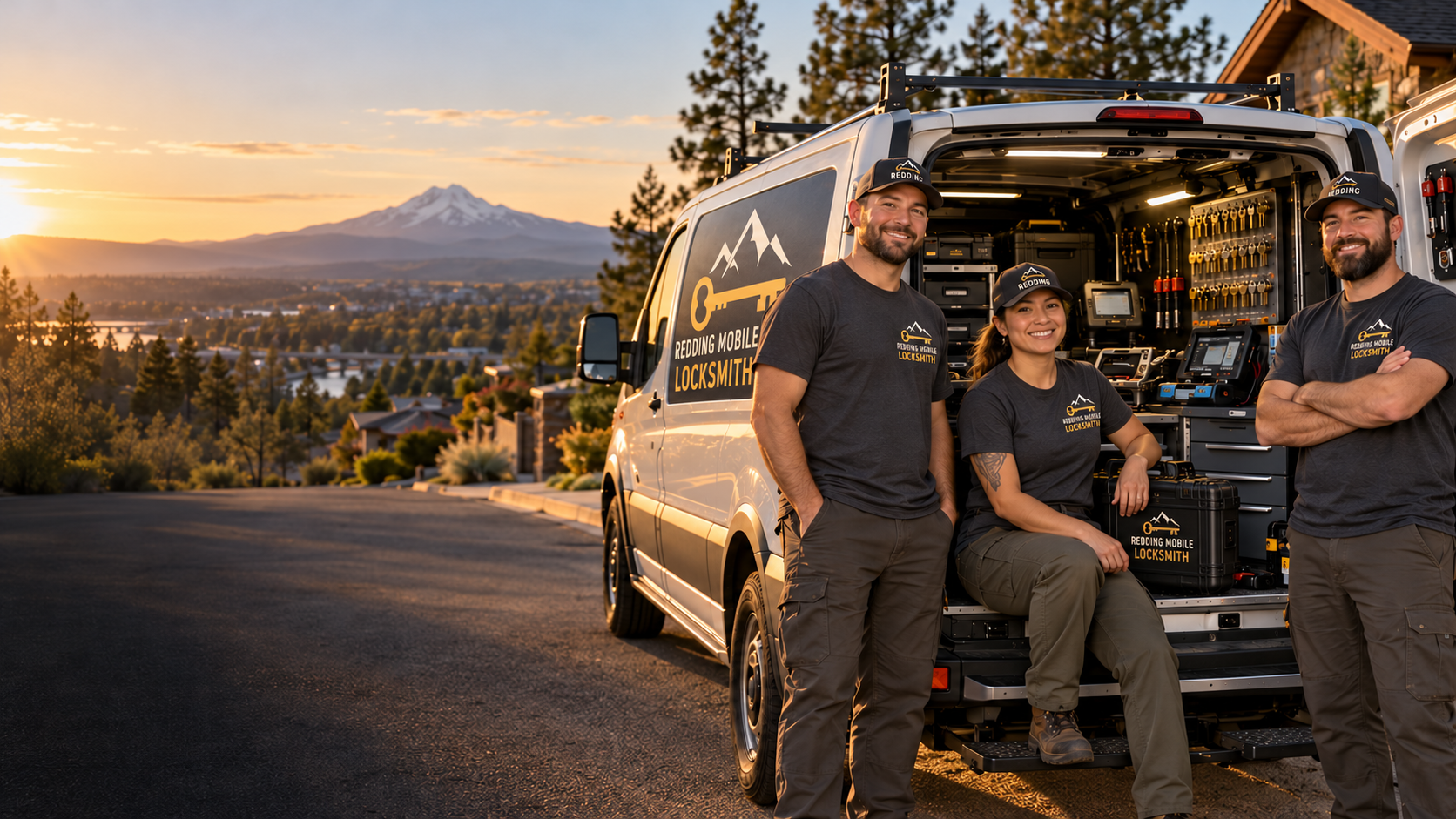
If that sounds familiar, you are in good company. Our team treats a house lockout as an ordinary problem with a calm solution. We come to the door with a branded service van carrying professional tools, key cutting equipment, and common hardware, so the goal is to get you in, keep the door working, and leave things better than we found them.
Start with the options that cost nothing
Before calling anyone, walk around the home and try the simple things. Check every exterior door, including the one from the garage, a side door, and a back patio door. Look at windows only to see whether one is already open, and do not climb or force anything. A fall from a ladder in the cold is a far bigger problem than a locked door.
Think about who else has a key. A partner, roommate, neighbor, family member, or property manager may be able to bring one. If you rent, your landlord or manager may have a key and may want to be told about the lockout anyway. A text to the right person can save everyone effort. Rules about who may enter a rental vary, so ask rather than assume.
If a spare lives in a lock box, a hide a key spot, or a trusted friend's house, use it, then plan to make the system safer. Our article on hiding a key outside and better options explains why obvious hiding places are weaker than people think and what to do instead.
The sensible order of options
Here is the order that tends to make the most sense. First, a spare key from someone you trust. Second, a professional opening, where a locksmith works the lock without harming the door, the frame, or the finish. Third, only when nothing else works, a repair or replacement of damaged hardware. Breaking a window or kicking a door is last, never first, and almost always costs more than a lockout service.
Each step is gentler on your property than the next. A professional opening leaves the lock, the strike, and the paint intact in most situations. Forcing a door can split a jamb, bend a latch, and leave a home unsecured until a carpenter and a locksmith fix it. That is a night with no secure door, which is worse than waiting outside for a short time.
If you are unsure which option fits, describe the door to the dispatcher. Tell us whether it is a deadbolt, a knob lock, a keypad, or a smart lock, and whether the door is wood, metal, or glass. We will help you choose the least damaging route and explain what to expect.
- Ask a trusted person with a spare key to bring it.
- Call a mobile locksmith who opens the lock without harming the door.
- Repair or replace hardware only if something was damaged.
- Leave windows and forced entry as the very last option.
What to tell us when you call
A clear description helps the dispatcher bring the right tools. Tell us where the home is in Mount Shasta, what type of building it is, and which door you want opened. Say whether the lock is a deadbolt, a handle set with a keyed knob, a keypad, or a smart lock, and whether the door is locked with the deadbolt thrown or only latched.
Tell us whether anyone is inside the home, especially a child, an older adult, a person who needs help, or a pet. If someone inside is in danger or unable to open the door, call emergency services first. That is not a locksmith's job, and professionals in emergency response are the right ones to reach first.
Our phone line is coming soon, so the way to reach us today is the request form on the contact page. Add the details above, mention whether you are the owner or a renter, and say whether you have identification ready. The more the dispatcher knows, the smoother the visit will be.
How a professional opens a house door
A professional does not break things. In general terms, a locksmith studies the lock and the door and chooses a method that respects both. Some locks open by working the mechanism inside the cylinder, some by manipulating the latch where it meets the frame, and some by removing the lock cleanly. The right choice depends on the lock type, the door material, and the condition of the hardware.
Deadbolts, handle sets, and electronic locks each behave differently. A deadbolt that is fully thrown is a stronger barrier than a spring latch that simply caught shut, so the method differs. Keypad and smart locks may open with a code, an override key, or a battery fix. We keep the details general here, because a public page is not the place for step by step methods.
What matters to you is the result. The door opens, the lock still works, the finish is unmarked, and you can test the lock before we leave. We would rather spend an extra minute checking the latch and the deadbolt than send you inside to a door that sticks. If a lock was already worn or damaged, we tell you straight, and offer repair, a rekey, or a replacement, but only if you want it.
Proof of residence and who can open the door
A responsible locksmith will not open a door for just anyone who stands outside. If a stranger could talk their way into a house, none of us would be safe. So expect the technician to ask you to show that you live there or have the right to be there before the work begins. That is a normal protection, not an accusation.
Identification with your name and address is the usual starting point. If your identification shows a different address, a utility bill, lease, or mail with your name may help. Tenants can be asked for a lease. Renters should also tell the landlord or manager, since some rental agreements address lock changes, and rules vary, so ask when you call.
If you are a guest at a vacation rental or a cabin, the owner or manager is the one who can authorize a lockout. We can talk through what is needed, and in many cases the owner can give permission by phone or message. If the door belongs to someone else, tell us up front so we know how to proceed.
Cold, snow, and the mountain evening
Mount Shasta winters change the stakes. Snow, ice, and temperatures that fall after sunset make waiting outside unpleasant and sometimes unsafe. If you are locked out in cold weather, do not stand around in the open. Go to a warm place, such as a neighbor's home, a car with the heater running, or an open business.
Cold also affects the lock itself. A deadbolt that was fine in September can stick when moisture freezes inside it, and a door that swells with damp may not latch cleanly. If your lock seems frozen, do not force the key, since a broken key makes everything harder. Our guide to winter lockouts and frozen locks in the mountains explains what helps and what hurts.
Plan for the road too. Snow can slow travel in Siskiyou County, so give the dispatcher your exact location, access details, and whether the driveway is plowed or icy. If a gate or unplowed lane blocks the van, say so, and we will plan the approach with you rather than meeting a surprise at the end of the drive. Clear footing matters for the technician as well as for you, so if you can, knock loose snow from the step and keep a pathway open to the door. A dry, lit entry makes careful work easier and keeps everyone steady on their feet.
Small business owners and the shop to home slip
People who run shops and offices carry a heavy ring of keys: shop, storage room, back door, home, car. At the end of a busy closing routine, it is easy to leave the ring on a counter or drop one key from the set. The home key is often the one that stays behind, because home feels like the part of the day that takes care of itself.
A simple fix is separating the keys. Keep the home key on its own small ring, ideally in a pocket you always use, and keep the shop keys on a different one. If you manage a business, you may also want to read about key control for a small business at opening and closing, which covers how to keep track of who holds what.
If your problem is at the shop, not at home, we also help with that. Our commercial locksmith work in Mount Shasta covers doors, keys, and hardware for small properties, and many shop owners combine a lockout visit with a check of their own door hardware.
Vacation rentals, cabins, and visitors
Mount Shasta is a place people visit, and many homes here are rentals or cabins used part of the year. Visitors are often locked out of a rental they only just arrived at, because a door code was mistyped, a key was left in a lock box that jammed, or the door swung shut with the host's key inside. Hosts and owners face their own version of the problem when a guest leaves and a key goes missing.
If you manage a rental, think about how access works. Keypad locks and lock boxes are convenient, but they run on batteries and codes that need care. Our notes on securing a vacation rental with keys and keypads and a lock strategy for cabins and second homes walk through the options in plain words.
If you are a guest, contact the host first. The host has the authority to give permission and often has a backup plan already. If you cannot reach them, tell us who owns the property and we will help you work out what is possible before anyone touches the door.
After you are back inside
When the door is open, take a moment to look at how it is working. Does the key turn smoothly? Does the deadbolt throw all the way? Does the door close without needing a shove? If any of those answers is no, mention it to the technician before they leave. Small problems like a misaligned strike plate are easy to fix while we are already there.
Think about whether your keys are under control. If you cannot say with confidence who has copies, a rekey makes the old keys useless without changing the lock. Our rekeying service and the local page on rekeying in Mount Shasta explain how it works. It is a good move after losing a key outright.
Finally, plan a spare strategy that does not depend on luck. A spare with a trusted person, a proper lock box, or a keypad entry can turn a future lockout into a small delay. For more on the whole service, see our house lockout service. Neighbors in McCloud and Weed face similar winter habits.
A calm checklist for the moment you are locked out
It helps to have a short routine for the moment it happens. Stop, breathe, and resist the urge to try something dramatic. Check that you and anyone with you are warm and safe. Put your phone somewhere you will not drop it, since the screen is how you reach the team, and keep it charged if you can.
Then work down the list. Try every door once. Think of every person who might hold a spare. Write down the lock type and the door material, because the dispatcher will ask. Take a photo of the door and the lock if the light allows, since a picture often answers three questions at once and helps us choose the right tools for the visit.
Last, decide where you will wait. A warm, lit place beats standing at the door. When the team arrives, have your identification in hand, point out the door you want opened, and tell the technician about any quirks, like a door that sticks in damp weather. That detail can save time and keep the work gentle on your door.
Common questions
What should I do first if I am locked out of my home in Mount Shasta?
Stay warm and safe. Try every door, then think about who has a spare key. If a person inside is in danger, call emergency services first. Otherwise send us your location and a description of the lock and door through the request form so the dispatcher can plan the visit.
Will a locksmith damage my door or lock?
A professional works to avoid damage. We choose a method that suits the lock type and the door material, protect the finish, and test the lock after the door is open. Forcing a door or breaking a window usually costs more than a proper lockout service and leaves your home unsecured.
Do I need to prove I live at the home?
Yes, expect to. A responsible locksmith asks for identification and some link to the address, such as a lease, a bill, or mail. This protects you, because it stops strangers from getting into homes. Rules can vary, so ask the dispatcher what works for your situation.
What if I rent or I am staying in a vacation rental?
Tell the landlord, manager, or host. They can often give permission or bring a spare. We can talk through what is needed, and in many cases the owner can authorize the work remotely. If you cannot reach them, tell us who owns the place so we can advise next steps.
What if my lock is frozen or my key broke?
Do not force a key in a frozen lock, since a broken key makes the job harder. Tell the dispatcher what happened and what the weather is like. Our team can remove a broken key, loosen a stuck lock, and repair or replace hardware if it was damaged.
How do I contact you while the phone line is coming soon?
Use the request form on our contact page. Describe where you are, the type of door and lock, and who has a right to open it. If anyone inside the home needs help or is in danger, call emergency services before anything else, then reach us about the lock afterward.