
Home / Field notes / Carrying keys while hiking, fishing and boating
Field Notes: Outdoor Keys
Carrying Keys While Hiking, Fishing and Boating
The trail, the river and the lake are hard on keys. Pockets get wet, branches snag rings and fobs sink. Here is a practical plan for carrying your keys outdoors and what to do when they go missing.
Why outdoor days are hard on keys
A day outdoors puts a key through everything it was not designed for. Pockets fill with sand and sweat, rings catch on brush, fobs get dunked, and a pair of keys left on a log can vanish into leaves. Even a careful person has a lapse when hands are busy with a pack, a rod or a rope.
Modern car keys make the stakes higher. A key with a transponder chip or a proximity fob is not a stamped piece of brass. It holds a circuit board, a battery and sealed plastic. Water, impact and heat can damage it, and a damaged fob can mean a car that will not start at the end of a long day.
The North State offers outdoor days of every kind, from lakes and rivers to forest trails and mountain passes. The same few habits protect keys in all of them.
Think of the key as the most valuable small object in your kit. A rod can be replaced at a shop, a hat can be bought at a gas station, but a car key with a chip inside is tied to your vehicle's electronics. Treat it with the care you give a phone.
Outdoor trips also take you far from towns, which makes a lost key more costly. The next town may be a long stretch along a mountain highway, and daylight may not be on your side.
Decide whether the key should come at all
The surest way to avoid losing a key outdoors is to leave the electronic one at home. If you have a spare plain key, or a simple valet style key that opens the door but does not need to start the car, it may be the right one to carry on a water day. Ask yourself whether the full fob is needed on this trip.
If the whole group rides in one vehicle, carry only one set of keys among all of you, and agree who holds it. Three sets of keys in three pockets mean three chances to lose one, and one set in a sealed pouch means only one chance.
Think about the end of the trip too. If you will be tired and wet when you return, your future self will be glad the keys are somewhere dry and easy to find.
Another plan is to use a carabiner that clips to the inside of the pack and holds only the key. Choose one with a locking gate, since a plain spring clip can open when it rubs against fabric.
If your hands will be full, such as when you carry a kayak or haul a cooler, put the key in place before you pick up the load. Keys are lost most often in the moment between the car and the water.
Waterproof and floating options
For water days, a small dry pouch or a sealed case is a sensible tool. Look for one that closes with a roll top or a real gasket, and check it before you rely on it by putting a paper towel inside and dunking it in a sink. If the towel is dry, the pouch is ready.
A floating key ring made of buoyant foam is a simple second layer. It will not rescue a fob that sinks inside a pocket, but it keeps a loose ring on top of the water long enough for you to grab it. Attach it to a loop on your belt or vest with a short lanyard.
Avoid hanging keys from a fishing vest in a way that lets them swing and snag. A short tether with a clip that opens under strain is safer than a loop that traps your hand.
A dry pouch deserves a proper test before the season starts. Squeeze it, check the seams and look for cracks in the plastic. A pouch that has sat in a hot car all summer may have stiffened and cracked at the fold.
For a fob with a metal ring, wipe it dry before it goes into the pouch. Moisture trapped inside a sealed pouch can cause the same trouble as a leak, since it has nowhere to go.
Keep in mind that a long lanyard can be a hazard around moving machinery. On a boat, a loop of cord near a winch, a propeller shaft or a trailer hitch can catch. Use the shortest tether that does the job, and choose one with a breakaway clasp.
- Use a dry pouch with a roll top or a gasket seal.
- Clip a floating ring to a belt loop with a short lanyard.
- Leave the full electronic fob in the vehicle storage if you can do so safely.
- Photograph your key and your vehicle details before you leave.
- Agree on one person to hold the group's key.
Hiking: pockets, pouches and zipped pockets
On the trail, the main risks are falling out and being forgotten. Pants pockets are poor places, because every sit down and every scramble can push a key out. A zipped pocket in the pack lid, a small pouch clipped inside a pack or a pocket with a zipper on a jacket is better.
Tie a bright cord or colored tag to the ring. A bright tag makes a dropped key easier to spot in leaves and on dusty paths. Avoid putting your name and address on it, since a stranger who finds the key could connect it to your vehicle or home.
Check your pocket whenever you stop for a rest, and say out loud where you put the key each time you move it. It sounds silly, but it works.
A paper map and a simple plan are part of the same habit. Tell someone where you are going and when you expect to return. If something goes wrong with the vehicle, that person knows where to send help.
Carry the vehicle registration copy or a photo of it on your phone, kept dry. If you ever need a replacement key, proof of ownership is the first thing a careful provider asks for.
Fishing: waders, tackle boxes and river banks
Fishing brings its own problems. Waders can fill, and a pocket under the water line is no place for a fob. A chest pack with a waterproof zipper or a pocket on the outside of a vest, closed with a clip, is more dependable.
River banks and shorelines are full of tall grass, mud and stones. Never set keys down on the ground or a rock while you rig a line. Hang them on the strap of your pack or clip them to your vest first.
If you fish from a boat or a dock, remember that a dropped key does not just fall. It slides, bounces and drops through gaps. Keep the key in a closed pocket and treat every open hand as a danger to it.
Tackle boxes are another trap. Keys dropped into a box with lures and hooks can snag, and a hook through the thumb is a bad end to a good morning. Keep keys in their own pocket, away from sharp gear.
Gravel bars and shallow pools hide small objects well. If a key does fall in, stay put and mark the spot rather than wandering. A calm, careful search of a small area often succeeds.
Boating: wet decks and moving hulls
Boats mix water, vibration and tight spaces. A key left on a seat can fall into the bilge or into the lake. A key dropped off a launch ramp sinks in cold, silty water, and the search that follows is unpleasant.
Leave the car key in a locked glove box or with a person who is staying ashore if you can. If it must go on the boat, seal it in a pouch and put the pouch inside a dry bag that stays in a storage hatch. Keep boat keys and car keys on separate rings, with floating foam on the boat key.
Boat ignition keys are a different category from car keys, but the same carrying principles apply. Floating tags and tethers help in both cases.
Cold lake water can be shocking, and a person who slips at a ramp has more urgent worries than a key. Dress for the water, wear a life jacket, and keep the car key out of your pocket if you are likely to get wet.
Many boaters designate a dry box in the truck for keys and wallets. The box lives in the cab, not the boat. It is one of the oldest and most sensible habits on the water.
Cold, heat and electronics
Fobs do not enjoy extremes. A fob left on a dashboard in summer heat can warp its case or weaken its battery, and a fob soaked in cold water may fail even after drying. Keep your fob out of direct sun and out of wet pockets.
If a fob does get wet, remove the battery if you can, let it dry fully in a warm, dry place and do not use a hair dryer on high heat. Silica packets can help absorb moisture. Our note on key fob battery basics covers the battery side.
In snowy weather, keep keys in an inside pocket, close to your body, so they stay warm and the buttons keep working.
Fobs also respond badly to magnets and strong electrical fields. Keep them away from the speaker magnet in a portable radio or a heavy duty magnet used for fishing. The effect is not always dramatic, but it is one more reason to give the fob its own pocket.
If the buttons feel mushy or the range is shorter, replace the battery before your next trip. A weak fob battery is the most common reason a fob stops working outdoors.
A final tip for fobs is to carry the physical spare blade, which many fobs hide inside the case. Learn how to release it before you need it, and test it in the door once. If the battery dies far from help, the blade opens the door even when the remote does not.
When a key goes missing at the trailhead
First, stay calm and retrace your route in your head. Check every pocket and every pouch, then look in the vehicle's footwell if you can see it through a window. A moment of care here is worth more than a hurried walk back along the trail.
If the key is truly gone and the car is locked, our guide on what to gather when every key is lost helps you prepare. For a locked vehicle with the key inside, see car lockout.
If someone has been left inside a locked vehicle, such as a child or a pet, call emergency services first. Do not wait for a locksmith.
Plan for the mental side of a lost key as well. Frustration leads to rash decisions, such as forcing a window or leaving a vehicle unlocked while you search for help. Neither is a good idea in remote areas.
If you must leave the vehicle, take valuables with you, note the position and landmarks, and arrange help from a safe place. A lock out service or a mobile team can meet you there.
A hidden spare: use caution
Many people hide a key in a magnetic box under the bumper. That is a poor idea at a trailhead, where cars sit for hours and strangers walk by. A thief knows where to look, and a magnetic box can fall off on a rough road.
A better plan is to leave a spare with a trusted person at home or in the group, or to use a lock box that is part of the trip plan, with its use agreed in advance. Our note on hiding a key outside and better options explains the trade offs.
If you travel to remote places, a second set of keys in a dry bag in your tent or camp kit is a sensible backup.
Better still, leave a spare with someone who can drive it to you. A friend with a spare in town can save the day, so share your trip plan with them. A small step like this removes much of the worry.
If you do use a hidden spare, hide it somewhere other than the vehicle itself and write down where it is. Do not rely on memory when you are tired.
Getting help from a locksmith when the trail ends badly
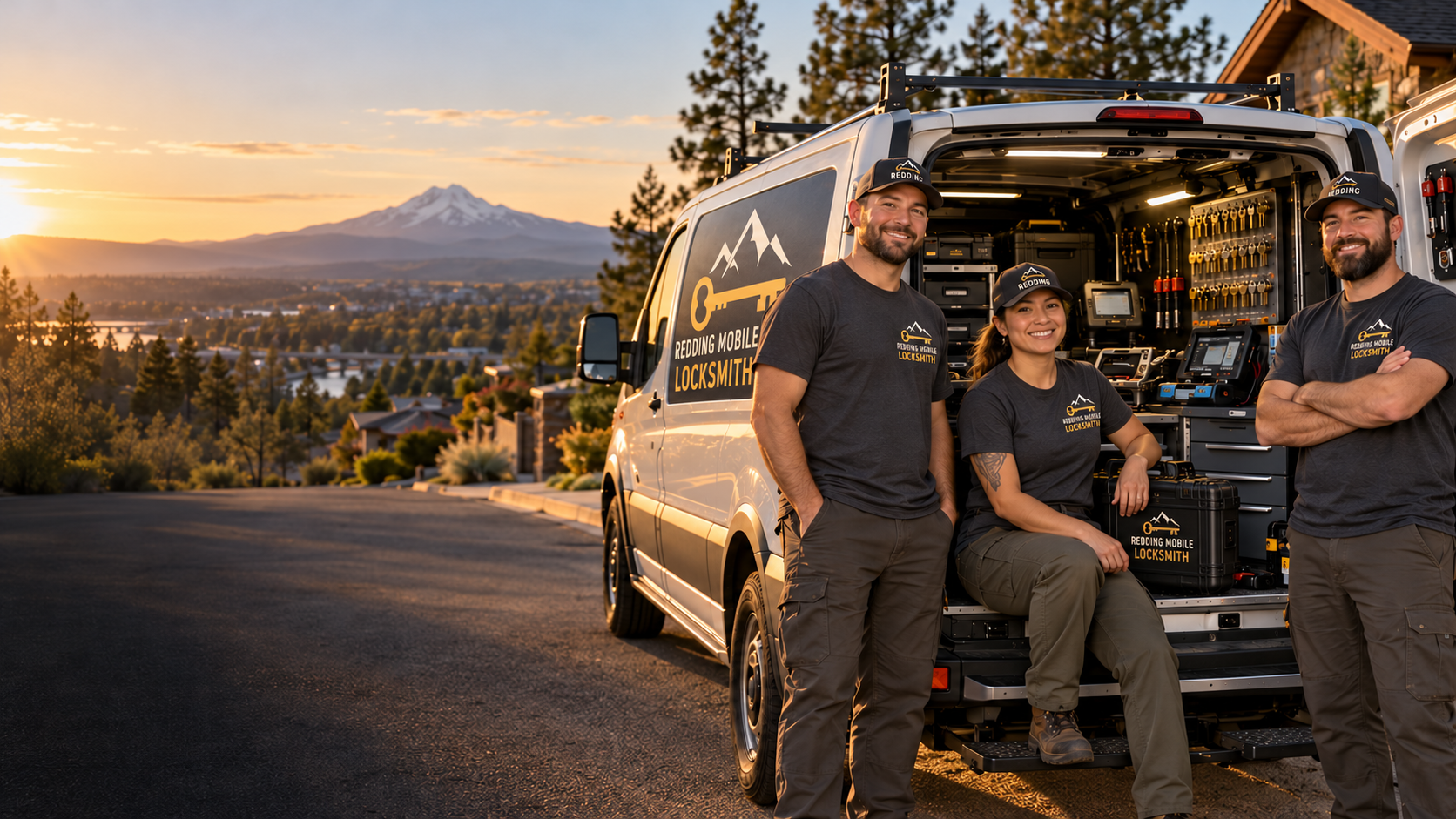
Locksmith work on outdoor lots is familiar territory. Our branded service van carries key cutting and programming equipment, so many lost key and lockout situations can be handled where the vehicle is parked, from a lakeside lot to a trailhead along Highway 299 or near Mount Shasta.
Describe your vehicle and your location through the request form. The phone line is coming soon. Mention the nearest highway or landmark you can see, and any gate or road conditions that might affect access.
To build good habits after the trip, read about car key replacement and plan a spare through our note on a spare key now versus later.
Whatever you carry, practice with it. Open the pouch, get the key out and unlock the car once at home. If the system is awkward, change it before the trip, not during.
After every outing, take the key out, dry it and check it for damage. A small crack in a plastic head or a loose ring is easy to fix at home and hard to fix at a trailhead.
Finally, remember that the vehicle itself has a story. A truck with a trailer, a car with a roof rack and a van full of gear all invite theft at a trailhead. Keep valuables out of sight and lock every door, so that the only thing you worry about on return is the walk back.
Common questions
Should I bring my fob on a boating trip?
If you can avoid it, leave the electronic fob in a secure place and carry a simple spare instead. If you must bring it, seal it in a dry pouch inside a dry bag, attach it to something that floats, and agree on one person to hold it.
What should I do if my fob falls in water?
Take it out, open the case, remove the battery and let everything dry in a warm, dry place. Do not use high heat. If it still does not work after drying, a technician can test it and, if needed, program a replacement.
Is a magnetic key box safe at a trailhead?
It is risky. Cars at trailheads sit for hours and people know to check bumpers. A box can also fall off on rough roads. A spare held by a trusted person, or a plan made in advance, is a safer approach.
How can I keep keys from falling out while hiking?
Use a zipped pocket or an internal pack pouch instead of loose pants pockets. Tie a bright cord to the ring so a dropped key is easier to spot, and check your pocket at every stop. Avoid writing your address on any tag.
What if my key is gone and the car is locked at a remote lot?
Prepare your vehicle details and proof of ownership, note your location and landmarks, then reach out for help. A mobile locksmith can open the vehicle and make a new key on site. If a person or pet is trapped inside, call emergency services first.
Do floating key rings really work?
They help with a bare metal key or a small ring, because foam holds it near the surface. They are less reliable with a heavy fob and many keys. Combine a floating ring with a tether and a dry pouch for better odds of getting it back.