
Home / Dunsmuir / House Lockout in Dunsmuir
Dunsmuir house lockout
House Lockout in Dunsmuir: A Simple Lockout or a Failed Lock?
Picture a contractor at a Dunsmuir job site, work truck out front, locked out of the house being repaired. This page explains how to tell a plain lockout from a failed lock, and what each one needs.
The contractor on the porch
Imagine a contractor in Dunsmuir who has been hired to repair a porch on an older house. The work truck sits on a steep driveway, ladders lean on the rail and the homeowner has stepped out, leaving the front door latched. The contractor needs to use the bathroom, charge a tool and pick up a plan on the kitchen table. The door will not open, and the owner is not answering.
This is an invented scene, but its question is real: is this a lockout, or is the lock itself broken? The two look the same from the porch. In both cases a person is outside and the door is shut. Yet the cause, the fix and the effect on the door are quite different.
Telling them apart is the first step in any house lockout. This page walks through the difference in plain language, then describes what to check, what to tell us and what to expect, in a town where steep lots, older homes and cold winters make small problems feel larger.
A simple lockout, explained
A simple lockout means the lock works perfectly well. It is locked, you are outside and you do not have the key. Perhaps it is inside, perhaps it is lost, perhaps it is with someone who is out of reach. The lock itself is healthy and the door is sound. The only thing missing is access.
In this case, a professional can usually open the door without harming anything. The crew uses tools meant for the task, works with the lock and the door, and leaves them as they were. The door can then be tested and the key problem addressed: a spare cut, a lock rekeyed or a replacement key provided.
The clearest sign of a simple lockout is that the key worked yesterday. If the lock turned easily with a key last night and now you cannot find the key, the lock is almost certainly fine. Our house lockout service page describes the usual process for these cases.
For a contractor, a simple lockout has a practical wrinkle. The homeowner may be away, the key may be in a pocket across town and the job may be stuck. Before anyone opens the door, the crew needs someone with the right to say yes. A call to the owner, a text message or a written work order can settle that, so try to reach the owner while you wait.
A failed lock, explained
A failed lock is different. Here the key is in your hand, but the lock does not work. The key may not enter, may enter but not turn, or may turn without moving the bolt. A broken part inside the lock may have jammed it. The door may be closed but not latched, or a frame may have moved and trapped the bolt.
These cases look like lockouts but need more than an opening. Repairing a failed lock may involve freeing a jammed bolt, replacing a cylinder, adjusting a strike plate or fixing the door itself. A crew member must diagnose the cause before deciding what to do, and the door may need to be opened with more care.
If you have a key and it does not work, say so clearly when you write in. Do not force it. Bending or breaking a key in the lock turns a repair into a bigger repair. Our notes on keys that will not turn and lock repair in Dunsmuir cover what comes next.
Sometimes the lock fails in a way that leaves the door unsecured. A deadbolt that will not extend, a latch that no longer catches or a cylinder that spins freely means the house cannot be locked even when you are inside. If that is your situation, say so at the start, because the crew will bring parts and plan to make the door secure before leaving.
Simple checks before you write in
Before you write in, take a few calm steps. Walk around the house and check every door, including the back, a garage entry and any side door. Look at the windows, but do not try to climb in through one, since falls and cuts are a real risk, especially on a steep lot with uneven ground.
Check whether anyone inside has a key, or whether a neighbor or family member holds a spare. Think about whether a keypad or smart lock is installed. Dead batteries cause many lockouts that look like something worse. Our field note on battery failure in electronic locks explains the signs.
Then note what you see. Is the door fully closed? Does it feel stuck or truly locked? Did the key ever turn today? Does the handle move freely or feel loose? A few honest observations give the crew a picture before arrival, and they often point toward the right tools.
- Try every door, including the back, side and garage entry.
- Ask household members, relatives or neighbors who hold a spare.
- Check whether a keypad or smart lock has weak batteries.
- Notice whether the door seems stuck or truly locked.
- Do not climb through windows or force the door.
Steep lots, older homes and what they mean for access
Dunsmuir is a small town in the upper Sacramento River canyon, and many homes sit on steep lots with stairs, retaining walls and sloped yards. Getting to a door can take effort, and getting a van near it may not be possible. Tell us how the house sits: up a flight of steps, down a drive, at the end of a narrow lane.
Many houses here are older, and older houses bring older hardware. You might have a knob lock with a deadbolt added decades later, a screen door with its own latch and a back door that was painted shut years ago. Each of these affects how a lockout is handled, and a short description helps the crew prepare.
Older doors can also be tired. Wood swells in the damp season and shrinks in dry. Frames shift, hinges sag and a door that once closed softly now needs a shove. Sometimes a lockout is really a door that has dropped and trapped the bolt. A crew member can recognize that pattern and fix the cause, not only the symptom.
The railroad and Interstate 5 run through the canyon, and the town is built along them. Houses on the uphill side may be reached only by stairs, and those on the downhill side by a narrow drive. When you describe the route to your door, mention anything that could slow a crew carrying equipment, such as a gate, a steep stair or loose gravel.
Cold weather and house lockouts
Dunsmuir has cold winters, and cold makes a lockout harder to bear. A person waiting on a porch in winter is at risk of discomfort, then worse. If you cannot get inside and the weather is harsh, find shelter first: a neighbor, a vehicle, a nearby business. Nothing about a lock is worth a chill.
Cold also changes locks. Moisture in a cylinder can freeze, a latch can stiffen and a door can bind against ice in the weather seal. A door that seems locked may only be frozen shut. Do not pour hot water on a frozen lock or door, as it can crack glass and refreeze. Our note on winter lockouts and frozen locks in the mountains goes deeper.
To avoid snow day lockouts, think ahead. Keep a spare key with someone you trust, check keypad batteries before the cold season and clear ice from steps and lock areas. The note on preventing snow day lockouts offers more habits.
Doors that are not the front door
Not every lockout is at the front. A sliding glass door, a back door or a garage entry may be the only way in. Each has its own hardware. Sliding doors use a latch and often a secondary bar or pin. Garage entries are often plain doors with a deadbolt. Tell the crew which door you are at.
Sliding doors in particular get stuck or misaligned, and what looks like a locked door may be a door off its track. Our note on sliding glass door locks explains how those work, and garage entry door security covers the other common weak point.
Windows are not a planned entry. Even if one is open, going through it risks injury and damage. A professional can open the proper door without harm, and it is nearly always the better path, especially for a household with children or older members.
What to tell us and how to ask
Use the request form on the contact page, since the phone line is coming soon. Name Dunsmuir and describe the home: a house on a hill, an older cottage, a duplex, a cabin. Say which door you are at, how many steps lead up and whether a vehicle can reach it.
Explain what happened. Is the key inside, lost or broken? Does the key not turn? Is there a keypad? Is anyone inside who cannot open the door, such as a child, an older relative or a pet? If so, say that first, and call emergency services if anyone is in danger. A locksmith is not a replacement for emergency help.
Finally, be ready to show you live there or have the right to enter. A crew member will ask for identification or something that ties you to the property, such as a bill. That step protects the owner, and it is a normal part of every house lockout. See the residential locksmith page for the wider service.
Job sites, rentals and shared access
A house under repair is a special case. Doors may be removed and rehung, locks may be taken out for painting, and several trades may come and go with their own keys. In that setting a lockout is common, because the lock is half installed or the key has passed between three people during one job.
If you are managing the work, agree on a key plan before the job starts. Decide who holds the main key, who may make copies and who must return what at the end. A simple log on paper, or a shared message thread, prevents most arguments. Rules about who may authorize lock work vary, so ask the owner or property manager if you are unsure.
Rentals add another layer, since tenants and owners both have a stake in the door. If you rent, check with the property owner before asking for any lock to be changed. If you own, keep a record of every key. Our note on landlord and tenant lock questions to ask lists topics worth settling in advance.
What the crew does at the door
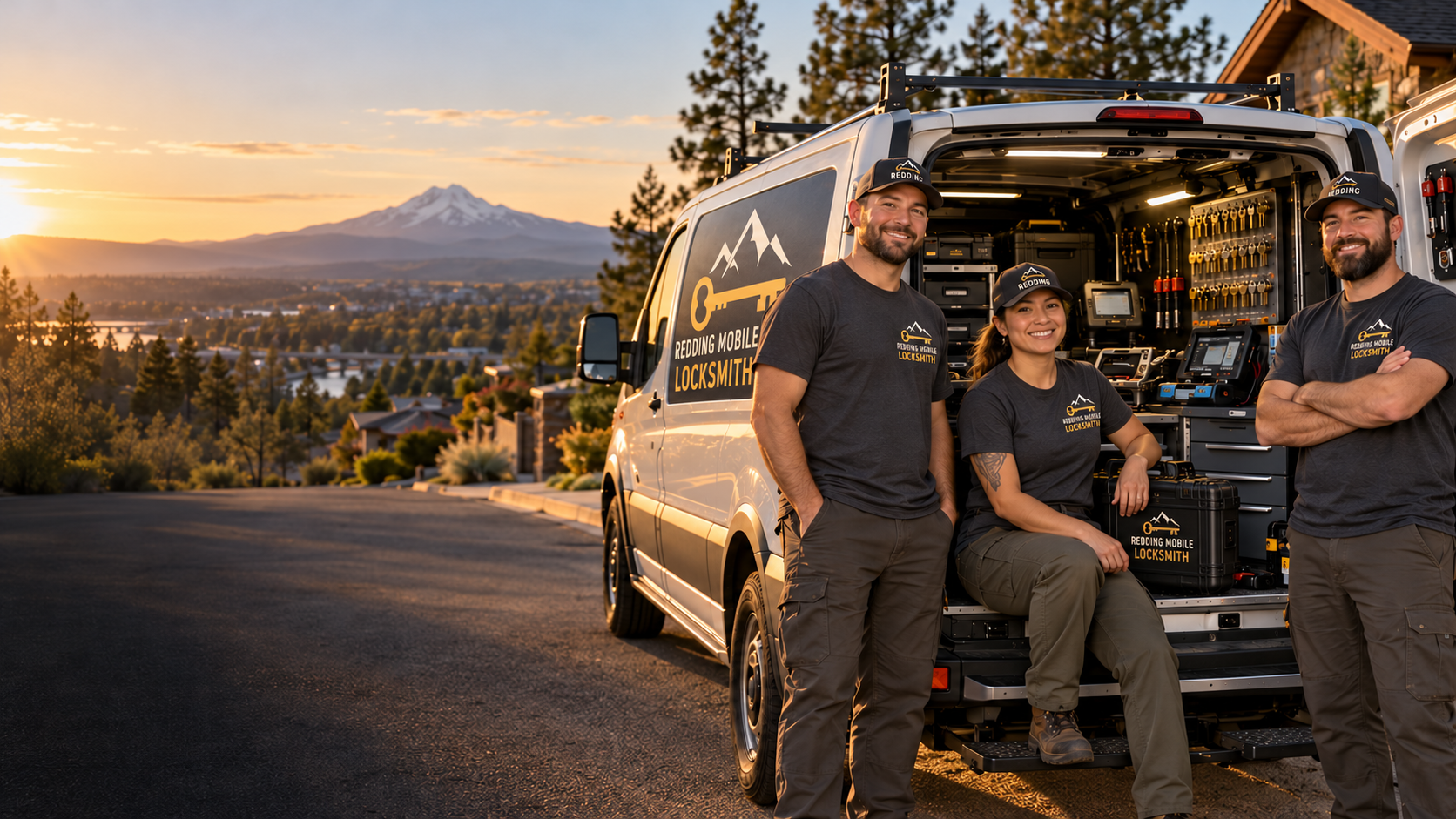
Our uniformed crew arrives in a branded service van with professional tools, key cutting equipment and common hardware. It begins by confirming who you are and your right to enter. Then it looks at the door, the lock and the frame, and decides whether the job is a simple opening or a repair.
If it is a simple lockout, the door is opened using methods that leave the lock and finish intact. We do not describe the steps in detail, since that helps the wrong person more than the right one. If it is a failed lock, the crew explains what it found and what needs to be done to make the door safe again.
Afterward, test the lock. Use the key several times, from both sides, and check that the bolt extends fully. If a spare is needed, it can be cut at the van. If the lost key worries you, see rekeying in Dunsmuir for how to make old keys useless.
After the door opens: small steps that prevent a repeat
Once you are inside, take a moment before the day moves on. Put the key where it always goes. Make a plan for a spare. A key hidden under a mat or planter is easy to find, and our note on hiding a key outside and better options explains safer choices.
Think about who else should have access. A contractor working in a house needs a clear arrangement with the owner: who holds the key, when it is returned and what happens if it is lost. A written note or a text message record keeps everyone honest and calm.
If your lock failed, schedule the repair now. A lock that nearly worked once will probably fail again, usually at an awkward time. The Dunsmuir page describes how we work in town, and nearby towns such as McCloud and Mount Shasta are also on our map.
One last habit is worth the effort. Take a photo of your key ring, front and back, and keep it where you can find it. If the ring is ever lost, you will know exactly which keys were on it, which locks need attention and which doors could be affected. It takes seconds and turns a vague worry into a short, clear list.
Common questions
How can I tell if I have a lockout or a broken lock?
If the key worked before and you simply do not have it, it is a lockout. If you have the key and it will not enter, turn or move the bolt, the lock may have failed. Describe what happens when you try the key, and do not force it.
Is it safe to climb through a window?
We advise against it. Falls, cuts and damage to the window are real risks, especially on steep or uneven ground. A professional can usually open the proper door without harm. If someone inside is in danger, contact emergency services right away instead of climbing in.
Will opening my door damage the lock?
A simple lockout is normally handled with professional tools that leave the lock and finish as they were. A failed lock may need repair or replacement, and the crew will tell you before doing anything beyond opening the door. You will be told what they found.
What proof will I need to show?
Expect to show that you live at the property or have the right to enter. A photo identification and something with the address on it, such as a bill or a lease, is common. If you are a contractor, the owner may need to confirm that you may enter.
Can you help with a sliding door or a garage entry?
Yes. Those doors have their own hardware, and the crew can work on them. Tell us which door is the problem and what happens when you try it. A sliding door that has slipped off its track may need adjusting as well as opening.
How do I ask for house lockout help in Dunsmuir?
The phone line is coming soon. Use the request form on the contact page, say you are in Dunsmuir, which door is locked and whether the key is inside, lost or not working. If a child, older relative or pet is trapped inside, call emergency services first.