
Home / Lakehead / Car Lockout in Lakehead
Car lockout, Lakehead
Car Lockout in Lakehead: Parking Lots, Trailheads and Changing Weather
Lakehead draws people to the water, the woods and the trailheads, and keys slip away in all of them. Here is what to do when you are shut out of your vehicle, and how our crew gets you back in.
What a car lockout really is
A lockout means the vehicle is locked and the key, fob or both are out of reach. Sometimes the keys are sitting on the seat, sometimes they are in the ignition with the engine running, and sometimes they are gone entirely. Each of those is a different problem, and the right response depends on which one you face.
The good news is that modern locksmith methods are built to open a door without harming the vehicle. A trained professional uses purpose made tools that work through the door seam or the window frame, avoiding the scratches and bent metal that come from improvised tricks. We do not describe the techniques in detail here, because the goal of this page is to help you, not to coach a break in.
What matters to you is the outcome. The door opens, the vehicle is undamaged, and you have your keys again. If the keys are lost rather than locked inside, we can discuss a replacement on the spot, using the same van and the same visit.
Key in the ignition with the engine running is a special case, and a surprisingly common one. The vehicle is working, the doors are locked and the clock is ticking on fuel and patience. Tell us that detail up front, and park or stand away from traffic while you wait, because engines running unattended at a roadside draw attention you may not want.
Why Lakehead has its own lockout rhythm
Lakehead sits at the northern end of Lake Shasta, close to Interstate 5, and its population swells and shrinks with the season. Full time residents share the roads with visitors who arrive with boat trailers, kayaks, bicycles and heavy bags. People step out of vehicles in a hurry, eager to be on the water or the trail, and the keys end up in the wrong place.
Marinas, boat ramps, trailheads and pull outs have one thing in common: they are places where you leave a vehicle and carry only part of your gear. The pocket with the key is not always the pocket you meant. A key set on a dock box, tucked into a life jacket or left on a cooler lid can disappear in a moment.
The result is that lockouts here often involve a gap between the vehicle and the person. You may be on the water, at the other end of a trail or in a boat when you realize the problem. Planning for that gap, with a spare stored sensibly, is one of the most useful habits for anyone who plays outdoors.
Interstate 5 brings its own pattern. Travelers stop to stretch, fuel up or look at the lake, and a driver who steps out to take a photograph can shut a door on the only key. Locals know the same feeling from errands, school runs and weekend chores. The lockout does not care how well you know the area.
Picture a contractor at a job site by the lake
Imagine a contractor working on a cabin renovation near the lake. The work truck is loaded with tools, and the keys are in a pouch on a tool belt. During the morning the contractor leaves the pouch on a sawhorse, closes the truck door out of habit and discovers that the vehicle has locked itself.
It is an invented scene, but it will sound familiar to anyone who has worked with a loaded vehicle. The truck holds expensive equipment, the job is paused and everyone on the crew is waiting for a tool that sits behind a locked door. Every minute spent standing around costs momentum.
A mobile locksmith helps here because the truck does not have to move. We come to the job site, open the door without harming the vehicle and let the work resume. If the contractor wants a spare key or a magnetic box placed in a protected spot, we can talk about the safest way to do that without making the vehicle easy to steal.
A contractor also has to think about the wider fleet. Work trucks often have a second key held by an owner or foreman, and a toolbox with its own lock that may use a different key. Sorting out which key does what, and where the spares are stored, is the sort of housekeeping that pays off on the day something goes wrong.
Lockouts in summer heat
Summer around Lake Shasta is hot, and a closed vehicle heats up rapidly. A car parked in direct sun can become dangerously hot inside, and that changes how we think about a lockout. If there is a child or a pet inside the vehicle, call emergency services first, before you call us. They are equipped to respond to that kind of situation right away, and their instructions come before anything else.
For lockouts where no one is inside, heat still matters. Phones, medications, food and some electronics do not tolerate being sealed in a hot cabin. If you can see items that should not sit in the heat, tell us when you make your request so we can plan around it.
Heat also affects people waiting outside. If you are in a parking lot with no shade, find a shaded or cooler spot, carry water and let someone know where you are. A lockout is an inconvenience, and it should not become a health problem. Our field note on a child or pet locked in a vehicle explains the first steps.
Vehicles with dark interiors, leather seats and dashboards can reach surprising temperatures, and the steering wheel or seat belt buckle can be too hot to touch. Once we open the door, give the cabin a minute to vent before climbing in, and take care with metal parts that have baked in the sun.
Lockouts in cold and wet weather
Lakehead is lower than the high mountain towns, but nights can still turn cold, and wet weather makes any wait unpleasant. A lockout at dusk after a day by the water, with wet clothes and a falling temperature, is not something to put up with for long.
If you are in that situation, find shelter if you can, stay with other people and keep your phone charged. If you have no working phone, ask someone nearby to help you contact us through the request form, or to contact emergency services if you feel unsafe or unwell.
Cold also affects locks themselves. Moisture can freeze in a door lock or around a door seal, which makes a vehicle feel locked when it is only stuck. That is different from a true lockout, and the fix is different too. The field note on winter lockouts and frozen locks explains what is going on.
Wet and cold conditions are also hard on the tools of the trade. We carry what we need to work in poor weather, though a sheltered spot, such as under a canopy or beside a building, makes the work easier and the result better. If you can safely move out of the rain, do.
Trailheads, marinas and parking lots
Isolated lots bring their own concerns. A trailhead may be far from other people, with poor phone service and little traffic. If you are locked out at a spot like that, tell us exactly where the vehicle is by describing the road or the nearest landmark in general terms, and wait somewhere visible and safe.
Marinas and boat ramps can be crowded, noisy and tight. Vehicles may be parked close together, trailers may be attached and access may be limited. Let us know if your vehicle is hitched to a trailer, parked in a narrow space or blocking others, so we can plan how to reach the door.
Busy parking lots are easy by comparison, but they carry pressure. People waiting for a space, a gate that closes at certain hours or a group that is ready to leave can all make the situation feel urgent. We work calmly, and we would rather open your door properly than hurry and risk damage.
One more tip for outdoor days: pick a single place for your keys and always use it. A zipped pocket, a lanyard clipped inside a pack, a dry bag that stays with you on the boat. Habit beats memory every time, and a tiny routine can save an afternoon of waiting.
- Share your exact location and any landmarks you can describe.
- Mention a trailer, narrow space or gated area.
- Wait somewhere safe, visible and out of the weather if possible.
- Keep your phone charged and your belongings with you.
What we need from you before we begin
Before we open a vehicle, we need to know it is yours or that you have the right to be in it. Expect to show identification and something that connects you to the car, such as registration or insurance paperwork. That is not a hurdle for its own sake. It protects you, because a locksmith who opened any car for anyone would be a risk to every vehicle owner.
Tell us the make, model and year of the vehicle and where it is parked. Mention whether the keys are inside, whether the engine is running and whether anyone or anything is in the car that needs attention. If the alarm may go off when the door opens, say so.
If you have a spare key at home and someone who can bring it, tell us. Sometimes a spare is the simplest answer, though a trip across the region to fetch it may take longer than letting us handle the opening. We will tell you honestly which option makes more sense for your situation.
Rental vehicles and borrowed ones need extra thought. If the car belongs to a friend, a rental company or an employer, we may need to contact the owner or see paperwork in their name. Let us know early so we can explain what is needed and avoid a wasted trip.
After the door is open
Once you are back inside, we check that the doors, locks and windows all work as they should. If your key is missing, we talk about the next step: a replacement, a spare or reprogramming. Our wider car lockout service page describes the typical process in more detail.
A lockout is a good moment to think about prevention. A spare key kept at home with someone you trust, a plain metal key in a secure spot, or a habit of checking pockets before closing the door can all help. Do not hide a key on the outside of the vehicle, since thieves know those spots well. Our guide to hiding a key outside and better options goes into this.
If your trouble is really about missing keys rather than a locked door, the car key replacement in Lakehead page explains how a new key is cut and programmed, and the automotive locksmith page explains the wider range of vehicle work we do.
If you have a smart key and the fob is inside the car, remember that some vehicles can lock themselves when the fob is detected nearby, while others refuse to lock with the fob inside. Knowing how your own vehicle behaves, and which of its warnings you tend to ignore, can prevent a repeat.
Locked out of the house as well
Sometimes the same pair of keys holds both the vehicle and the home, which means one mistake can lock you out of both. If that happens, our house lockout in Lakehead page describes how we handle entry to homes, cabins and rentals.
Many Lakehead properties are seasonal, so a lockout can happen at a cabin you do not visit often. In that case the proof of access we ask for may involve different paperwork. It helps to think about what documents you could show before you arrive.
If you manage a vacation property for others, keep a record of who holds keys and where spares are kept. That record can shorten the process when something goes wrong, and it makes handoffs between guests and cleaners a lot less stressful.
Keep in mind that people who live and work around the lake often share vehicles, trailers and boats. A lockout on a shared vehicle is a chance to agree on where spare keys live and who is responsible for them, so the next time is less of a scramble.
How to ask for help in Lakehead
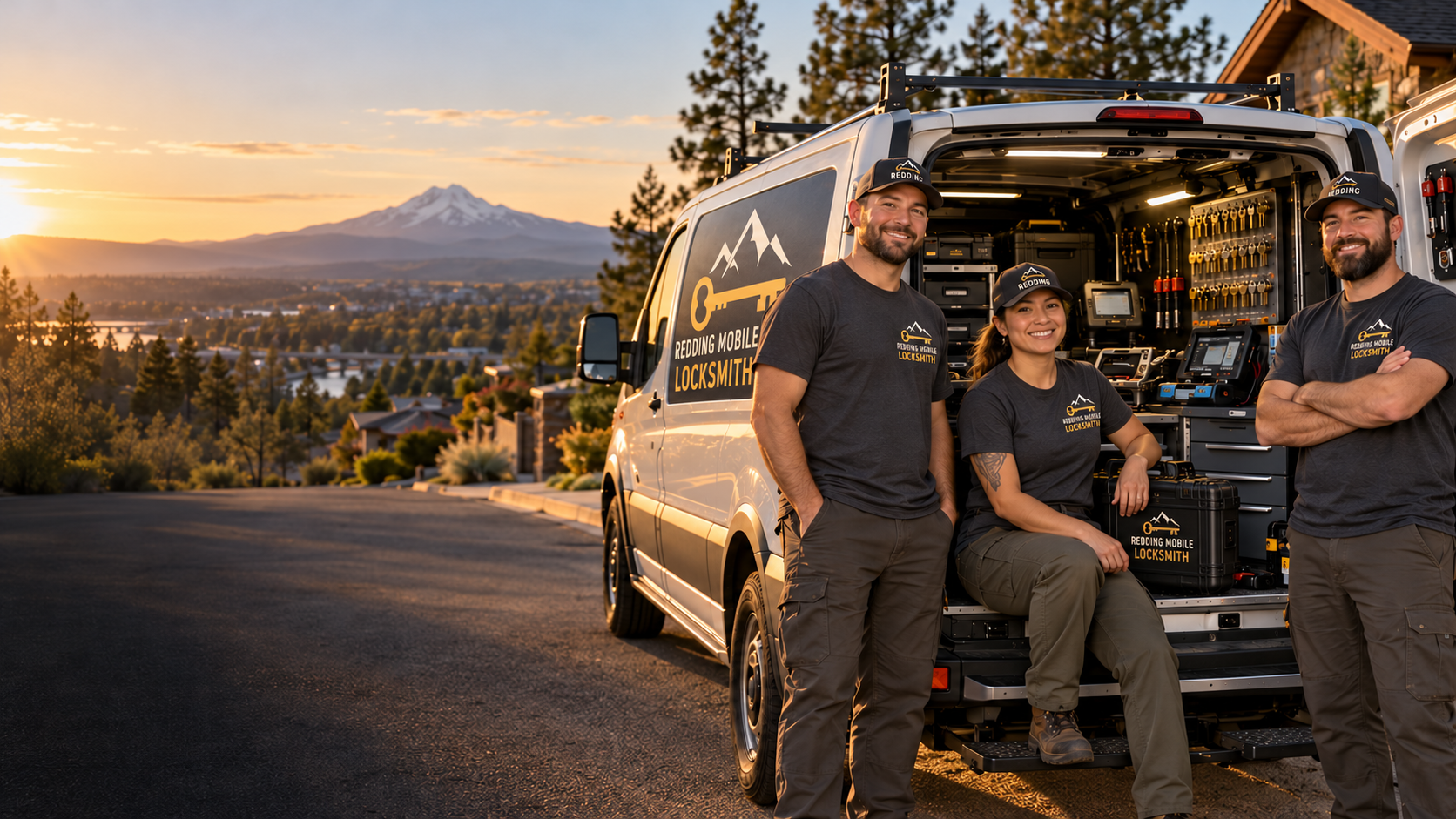
Our phone line is coming soon, so please use the request form on our contact page. Give us the vehicle, the location, the nature of the lockout and any safety concerns. We are a 24 hour mobile locksmith, with uniformed staff and a branded service van, so a request at night is as welcome as one in daylight.
If your safety is at risk, or a child or pet is inside the vehicle, call emergency services first. We are a locksmith, not a rescue service, and we want you to get the right help from people trained for that situation.
For other communities around the lake and along Interstate 5, the Lakehead area page and the Shasta Lake area page show where our crews work across Shasta County.
Whatever the hour, have your vehicle details ready and keep your phone within reach. A short, clear request lets us plan the right tools and the right route, and it spares you from answering the same questions twice while you stand in the weather.
Common questions
What should I do first if my child or pet is locked in the car?
Call emergency services first, before contacting a locksmith. They are trained and equipped to respond to that situation and can give you instructions. We are glad to help afterward, but safety comes before anything else, especially in hot weather.
Will opening my car door damage the vehicle?
Our methods are designed to open a vehicle without harming the paint, weather stripping or locks. We use purpose made tools and take care with each door. If a vehicle has unusual features, tell us when you make your request.
Do I need to show identification for a car lockout?
Yes. We ask for identification and something that connects you to the vehicle, such as registration or insurance paperwork. This protects owners, because it keeps a locksmith from opening a car for someone who has no right to be in it.
Can you help if I am locked out at a trailhead or boat ramp?
Yes, we are mobile and go to the vehicle. Give us a clear description of where it is, mention any trailer or tight space, and wait somewhere safe. Phone service can be limited in remote spots, so share what information you can.
What if my keys are lost rather than locked inside?
We can open the vehicle and then discuss replacing the key. Depending on the vehicle, we may be able to cut and program a new key on site. You will need identification and paperwork showing the car is yours.
How do I request a lockout visit in Lakehead?
Our phone line is coming soon. Use the request form on our contact page and describe the vehicle, location and situation. We are a 24 hour mobile locksmith and will follow up using the details you provide.