
Home / Lakehead / House Lockout in Lakehead
House lockout, Lakehead
House Lockout in Lakehead: Getting Into Your Home, Cabin or Rental
Being shut out of a place you belong is stressful at any hour. This page explains how we get families, renters and owners back inside around Lakehead, and why we ask you to show you live there.
What a house lockout looks like
A house lockout is any situation where you cannot get through your own door. The keys may be inside, lost, stolen, broken in the lock or sitting at a friend's house an hour away. The door may be locked, stuck or damaged. Each version has a slightly different answer, but the starting point is the same: we need to know who you are and why you belong there.
It is easy to feel foolish after a lockout, and we want to say plainly that it happens to careful people. A door that locks behind you, a child who pulls it shut, a gust of wind on a back porch or a pocket that turns out to be empty is all it takes. Nobody plans these moments.
What helps most is a calm head and a clear description. The more you can tell us about the door, the lock and the situation, the better prepared we are to open it without damage.
Before you call, take a short walk around the outside, if it is safe to do so. Check whether another door is already unlocked by habit, whether a family member is on the way home with a key, or whether the lockbox you installed for guests might hold a spare. Many lockouts end right there, and a few minutes of looking can save you a visit.
The mix of homes around Lakehead
Lakehead sits at the northern end of Lake Shasta, near Interstate 5, and the housing here is varied. There are full time family homes, vacation cabins, houses used by seasonal residents, rentals for visitors and homes close to marinas and shoreline. Each kind has its own lock habits and its own risks of getting locked out.
A family home tends to have a few familiar locks and several people with keys. A cabin used a few weekends a year often has older hardware, a lockbox or a keypad, and a spare key hidden somewhere that nobody can quite remember. A rental may have a code that changes between guests, or a combination box that does not work as expected.
Because of that variety, we do not assume anything. We ask about the type of door and lock, whether it has a deadbolt, a keypad or a smart lock, and whether more than one lock must be opened. Good questions at the start save trouble at the door.
Weather shapes the experience too. Summer afternoons near the lake can be hot, and winter nights get cold enough that standing on a porch for long is unpleasant. If you have young children or an older relative waiting with you, find shade or shelter and keep them comfortable while help is on the way.
Picture a neighbor helping a neighbor
Imagine a cabin owner who arrives for the weekend and finds the front door locked and the key missing from the usual pocket. A neighbor who keeps an eye on the property wanders over, offers a ladder, suggests checking the windows and wonders aloud whether to force something. The owner, tired from the drive, is tempted.
This is an invented scene, but the temptation is real. Forcing a window or a door often does more damage than the lockout itself and leaves the cabin less secure than before. A frame cracked on the way in is a repair bill and a weak point for months.
A better approach is to stay calm, check the obvious options such as a spare key with a trusted person, and call a locksmith who can open the door without harm. The neighbor's help still counts, because a second set of eyes and a bit of local knowledge about the property make our work easier.
It also helps to remember what a neighbor can lawfully and sensibly do. They can hold a spare key if you gave them one, keep watch while you wait and tell us what they know about the property. They cannot vouch for you in the way identification does, so bring your own proof when you can.
For absentee owners, a neighbor who keeps an eye on the property is a real asset. Agree in advance on what they should do if they notice something wrong, such as a door ajar or a lock that looks tampered with, and give them a way to reach you.
Why we ask for proof of residence
Before we open a door, we need to know you have the right to be inside. We cannot simply take someone's word for it, because the same request could come from a person who wants to get into a home that is not theirs. Asking for proof is how a responsible locksmith protects the people who live in a place.
Proof of residence can take different forms. Identification with the address on it is common. A utility bill, a lease, a piece of mail or paperwork tied to the property can also help. For a cabin, ownership documents or a rental confirmation may serve. The exact items depend on the situation, and we explain what we need when you contact us.
If you do not have anything with you, tell us. There may be other ways to confirm your link to the property, such as showing items inside the home once the door is open. We handle each case with care, and we would rather take an extra step than open a door for the wrong person.
Proof of residence is a routine part of the work, not a sign that anyone doubts you. We ask the same of everyone, from the long time resident to the person who closed on a cabin last week. Keeping a copy of one or two documents in your phone or your vehicle is an easy way to be ready.
- Identification, ideally with the address on it.
- A lease, rental confirmation, utility bill or piece of mail.
- Ownership paperwork for a cabin or second home.
- Any other record that connects you to the property.
Families, renters and owners
Families have the extra pressure of children and routines. A parent locked out with a child inside the house, or a child locked in and unable to open a door, is a different situation. If anyone inside is in danger or distress, call emergency services first. We are a locksmith, not an emergency responder.
Renters face a different set of questions. Landlords and property managers often hold keys or have rules about locks, and in many cases tenants cannot change a lock on their own. Those rules vary, and we do not give legal advice, but we can explain the hardware side and suggest asking the landlord or manager what is allowed.
Owners usually have the most freedom, but the same care applies. We can open the door, check that the lock still works and talk about whether a rekey, repair or new lock is a sensible next step. Our house lockout service page describes the usual process.
Households that share a home between several adults, such as roommates or extended family, may find that the person who calls us is not the person whose name is on the lease. Tell us who is calling and how they relate to the property, so we can work out what proof is suitable.
How we open a door without causing damage
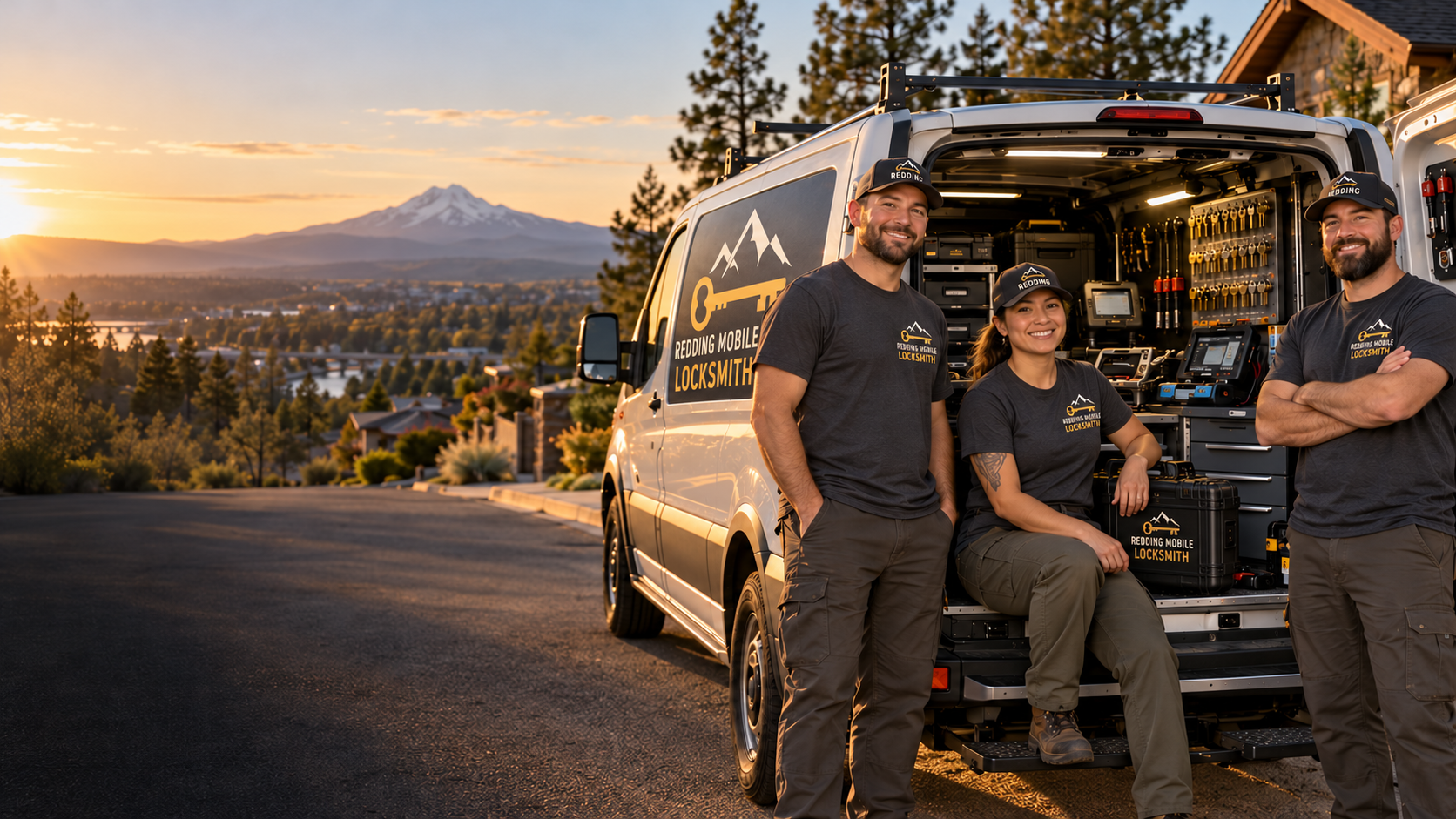
Our branded service van carries professional tools for opening residential doors. The aim is always to open the door without harming the lock, frame or finish, so you can use it normally afterward. We do not explain the methods in detail, because they are for professionals, not for people who want to bypass a lock.
Different doors need different approaches. A standard deadbolt, a handle set, a sliding glass door, a keypad lock and a smart lock each have their own features. Sometimes the simplest approach is working with the lock itself, and sometimes it is working around it, and we choose based on what will leave the least mark.
Occasionally a door cannot be opened without some damage, such as a lock that has been broken, a deadbolt that is seized or a frame that has warped. In that case we explain why, show you the options and let you decide before we proceed. You will not be surprised by a repair you did not agree to.
Smart locks and keypad locks add a twist. If the lock is battery powered and the battery has died, there may be a way to power it briefly from outside, or a mechanical key hidden in the housing. Tell us which brand type you have, in general terms, and we will plan accordingly.
Cabins, second homes and rentals
Many Lakehead properties are used only part of the year. That has benefits for security, because the property is often empty, and drawbacks for lockouts, because the owner may arrive after a long drive to find a problem. Keeping a spare key in a secure place with a trusted person, rather than under a flowerpot, is the easiest prevention.
Keypads and lockboxes are popular for rentals, since they let guests enter without a key exchange. They also fail in particular ways: dead batteries, changed codes, boxes left locked or doors that need a firm push. Our note on keypad locks for rental turnover covers the common pitfalls.
If you manage a vacation rental, a lockout from a guest can happen at any hour. Having a clear process for where to send a guest, who to contact and what proof is required helps everyone. For longer term planning, see our guide to a lock strategy for cabins and second homes.
Seasonal visitors who rent a place for a week often have no proof of residence in the usual sense. A booking confirmation, the host's contact details and identification can serve, and we encourage guests to contact the host or manager first, since they may have a more direct route to a spare key.
After the door opens
Once you are inside, we check that the lock, strike and latch work properly and that the door closes and locks as it should. If something was damaged, we discuss a repair. If the keys are lost, we talk about rekeying so the missing key becomes useless, and our rekeying in Lakehead page explains how that works.
It is also a good moment to think about how to prevent a repeat. Options include a spare key with a person you trust, a keypad deadbolt in addition to a keyed one, or a simple routine of checking pockets before the door closes. The right choice depends on your household and your property.
If a lock has been tired for a while, it might be time to look into lock repair, and the guide on your first day in a new home is a good checklist for anyone who has just moved in.
A fresh start with keys is worth considering if the lockout involved a lost key. A key that vanished near the water, in a pack or in a vehicle could be anywhere, and the lock on your door is only as private as the number of working copies in circulation.
If you are also locked out of the car
Sometimes the keys that are missing belong to both the house and the vehicle. If you are shut out of both, we can help with each. The car lockout in Lakehead page explains how we handle vehicles at trailheads, marinas and parking lots.
It can also be useful to know that our crew handles a mix of residential, automotive and commercial work. A family that needs a door opened today may want a new key for the vehicle next week, and having one service that does both is simpler than hunting for two.
If a spare key is available with someone close by, tell us. Sometimes retrieving it is the simplest answer, though we will tell you honestly when opening the door is the better option.
Just as with homes, vehicles and boats sometimes share keys, and a ring that opens a cabin, a truck and a storage shed can leave you in trouble all at once. If that sounds like your setup, mention it when you contact us so that we can bring the right tools for each job.
How to ask for help in Lakehead
Our phone line is coming soon, so please use the request form on the contact page. Describe the type of door, the lock if you know it, whether anyone is inside, and what proof of residence you can show. We are a 24 hour mobile locksmith and the form is read at any hour.
If anyone is in danger inside, or if you smell smoke or gas, or hear a child or pet in distress, call emergency services first. Locksmiths open doors, but emergency crews have the training and the authority to act.
We serve Lakehead along with communities across Shasta and Siskiyou counties. The Lakehead area page shows the neighborhoods we cover, and the Redding area page shows the wider region.
If you are on the road and cannot be at the property, tell us. We can sometimes work with a property manager or a trusted person on site, as long as proof is shown and the owner agrees. Plan this ahead of time, and the situation becomes far easier when it arises.
Common questions
Why do you need proof that I live at the property?
We have to be sure we are opening the door for someone with the right to be inside. Proof protects residents and owners from anyone else trying to get in. Identification with the address, a lease, a bill or ownership paperwork usually works.
What if I cannot find anything with my address on it?
Tell us what you do have. Other items may help connect you to the property, and in some cases we can confirm with objects inside once the door is open. Each situation is handled with care and honesty about what we can and cannot do.
Can you open a door without damaging it?
In most cases yes. We use professional tools made for residential doors and aim to leave the lock, frame and finish unharmed. If a door cannot be opened without some damage, we explain why and agree on the next step with you first.
I rent my home. Can I still ask for help?
Yes, with proof that you live there, such as a lease or mail. Rules about changing locks in a rental vary, so ask your landlord or manager before replacing or rekeying anything. We can explain the hardware side.
What should I do if someone is inside the house in distress?
Call emergency services first. If a child, pet or person inside is in danger, trained responders should come before a locksmith. We are glad to help afterward with the lock or any damage.
How do I request a house lockout visit in Lakehead?
Our phone line is coming soon. Use the request form on our contact page and describe the door, lock and situation. We are a 24 hour mobile locksmith and will follow up using the details you provide.