
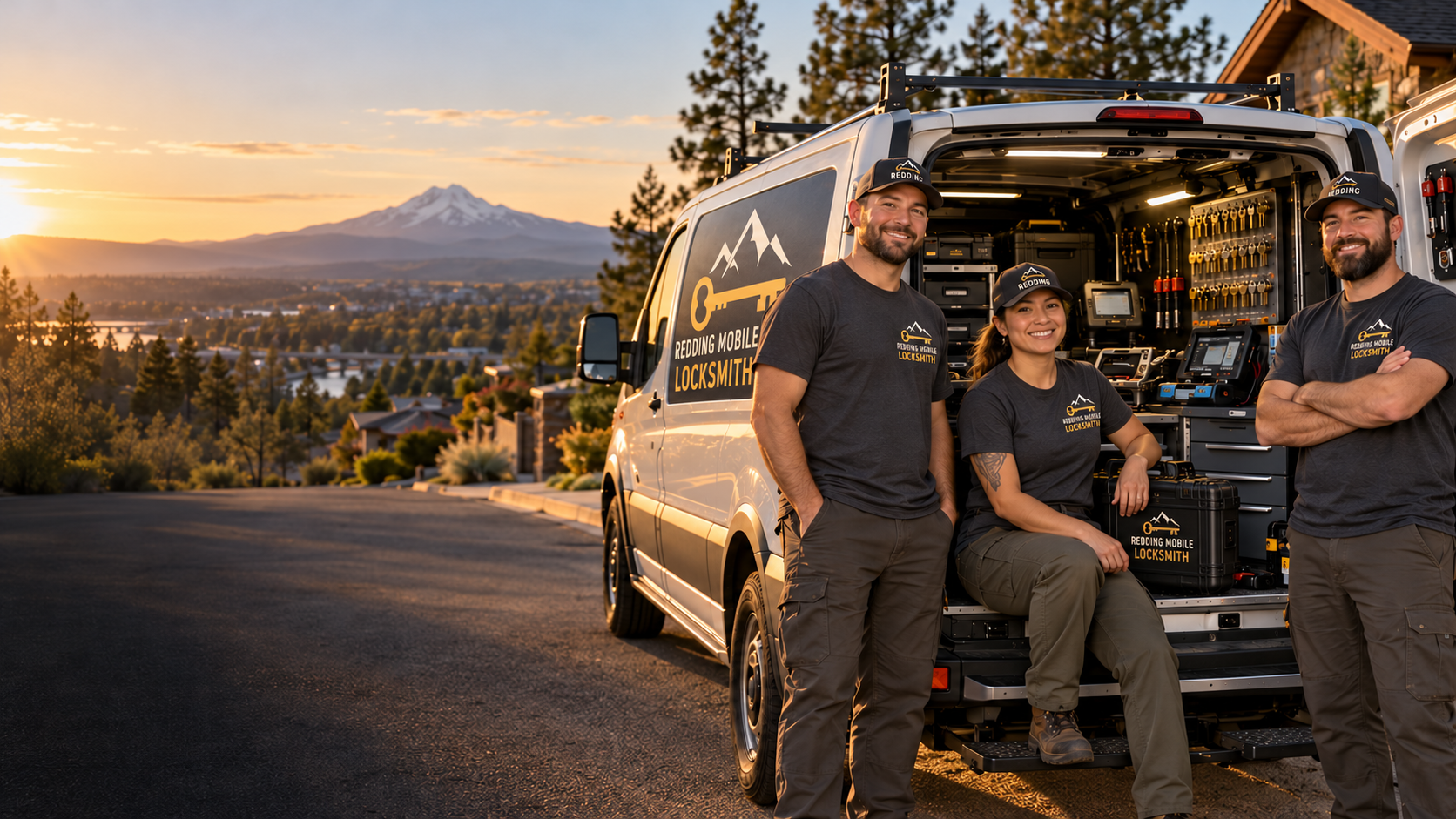
Dusk at the end of a gravel road
Imagine an angler or hiker coming back to the vehicle as the light goes soft over the Shasta Valley. The day was good, the gear is damp and heavy, and the only sound is wind in the grass. At the tailgate, a hand pats a pocket and finds it empty. The key is in the vehicle, which is locked, and the nearest neighbor is well down the road.
Rural lockouts have a particular feel. In town, a shop or a stranger is usually within sight. Out near Granada, the space between you and help is wide, and the daylight is limited. That makes the first few decisions more important: stay calm, stay safe, and give clear information to whoever is coming.
This page is for people in that situation, and for people who want to be prepared before it happens. It focuses on what differs by vehicle type, since a sedan, a pickup, a van and an SUV all open a little differently.
Think about what you can control in that moment. You cannot make the door open, but you can choose where to wait, what to put on, and how to describe your position. A calm, organized request does more to shorten the wait than any amount of pacing around the vehicle.
How to reach the team from a remote spot
Our phone line is coming soon, so the way to reach us right now is the request form on our contact page. If your cell signal is weak, try moving to higher ground, or wait until you reach a spot with a stronger connection. Even a brief window of signal is enough to send a short request.
Write down where you are in plain terms. Describe the road you are on, any gates, mailboxes, signs or distinctive features and which direction you traveled to get there. A lot of rural places in the valley lack easy landmarks, so every bit of description helps.
Tell us the vehicle type, what key is inside, whether the engine is running and whether anyone or any animal is in the vehicle. If a child or pet is inside, call emergency services first. Our guide on what to do when a child or pet is locked in a vehicle explains why.
If you have a travel companion, give them a job. One person can write the request while the other watches the road or gathers documents. Splitting the tasks keeps everyone calm and makes sure nothing is forgotten, such as the vehicle make or the nearest gate or sign.
Sedans and compact cars
A typical sedan has four doors with frames, rubber seals and a snug fit. The body panels are tight and the windows often sit in frames with a fine seal around the glass. A technician approaching a sedan thinks about the gap between the door and the body, the position of the airbag wiring and the lock linkage inside the door.
Smaller cars often have shorter reach inside, and some have frameless windows that seal differently when pressed. A careful technician works with that, creating just enough space to reach the unlock control while keeping the weather seal intact.
If your sedan has a smart key or a push button start, the fob may be on the seat or in a bag inside the car. Modern systems often prevent the doors from locking while a recognized fob is inside, but not all of them do. Tell us what you know about how your car behaves.
Sedans also tend to have the most sensitive electronics packed into the door, including window motors, speakers and side impact sensors. That is one more reason a clumsy attempt with a household tool can create a repair bill far larger than the lockout itself.
If you travel through the valley often, consider keeping a small kit in the vehicle that stays out of the locked cabin: a warm layer in the bed, a water bottle and a flashlight in a toolbox you can reach. It will not open a door, but it makes a wait far more comfortable.
Pickups and work trucks
Pickups are common in the Shasta Valley, and many are working vehicles. The doors are larger and heavier, the cab is tall, and the lock hardware sits in a different position from a car. Extended cab and crew cab models add rear doors, and some have small rear access doors that open differently.
Work trucks often have toolboxes, locking caps and tailgate locks in addition to cab doors. If you are locked out of the cab but the bed holds your tools, say so. If the keys are inside a toolbox that is also locked, that is a separate problem and worth describing.
Older pickups with manual lock posts, crank windows or basic key cylinders open differently from modern trucks with power locks and sensors. Tell us the model year range so the technician can pack the right tools. For work vehicles that serve a business, our note on work trucks and toolbox locks may help.
A pickup parked in a field with the windows down a crack is a different situation from one with the windows sealed. Mention it either way. A partly open window sounds like an invitation, but it also means a rain shower or a dust storm can soak the cab, and the technician may want to prioritize accordingly.
Vans and larger vehicles
Vans come in many forms, from family minivans with sliding doors to cargo vans with separate locks on the cab, the side and the rear. A cargo van can have three or four different locks that may or may not use the same key. Knowing which one is locked, and where the key is, helps.
Sliding doors on minivans bring their own mechanism, often powered, and they may lock separately from the front doors. A lockout could mean only one of those doors is secured while another is open. Tell us which doors you have tried.
Larger vehicles, such as camper vans, small motorhomes and utility vans, may have step doors, specialty locks and additional compartments. A technician who understands these differences can plan the visit. Our guide on RV and camper locks gives background for those vehicles.
Another thing to mention is whether the vehicle has a rear sliding window, a flip up seat or a cargo area that opens from the outside. These details are small, but a technician reading them can choose the cleanest path and avoid touching the paint.
SUVs and crossovers
SUVs sit between a sedan and a truck in many ways. They have more glass, taller doors and a rear hatch that sometimes locks independently. Some have frameless windows on the front doors, others have framed windows. Seals and sensors differ, and so does the way a technician reaches the control inside.
A rear hatch can be a lifeline. On some SUVs, an unlocked hatch gives access to the inside, but on many it is linked to the central locking. Do not assume a hatch is open just because it looks fine. Tell us what you have tried, so we do not repeat steps.
Crossovers with smart keys often use proximity sensors on the door handles. A weak fob battery can make a car seem locked when it will respond to a physical key. Our note on key fob battery basics explains how to check.
If you are driving a rental or a borrowed vehicle, say so and have the paperwork ready. A technician will need to confirm that you have permission from the owner, and the rental company or the vehicle's owner may have to be involved. Starting that conversation early prevents a delay at the roadside.
What we need to see before we open a vehicle
A lockout call comes with a short verification step. The technician needs to see that the vehicle belongs to you or that you have the authority to open it. Government photo ID, plus a registration, title or insurance document linking you to the vehicle, is the usual combination.
Requirements can vary, and we do not promise a fixed list. If your documents are inside the locked vehicle, tell the dispatcher. There may be other ways to confirm ownership, and discussing them beforehand avoids a wasted trip.
This step protects you. A technician who opened any car for anyone with a good story would be a hazard to every owner in the valley. The few minutes it takes is part of the service, not an obstacle.
Make a habit of noting where your vehicle is when you leave it. In flat open land, one fence line looks like another, and a pin on your phone map is worth more than a description. If you share your position with a family member before you head out, a lockout becomes much simpler.
Open country, gates and long driveways
Granada sits in ranch country with open fields, outbuildings and gates. A vehicle may be parked at a gate, inside a pasture lane, near a barn or at the end of a long driveway. Technicians need to know how to reach you. If a gate is locked, say who can open it. If the road is gravel or has ruts, say so.
Livestock matters. If animals share the area, tell us so the technician can plan to park and work safely. Dogs on the property are worth mentioning for the same reason. A calm word in your request prevents surprises.
If your vehicle is in a spot that is hard to see from the road, consider asking someone to wait at the road to guide the technician in. A flashlight, a hazard light or a reflective vest helps at dusk, when a vehicle in a field is easy to miss.
Dust is also a factor. A dry valley summer day can fill a locked cab with dust and heat, and a hard wind can slam doors on keys. Rain turns dirt roads into slick tracks that a technician may need to approach slowly. Being honest about the road condition helps everyone prepare.
Weather and light in the valley
The Shasta Valley has hot dry summers and cold winters. In summer heat, a closed vehicle can become uncomfortable and unsafe sooner than you would think, so shade and water matter while you wait. In winter, cold wind and early dark make the wait harder, and a vehicle that was warm minutes ago cools off in a hurry.
Dress for the wait rather than for the walk. If you were hiking or fishing, you may be damp, which makes cold feel worse. Put on dry layers if you can reach them. If the keys are locked inside, your jacket may be too, so think about what you can do with what you have.
Plan for darkness. A vehicle in a field after sunset can be hard to find. Turn on any light you carry, stay near the vehicle and let your contact know your position.
If a lockout was caused by a worn key that failed in the door rather than a key left inside, tell the technician. A key that has begun to bend or crack should be replaced before it breaks off in a lock. It is a small cost compared with being stranded in a field.
Last, keep the details of this event in mind for next time. Which door did you shut, who was with you, and what could have prevented it. Most lockouts come from a short list of causes, and recognizing yours is the surest way to avoid a repeat on a cold evening.
After the door opens
Check the vehicle once the door is open. Make sure the doors lock and unlock normally, and confirm that your key or fob works as expected. If the lockout resulted from a dead fob battery or a faulty lock actuator, the technician can point that out. Our guide on car door lock actuator trouble explains what that means.
Then think about a spare. If this was your only key, a duplicate kept at home protects you from a repeat. Our Granada car key replacement page covers making keys on site, and the main car lockout service page gives the broader picture.
Lastly, adjust your habits. Keep a key with you rather than in a pack that goes into the vehicle. A neck cord or a zipped pocket works well for anglers and hikers.
Think about your whole key ring too. If your vehicle key shares a ring with a house key, a gate key and a shop key, one loss exposes everything. Separating the vehicle key onto its own clip lets you hand over the ring for valet or service without handing over your property.
Granada and the surrounding communities
Granada is one of seventeen communities we serve across Shasta and Siskiyou counties. The same team works around Montague, Yreka and the wider Granada area, and across the region.
To get started, use the request form with your location, vehicle type and what happened. Redding Mobile Locksmith will pick up your request and follow up.
If you are locked out of a home or outbuilding as well, our Granada house lockout page covers that side of things.
Common questions
Do you come out to remote roads and gates?
Yes, our service covers rural parts of Siskiyou County including the ranch country near Granada. Give clear directions, mention gates and gravel roads, and say who can open a locked gate. If signal is weak, send a short message from wherever you can and add detail as you can.
Is a pickup harder to open than a sedan?
Not necessarily, but the details differ. Pickups have larger doors, a taller cab and different lock hardware. Older trucks may use manual lock posts. The technician adjusts to the vehicle in front of them, so give the make, type and rough year in your request.
What if my keys are locked in a toolbox on the truck?
That is a separate lock from the cab doors, with its own key and hardware. Tell us which lock is secured and where the keys are. A technician can plan for both the cab and the toolbox, and explain what is possible on the day.
Can you open a van with sliding doors?
Yes. Sliding doors may lock separately from the front doors, so tell us which doors you have tried. Cargo vans may have different locks for cab, side and rear doors. Knowing which one is locked lets the technician bring the right approach.
What proof of ownership do I need?
Photo ID plus a registration, title or insurance document connecting you to the vehicle is typical. If your documents are inside, tell the dispatcher in your request. There may be another way to confirm ownership, and it helps to discuss it before the visit.
What should I do while I wait at dusk?
Stay near the vehicle in a visible, safe spot, away from traffic. Put on dry layers if you can reach them, keep your phone charged and light a flashlight or hazard lamp if you have one. If anyone or any animal is inside the vehicle, contact emergency services first.