
The cabin owner who gets back after weeks away
Picture a seasonal cabin owner who pulls into the Weed area after several weeks somewhere else. The truck has sat in a garage, the key fob has been in a coat pocket, and a long drive up Interstate 5 has left them tired. They step out to stretch, shut the door, and hear the lock engage with the fob still sitting on the seat.
This is the most common shape of a car lockout. Nothing is broken and nothing is wrong with the vehicle. The keys and the car simply ended up on opposite sides of a locked door. It is frustrating, but it is also one of the most routine problems a mobile locksmith solves.
We wrote this page for people in Weed who find themselves in that spot, or who want to know what will happen before it does. The short version is that a trained technician opens the door with purpose built tools, and the car goes home with the same paint, the same weather seals and the same working locks it had before.
What a lockout call looks like from your side
When you reach us through the request form on our contact page, we ask for a few plain details. Where is the vehicle, what is the make and general type, which key or fob is inside, and is anyone or anything in the car that makes the situation more urgent. Those answers tell the dispatcher what tools to bring and how to prioritize the call.
Our phone line is coming soon, so the form is the way to reach the team for now. Please write the location as clearly as you can. A business name, an intersection in general terms, or a description such as the lot beside the highway helps a technician find you without a second round of questions.
Once a technician is assigned, you wait with the vehicle if it is safe to do so. Stay somewhere visible and out of traffic. If you are in a wind exposed lot, which is common around Weed, standing near the entrance of a nearby building is a better choice than standing next to the car.
How a professional opens a locked car
Modern car doors are built with protective shields around the lock linkage, tight weather seals and side airbag wiring inside the panel. That is why guessing with a coat hanger or a flat bar tends to scratch paint, tear seals and sometimes bend the door frame. A locksmith works with thin, shaped tools designed to make a small, controlled gap or to reach the unlock control without pressing on anything that should not be touched.
The goal is always to open the door the way the car was designed to be opened, only without the key. A technician protects the paint with soft wedges, checks where the airbags and wiring run, and moves slowly. On many vehicles the job is over in the time it takes to describe it, and nothing about the lock has changed.
We are not going to describe the step by step method here, and that is on purpose. The technique is for trained people working on vehicles they have confirmed belong to the person asking. What matters for you is the result: an open door, an undamaged car and keys back in your hand.
There is also a practical reason for keeping the method private. Door designs change every few years, and a technique that suits one vehicle can be wrong for the next. A technician reads the car in front of them, picks the approach that suits that door, and adjusts as the work goes on. That judgment, built from many doors of many types, is what you are really paying for when you call a professional.
Heat, cold and wind in Weed
Weather decides how urgent a lockout feels. Weed sits in open terrain north of Mount Shasta, and the wind there can be steady. In summer the valley floor and the mountain foothills both bake, and a closed car heats up much sooner than most people expect. In winter the same lot can turn icy, and standing outside in cold wind for an extended wait is miserable.
If a lockout happens in extreme heat or cold, tell us right away in your request so the dispatcher knows. Anyone who is uncomfortable should move into shade, a building or a warm place while waiting. Never leave a person or a pet in a closed vehicle, and if one is already locked inside, stop reading and contact emergency services first. Our guide on what to do when a child or pet is locked in a vehicle explains why.
Cold adds one more wrinkle. Frozen door seals and iced up handles can look like a lockout when the door is actually just stuck. If you can see the lock button popped up and the key is in your hand, a stuck seal is likely. Pulling harder is the wrong move because you can tear the seal or snap a handle. Describe what you see and we can tell you which situation you probably have.
Wind deserves a mention as well. Weed is known for gusts that can slam a door shut on a key that was resting on the seat or the door sill. If you were loading groceries, camping gear or luggage in a breeze, the door may have closed on its own with the lock button already pressed. That is a very ordinary way to end up outside a locked vehicle, and it is worth telling the dispatcher so they know the car itself is working normally.
Parking lots, highway stops and trailheads
Weed draws a mix of local traffic and people passing through on Interstate 5 and Highway 97. That means lockouts happen in grocery store lots, near campus areas, at highway rest stops, and at the gravel pull offs where people head out for a hike or a fishing trip. Each place has its own considerations.
In a busy lot, the main issue is finding a safe spot for the technician to work without blocking traffic. At a highway pull off, we want to know which direction you are headed and what is visible nearby. At a trailhead, the concern is often signal and light, so tell us if your phone service is weak and where you can get a bar or two. Details like these shorten the call more than any tool does.
If your keys fell out of a pocket on the trail and you cannot find them, that is a different job from a lockout. Say so in your request. A technician may be able to open the car now and then talk with you about making a new key, which is covered on our Weed car key replacement page.
One more thing helps in remote places: tell someone where you are. A friend, a family member or a coworker who knows your location and your plan can check on you, relay messages if your signal drops and keep you company while you wait. It sounds small, but being found by a technician is easier when someone else on the other end of a phone also knows what the surroundings look like.
What we ask before opening a vehicle
Opening a car for someone who cannot prove it is theirs is a risk to everyone, including the real owner. That is why a technician will ask you to show that the vehicle is yours. Typically that means a government photo ID along with a registration, an insurance card or another document that connects your name to the car.
Rules and company policies differ about exactly what counts, so we cannot give you a fixed list here. What we can say is that it helps to have your documents ready. If your registration is inside the locked car, tell the dispatcher. There are usually other ways to confirm ownership, and a conversation beforehand avoids a surprise at the curb.
This is not meant as an obstacle. A mobile locksmith who opens cars without checking would be a hazard in any town. The check protects you the next time your own vehicle is the one at risk.
Different vehicles, different details
Sedans, pickups, vans and SUVs all open differently. A pickup with a tall cab and a rear sliding window is not the same job as a compact car with frameless windows. Older vehicles with manual lock posts behave differently from newer ones with electronic latches and smart entry systems that listen for a key fob nearby.
Tell us the make, the general model type and the rough age of the vehicle when you write your request. If there is an aftermarket alarm or a remote starter, mention that too. An alarm that sounds when the door opens is not harmful, but it is nice to know about so you are not surprised.
If the keys are locked inside a running vehicle, say that first. The engine may be on, the exhaust may be near people, and you may be standing in cold wind or hot sun. Our note on keys locked in a running car covers what to do while you wait.
After the door is open
Once the door opens, the technician hands over the vehicle and the work is finished. Take a moment to look over the door edges and weather seal with them, though a careful job leaves nothing to point at. Then get your keys, check that every lock still works with the fob, and make sure you can lock and unlock the doors normally.
This is also a good moment to ask about a spare. A lockout with one key is a warning sign. If the only fob you own is the one sitting on the seat, you have no backup if it is lost, broken or drowned in a stream. Making a spare while you are already talking with a locksmith is usually simpler than doing it after a second emergency. The details are in our general car lockout service overview and our car key replacement page.
If the lockout was caused by a worn fob battery or a flaky door lock actuator, the technician can often point that out. Neither is a locksmith emergency, but both can lead to another lockout on a bad day.
If you use a vehicle with a key that has a metal blade hidden inside the fob, ask the technician to show you where the blade release is and which door cylinder it fits. Many people drive for years without knowing their fob has an emergency blade, and that knowledge alone can turn a future lockout into a ten second problem as long as the blade stays with you and not on the seat.
Habits that prevent the next lockout
Most car lockouts follow the same few patterns. Someone sets the keys on the roof or seat while loading bags. Someone presses the lock button on the door panel while holding the door open. Someone hands the fob to a child, who drops it in the back. A few simple habits close those gaps.
Keep a spare key somewhere that is not in the car or in a magnetic box under the bumper. Trusted family members or a secure place at home are better choices. Get into the habit of touching your pocket before you close the door. If your vehicle has a button start with a smart key, remember that some systems will not lock with the fob inside, but others will, so learn how yours behaves before you depend on it.
Cabin owners and seasonal travelers have one more wrinkle: a fob battery that sat idle for weeks can be weak or dead when you need it. Replace it before the long trip, not on the side of the road.
Finally, think about how your household handles keys. If two people share a vehicle, agree on where the one spare lives and who holds it. If a teenager or a visiting relative drives the car, make sure they know who to contact and what documents the vehicle needs. A short conversation at home removes a lot of confusion later, especially on a cold evening when the temperature is falling and nobody wants to improvise.
Where Weed fits in our service area
Weed is one of seventeen communities we serve across Shasta County and Siskiyou County. Nearby, our teams also work with drivers around Mount Shasta, Yreka and the wider Weed area. If you want to read about house related problems in town, the Weed house lockout page is the companion to this one.
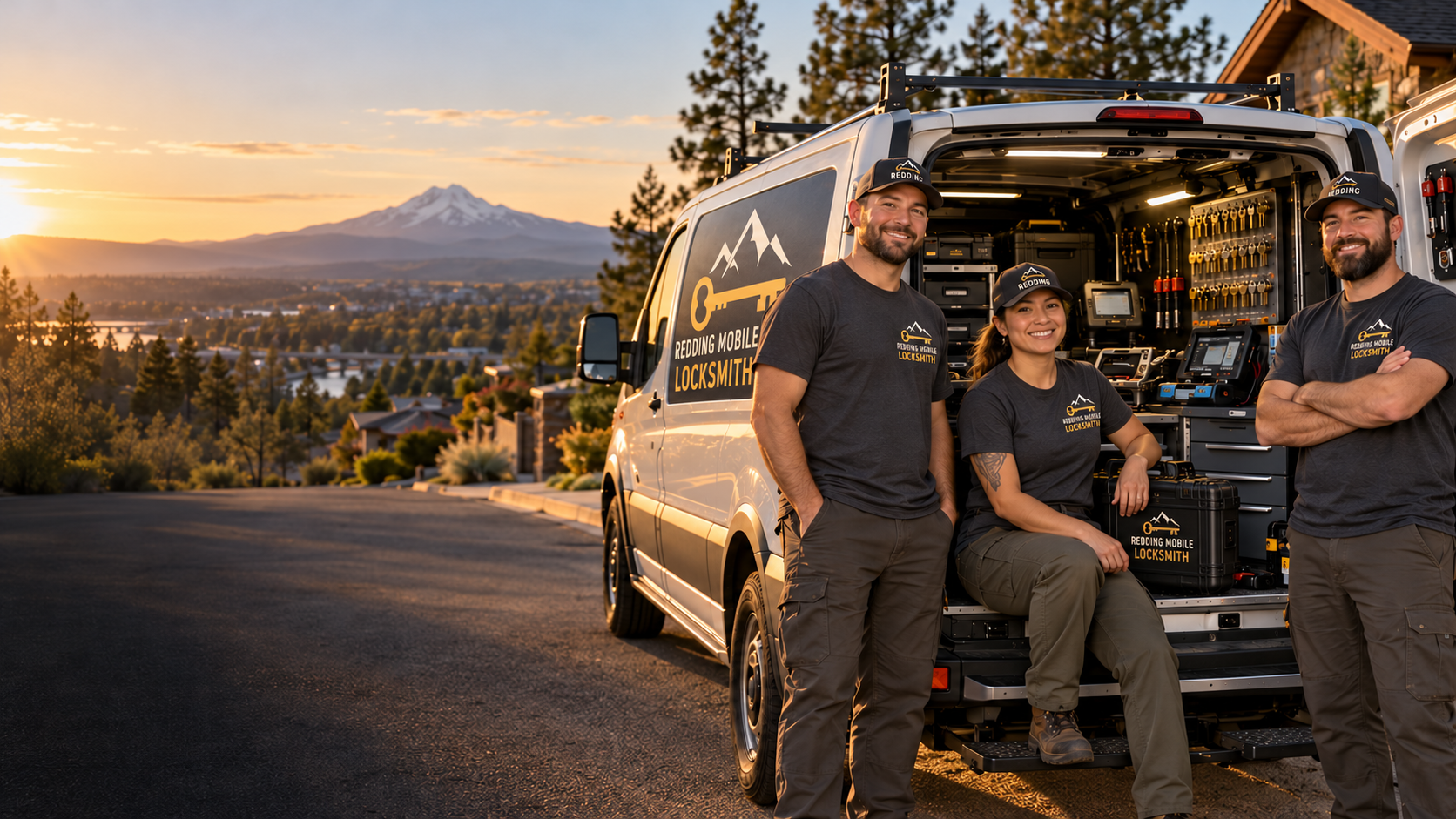
Our team works from a branded service van carrying professional tools and key cutting and programming equipment, so many problems that start as a lockout can be sorted out on site. If you need an overview of everything we cover for vehicles, see the automotive locksmith service page.
When you are ready, send a request from the contact page with your location, your vehicle and what happened. Redding Mobile Locksmith will take it from there.
Common questions
Will opening my car damage the paint or the door?
A trained technician uses tools designed for the job and protects the paint and seals as the work happens. The aim is to leave the door exactly as it was. Hooks, bars and improvised tools are what cause scratches and torn weather seals, which is why it helps to avoid trying them yourself before we arrive.
What should I have ready when I submit a request?
Be ready to share where the vehicle is, its make and general type, and what key or fob is locked inside. Have your government photo ID ready, and if you can reach one, a registration or insurance document. Mention weather, light and signal problems so the dispatcher plans the call properly.
My keys are inside and the engine is running. Is that different?
It can be. A running engine means exhaust, fuel use and often a person waiting outside in weather. Say it first in your request. Stay clear of the tailpipe, keep somewhere safe and visible, and do not let anyone remain in the vehicle if they cannot get out without a key.
Can you make a new key if mine is lost on a trail?
In many cases yes. Our service van carries key cutting and programming equipment, and a technician can discuss options once the car is open and the vehicle is confirmed as yours. What is possible depends on the key type, so tell us the make and age of the vehicle when you write.
What if the lock just feels stuck rather than locked?
Frozen seals, worn handles and a weak door lock actuator can all feel like a lockout. Do not force the handle, because that can break parts. Describe what you see and feel in the request form, and a team member can help you work out whether it is a true lockout.
Do you serve highway stops and trailheads around Weed?
Yes, we work in parking lots, roadside pull offs, trailheads and driveways across our Siskiyou County area. Give as much location detail as you can, including which direction you were headed and any landmarks visible. Mention if cell signal is weak so we know how to reach you.